
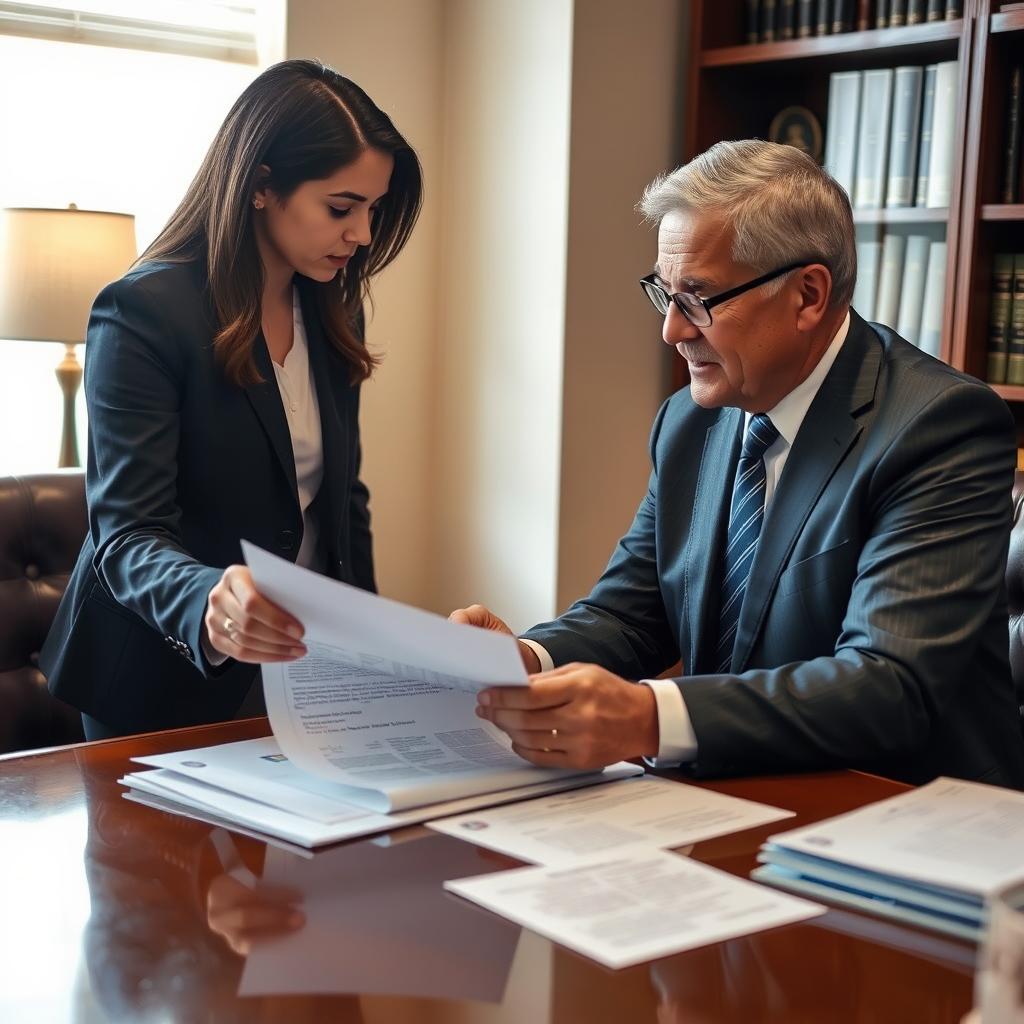
Child Petition Lawyer Georgetown, DC
For families in Georgetown, bringing a foreign-born child to the United States begins with a child petition—Form I-130, Petition for Alien Relative—filed with U.S. Citizenship and Immigration Services. Whether you are a U.S. Citizen parent sponsoring an unmarried child under the age of 21, or a lawful permanent resident seeking to reunite with your child, the immigration process requires careful attention to documentary requirements, eligibility standards, and the agency’s evolving adjudication priorities. A U.S. Citizen parent’s petition for a child qualifies as an immediate relative case under the Immigration and Nationality Act; this means it is not subject to annual visa caps and can proceed more directly than family-preference categories. For permanent resident parents, the F2A family second preference category may involve longer waiting periods tied to visa availability. Law Offices Of SRIS, P.C., founded in 1997, serves Georgetown residents from our Arlington location just across the Potomac River. Mr. Sris and his Of Counsel team help parents navigate USCIS’s Washington Field Office, consular processing, and, when necessary, proceedings before the Arlington Immigration Court. To request a consultation, reach our firm at (888) 437-7747. Law Offices Of SRIS, P.C. – Advocacy Without Borders.
What Child Petition Immigration Means in Georgetown
A child petition is the legal request a parent files to obtain a green card for a foreign-born son or daughter. Under the Immigration and Nationality Act, a “child” is defined as an unmarried person under 21 years of age. The petitioning parent must demonstrate a qualifying relationship—biological, legitimated, stepchild, or adopted—and provide the supporting documentation USCIS requires. Once the I-130 petition is approved, the child can either adjust status in the United States (if already present lawfully) or attend an immigrant visa interview at a U.S. Embassy or consulate abroad. Georgetown, a historic neighborhood in Northwest Washington, D.C., is home to many multinational families. Because immigration law is federal, local D.C. Courts do not decide immigration status, but an attorney familiar with the agencies that do is essential. Georgetown residents interact primarily with the USCIS Washington Field Office, located in Fairfax, Virginia, which processes adjustment-of-status applications and conducts interviews. For families whose child is already in removal proceedings, the Arlington Immigration Court in Virginia handles the case. Our firm’s proximity to both the USCIS field office and the immigration court allows us to provide attentive representation without the logistical friction that can delay a family’s timeline.
In addition to the core I-130 filing, a child petition may involve ancillary relief such as waivers of inadmissibility, deferred action requests, or motions to reopen prior removal orders. A parent may also need to address the Child Status Protection Act when the child is approaching age 21, to prevent “aging out” of the immediate relative classification. Each of these steps demands precise legal strategy. Mr. Sris and his Of Counsel draw on their experience with USCIS adjudicators and immigration judges to guide Georgetown families through each stage, from initial intake to the final grant of lawful permanent residence. We represent clients in every sub-neighborhood—East Georgetown, West Georgetown, the Georgetown Waterfront, and the bordering Burleith area—ensuring that no matter where a family lives in the community, accessible counsel is available.
The District of Columbia’s unique status as a federal enclave also means that immigration issues often intersect with local concerns. A parent’s employment at a government agency or international organization can raise additional questions about visa status, dual intent, and the interplay between nonimmigrant work authorization and the child petition. Law Offices Of SRIS, P.C. Navigates these intersections with an understanding of both federal immigration law and the practical realities of life in Washington, D.C. Our location at 1655 Fort Myer Drive in Arlington, Virginia, places us within convenient reach of Georgetown—roughly 4.5 miles from the neighborhood—so families can meet with an attorney without crossing significant distances.
How Mr. Sris and His Of Counsel Handle Child Petition Cases
Every child petition begins with a thorough evaluation of the parent–child relationship and the child’s immigration history. The team reviews the child’s birth certificate, marriage records of the parents, evidence of legitimation if needed, and any prior immigration applications or encounters with law enforcement. This pre‑filing diligence helps identify potential issues before USCIS raises them, reducing the likelihood of a Request for Evidence or a Notice of Intent to Deny. When issues do arise—for example, if the child entered without inspection and needs a provisional unlawful presence waiver, or if the parent’s own immigration status creates complications—Mr. Sris and his Of Counsel develop a tailored response that addresses the agency’s concerns while protecting the child’s legal position.
The team also handles the complexity that arises when a child petition intersects with other immigration processes. A child who is abroad may need to attend a consular interview at a heavily backlogged post, where documentary requirements differ from those at the USCIS field office. A child who is already in the United States but out of status may be able to adjust through the immediate relative process if eligible, but may also face a ground of inadmissibility that must be resolved. In removal proceedings, the child may be applying for cancellation of removal or asylum simultaneously, and the parent’s petition can serve as a critical form of relief. Mr. Sris and his Of Counsel approach each case with a comprehensive strategy, identifying all pathways to lawful status and presenting them to the Tribunal with clarity. They are available to attend USCIS interviews with families, to argue motions before the immigration court, and to brief appeals to the Board of Immigration Appeals when necessary.
About Mr. Sris and His Of Counsel Team
Mr. Sris, Owner and Founder of Law Offices Of SRIS, P.C., began his legal career as a former prosecutor before founding the firm in 1997. Admitted in Virginia, Maryland, the District of Columbia, New Jersey, and New York, he has spent decades representing individuals and families in immigration matters. His practice includes family‑based petitions, removal defense, asylum, and appellate work before the Board of Immigration Appeals. Mr. Sris testified before the Virginia House Courts of Justice Committee in support of 2019 HB 635 (chief patron Del. David Bulova), reflecting his commitment to the legislative process that shapes family law.
Mr. Sris is supported by a dedicated team of Of Counsel attorneys who bring complementary experience to every child petition. Collectively, they assist with document preparation, USCIS communication, and hearing representation. The firm has handled immigration matters across the District of Columbia, Virginia, and Maryland since its founding, and our Arlington location makes us readily available to Georgetown residents. Our staff includes Spanish‑speaking professionals, and consultations can be arranged in English, Spanish, or Tamil. To discuss a child petition or any other immigration concern, contact Law Offices Of SRIS, P.C. at (888) 437-7747.
Frequently Asked Questions
What is a child petition in U.S. Immigration law?
A child petition is Form I-130, which a U.S. Citizen or lawful permanent resident parent files with USCIS to sponsor an unmarried child under 21 for a green card. The petition establishes the parent‑child relationship, and once approved, the child can either adjust status in the United States or apply for an immigrant visa at a consulate abroad. For a U.S. Citizen parent, the child is an immediate relative, which means no visa backlog. For a permanent resident parent, the child falls under the F2A family preference category and may face waiting periods. The petition must be supported by birth records and, if applicable, evidence of legitimation, adoption, or step‑relationship.
How does a U.S. Citizen parent in Georgetown start a child petition?
The parent files Form I-130 with USCIS, accompanied by supporting documents that prove the parent’s citizenship and the child’s identity and relationship. The petition can be filed online or by mail. After USCIS approves the I-130, the child may apply for an immigrant visa at a U.S. Embassy or consulate if living abroad, or adjust status if already in the United States lawfully. Georgetown residents can send the petition to the USCIS lockbox and later interact with the Washington Field Office for interviews. Because errors can lead to delays or denials, many parents choose to work with an attorney who understands USCIS evidentiary standards and can respond to any agency queries.
Can a lawful permanent resident parent file a child petition?
Yes, a lawful permanent resident may file Form I-130 for an unmarried child under 21, but the petition falls under the F2A family second preference category. This means the child’s priority date—the date I-130 is filed—must become current according to the monthly Visa Bulletin before an immigrant visa or adjustment of status can be finalized. The wait can vary significantly depending on the child’s country of chargeability. Once the child turns 21 and “ages out,” the petition may automatically convert to the F2B category for unmarried sons and daughters over 21, which may extend the timeline. An attorney can evaluate eligibility to avoid losing the benefit.
Does the Child Status Protection Act protect a child from aging out?
The Child Status Protection Act (CSPA) can freeze a child’s age for immigration purposes under specific circumstances, preventing the child from being reclassified as an adult. For U.S. Citizen parents, if the child was under 21 when the I-130 was filed, the Child Status Protection Act generally locks in that age. For permanent resident parents, the calculation is more complex: the child must remain under 21 when the priority date becomes current, minus the time USCIS took to adjudicate the I-130. Failure to calculate CSPA eligibility correctly can cause a child to lose the immediate relative or F2A classification. An attorney can perform this analysis and, when necessary, argue for CSPA protection before USCIS or the immigration court.
What if the child is already in the United States without lawful status?
A child who is in the United States without lawful immigration status may still be able to obtain a green card through a parent’s petition if the parent is a U.S. Citizen and the child meets the eligibility requirements for adjustment of status under INA § 245(a). However, not all entries without inspection are forgivable; a child who entered without inspection generally cannot adjust status from within the United States unless a special provision applies. The child may need to depart the country and apply for an immigrant visa abroad, which could trigger a three‑ or ten‑year unlawful presence bar. An attorney can explore waivers of inadmissibility and advise on the safest path forward based on the child’s individual immigration history and the family’s situation.
If you are looking for immigration representation in other D.C. Neighborhoods, explore our pages for Washington, D.C., Spring Valley, Cleveland Park, Chevy Chase DC, and American University Park.
Attorney advertising. Prior results do not guarantee a similar outcome. Results may vary.
Case results depend on a variety of factors unique to each case.