
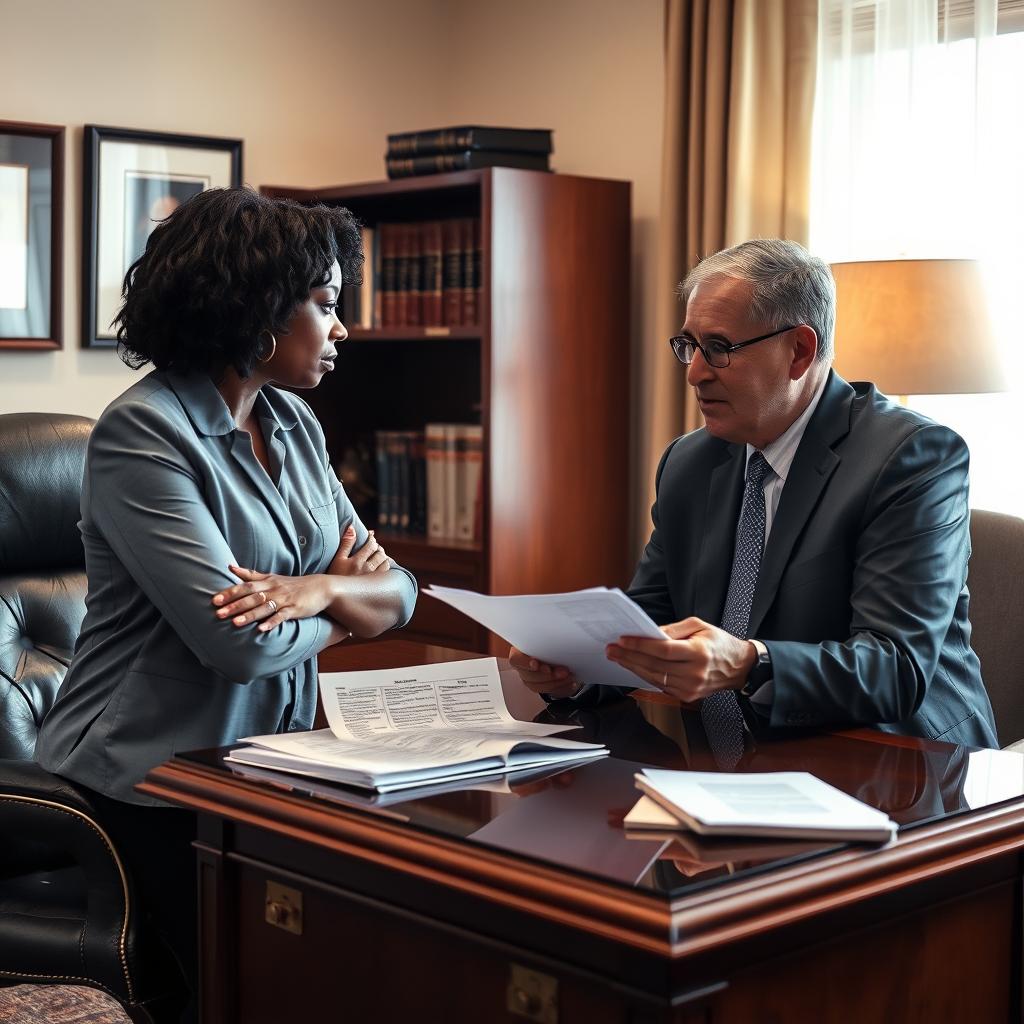
VAWA Lawyer Georgetown, DC
If you are a victim of domestic violence living in Georgetown, DC, and you are seeking a path to lawful permanent residence without the cooperation of an abusive spouse or parent, the Violence Against Women Act (VAWA) may provide a way forward. Mr. Sris, Owner and Founder of Law Offices Of SRIS, P.C., and his Of Counsel team represent clients in the Georgetown community and throughout the District of Columbia in VAWA self‑petitions. A VAWA self‑petition allows a qualifying victim to apply for lawful status confidentially—no notification goes to the abuser, and the process is independent of any pending family‑based petition. Our firm represents clients at each stage of the USCIS adjudication, from assembling the required documentation to responding to any agency request. Reach Law Offices Of SRIS, P.C. at (888) 437-7747 to schedule a consultation.
What VAWA Immigration Means in Georgetown, DC
Georgetown is one of Washington, D.C.’s most vibrant neighborhoods, home to a diverse population that includes many immigrants from around the world. For a person living in Georgetown who is experiencing domestic violence at the hands of a U.S. Citizen or lawful permanent resident spouse, parent, or child, VAWA offers a federally authorized remedy that does not depend on the abuser’s support. The self‑petition is filed directly with U.S. Citizenship and Immigration Services (USCIS), not through a family member, and the entire process is confidential.
Because immigration law is federal, the local court system in D.C.—the DC Superior Court—does not adjudicate VAWA petitions. However, a person seeking protection in Georgetown may also interact with local courts for a civil protection order. Our attorneys, led by Mr. Sris, understand how a protective order can reinforce a VAWA case and how to build a cohesive strategy that addresses both safety and immigration goals. Removal proceedings for DC residents are handled at the Arlington Immigration Court, a short distance from Georgetown. Mr. Sris and his Of Counsel appear regularly before the Arlington Immigration Court and are familiar with the procedures and expectations of that venue.
The VAWA provisions under 8 U.S.C. § 1154(a)(1)(A)(iii)–(iv) allow a victim to file Form I‑360 without the abuser’s knowledge or consent. Eligibility turns on the relationship to the abuser, the nature of the abuse, and the petitioner’s good moral character. The firm’s experienced multi-state attorneys work with clients to present a thorough petition that meets USCIS evidentiary standards while preserving the petitioner’s safety and privacy.
How Mr. Sris and His Of Counsel Handle VAWA Cases
When a client in Georgetown contacts the firm, the first step is a confidential consultation with Mr. Sris or an Of Counsel attorney. During that meeting, the client’s circumstances are reviewed in detail, including the nature of the abuse, the relationship to the abuser, and any immigration history that could affect the petition. The team then develops a plan to gather the required supporting evidence—such as police reports, medical records, affidavits from individuals with knowledge of the abuse, and a detailed personal statement from the client.
Because the VAWA self‑petition is filed with USCIS without notifying the abuser, the firm uses delivery methods and correspondence protocols that protect the client’s confidentiality. Throughout the process, the attorneys manage all correspondence with the agency, prepare the client for any biometrics appointment, and respond to Requests for Evidence (RFEs) or Notices of Intent to Deny (NOIDs) should they arise. Mr. Sris and his Of Counsel bring extensive combined legal experience to VAWA matters. Results may vary. Every petition is prepared with careful attention to the statutory requirements and the unique facts of the client’s situation.
About Mr. Sris and His Of Counsel Team
Mr. Sris, Owner and Founder of Law Offices Of SRIS, P.C., is a former prosecutor whose practice spans five jurisdictions: Virginia, Maryland, the District of Columbia, New Jersey, and New York. He has guided numerous clients through the VAWA process and understands the challenges victims face when seeking safety and lawful status simultaneously. Mr. Sris testified before the Virginia House Courts of Justice Committee in support of 2019 HB 635 (chief patron Del. David Bulova).
Mr. Sris is joined by a team of Of Counsel attorneys who collectively bring extensive combined legal experience in immigration, family law, and related areas. The Of Counsel team includes professionals with backgrounds in prosecution and civil litigation, all of whom contribute to preparing well‑documented VAWA petitions. Clients may meet with the firm by appointment at our Arlington, Virginia location, which is convenient to Georgetown and the greater Washington, D.C. Area. Call (888) 437-7747 to request a consultation. The firm also offers language services in English, Spanish, and Tamil.
Frequently Asked Questions
What is a VAWA self‑petition and how does it work?
A VAWA self‑petition allows an abused spouse, child, or parent to apply for lawful immigration status without the abuser’s involvement. The petition, Form I‑360, is filed with USCIS. If approved, the victim may obtain work authorization and, if a visa number is available, apply for adjustment of status to lawful permanent residence. The abuser is never notified that the petition has been filed, and the victim does not need the abuser’s signature or cooperation. The process is governed by federal law and is independent of any family‑based petition the abuser may have sponsored.
Who qualifies for VAWA protection?
An abused spouse, former spouse, child, or parent of a U.S. Citizen or lawful permanent resident may qualify if they have experienced battery or extreme cruelty. The abuser must be a U.S. Citizen or LPR. The victim must have lived with the abuser at some point and must be a person of good moral character. Both men and women may file. The abuse can be physical, emotional, psychological, or a combination. There is no requirement that the victim report the abuse to law enforcement, although documentation strengthens the case.
Do I need a lawyer to file a VAWA self‑petition?
You are not legally required to have a lawyer, but the process is complex and a lawyer can help you avoid mistakes that could delay or derail your petition. The evidentiary requirements are stringent, and any misrepresentation—even unintentional—can lead to a denial. An experienced immigration attorney can ensure that your petition is complete, consistent, and supported by the right evidence. Mr. Sris and his Of Counsel handle the entire filing and communicate with USCIS on your behalf, allowing you to focus on your safety.
How does the VAWA process work in the Washington, D.C. Area?
Clients in Georgetown and surrounding D.C. Neighborhoods file the VAWA petition with the USCIS service center that handles the Vermont jurisdiction, which covers the District of Columbia. The petition is adjudicated on paper; there is generally no interview unless USCIS deems one necessary. If the client is also in removal proceedings, the case may be jointly handled with the Arlington Immigration Court. Mr. Sris and his Of Counsel coordinate with the court and USCIS to manage both tracks effectively. The timeline varies depending on USCIS workload and the specifics of the case.
What evidence do I need to support a VAWA petition?
USCIS requires evidence of the qualifying relationship, the abuse, and the petitioner’s good moral character. Typical documents include a marriage certificate (for spouse cases), birth certificates, a personal declaration describing the abuse in detail, police reports, medical records, protective orders, and affidavits from counselors, social workers, or friends who have knowledge of the abuse. The firm works with clients to identify and secure this evidence while maintaining confidentiality. Photographs, threatening messages, and any documentation showing a pattern of control can also be valuable.
Internal-link nav strip:
Washington, D.C. Immigration Lawyer • Spring Valley Immigration Lawyer • Cleveland Park Immigration Lawyer • Chevy Chase Immigration Lawyer
Outbound primary-source authority strip:
USCIS VAWA Self‑Petition Information • Executive Office for Immigration Review (EOIR) • 8 U.S.C. § 1154
Attorney advertising. Prior results do not guarantee a similar outcome. Results may vary.
Case results depend on a variety of factors unique to each case.