
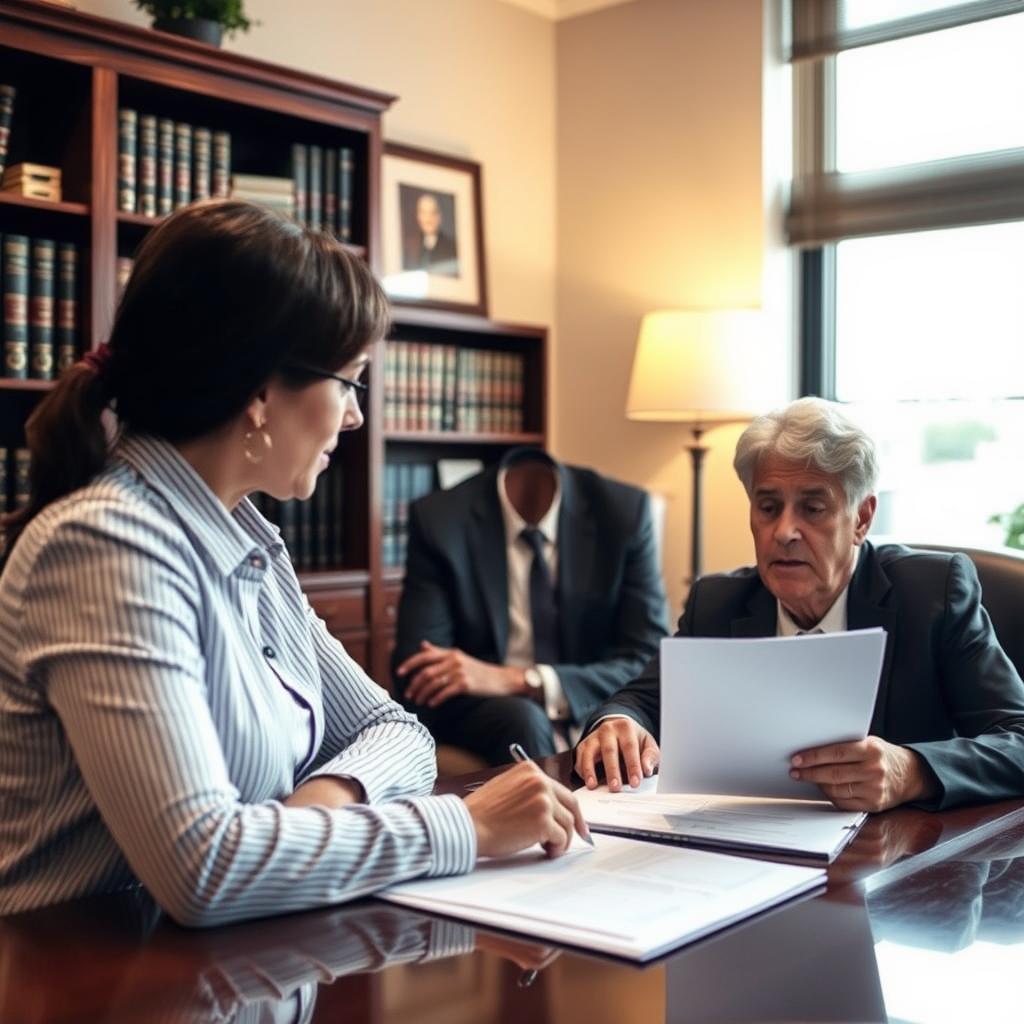
VAWA Immigration Lawyer Orange County, VA
If you or a family member has been the victim of abuse and you need immigration protection, the Violence Against Women Act (VAWA) provides a confidential path to lawful status without your abuser’s cooperation. For residents of Orange County, Virginia—from the Town of Orange to Gordonsville—Mr. Sris and the firm’s Of Counsel attorneys help survivors file VAWA self‑petitions, secure work authorization, and pursue permanent residence. The firm represents individuals at the USCIS Washington District Office in Fairfax and before the Arlington Immigration Court for related proceedings, while answering calls 24 hours a day at (888) 437‑7747.
What VAWA Immigration Means in Orange County, Virginia
VAWA immigration refers to a federal process under 8 U.S.C. § 1154(a)(1)(A)(iii)–(iv) that allows abused spouses, children, and parents of U.S. Citizens or lawful permanent residents to self‑petition for lawful status without the abuser’s knowledge or consent. The petition is filed confidentially with U.S. Citizenship and Immigration Services (USCIS). Orange County residents submit their applications to the USCIS Washington District Office, located at 2675 Prosperity Avenue in Fairfax, which handles all affirmative immigration filings for the region. If a removal (deportation) matter arises, hearings take place at the Arlington Immigration Court, 1901 South Bell Street, Arlington, VA 22202.
Because VAWA self‑petitions involve sensitive fact patterns and detailed evidentiary requirements, an experienced immigration attorney can guide you through each stage. Mr. Sris and the firm’s Of Counsel attorneys have worked with survivors throughout Virginia, including Orange County, on matters ranging from initial eligibility assessment to adjustment of status after the petition’s approval. They understand how to compile the necessary documentation—including police reports, medical records, and credible personal statements—while preserving confidentiality.
Orange County is situated in the Piedmont region of Virginia, bordered by Madison County to the north, Culpeper County to the east, Louisa County to the south, and Greene County to the west. The county seat is the Town of Orange, and other communities include Gordonsville, Locust Grove, Barboursville, Somerset, and Unionville. Many residents of these communities travel to Fairfax for USCIS appointments or to Arlington for immigration court hearings, following U.S. Route 15 or State Route 20 northward toward the Northern Virginia corridor. The drive from Orange to the USCIS Washington District Office in Fairfax generally takes approximately 90 minutes under normal traffic conditions. For individuals who rely on public transportation, the Virginia Railway Express (VRE) offers service from nearby stations, and bus routes connect through the Virginia Regional Transit system.
The confidentiality protections built into the VAWA statute are particularly significant for survivors residing in smaller communities such as Orange County, where concerns about privacy and community awareness may feel especially acute. USCIS regulations strictly prohibit any notification to the abuser at every stage—from initial filing through adjudication and any subsequent adjustment of status. This confidentiality extends to all communications, including requests for additional evidence and interview scheduling. The agency’s systems are designed so that the abuser’s name does not appear on any correspondence sent to the petitioner’s address of record. For Orange County residents, the firm’s attorneys can discuss additional safety planning measures during the confidential consultation, such as using a mailing address different from the petitioner’s residence or coordinating with local domestic violence advocacy organizations. Orange County is served by several community-based organizations that provide support services to survivors, and an attorney can help connect you with those resources as part of a comprehensive approach to your case.
How Mr. Sris and the Firm’s Of Counsel Attorneys Handle VAWA Immigration Cases
Handling a VAWA self‑petition begins with a confidential consultation. The firm’s immigration team will evaluate your relationship to the abuser, evidence of battery or extreme cruelty, good moral character, and whether you currently reside in the United States. If you qualify, the attorney prepares Form I‑360 with a comprehensive supporting packet. The abuser is never notified of the filing; USCIS regulations ensure the process remains confidential.
Once the I‑360 is approved, many survivors can apply for lawful permanent residence through adjustment of status (Form I‑485). For immediate relatives of U.S. Citizens, this typically takes 8 to 14 months after VAWA approval. During that time, work authorization and travel permission may be available. The firm’s attorneys stay actively engaged throughout the adjudication, responding to Requests for Evidence and preparing clients for any in‑person interviews. Every case is different, but the team works to build the strongest possible petition while protecting your safety and privacy.
The preparation of Form I‑360 itself is a meticulous process. The form requires detailed biographical information about both the petitioner and the abuser, including dates of birth, places of birth, Alien Registration Numbers if applicable, and marriage or divorce dates if the petitioner is or was married to the abuser. Beyond the form itself, the supporting evidentiary packet is central to a successful petition. USCIS expects evidence that demonstrates the qualifying relationship, the abuse or extreme cruelty suffered, and the petitioner’s good moral character. Qualifying relationship evidence may include a marriage certificate, birth certificate, or divorce decree. Evidence of abuse can take many forms: police reports documenting calls for service or arrests, protection orders issued by a state court (including the Orange County Circuit Court or General District Court), medical records from treating physicians or hospital visits, photographs of injuries, psychological evaluations or counseling records, and sworn affidavits from witnesses such as neighbors, coworkers, clergy members, or family members who observed the abuse or its aftermath. The petitioner’s own detailed personal declaration, describing the abuse in chronological order and explaining how it meets the statutory standard of battery or extreme cruelty, is often one of the most persuasive components of the filing. Good moral character is typically demonstrated through an affidavit from the petitioner, supported by character references from employers, community members, or religious leaders, and a background check conducted by USCIS.
After the petition is filed, USCIS issues a receipt notice (Form I‑797C), which serves as confirmation that the agency has accepted the filing. The receipt notice contains a case number that can be used to track the status of the petition online through the USCIS case status portal. Processing times for VAWA self‑petitions vary and are published on the USCIS website for the Vermont Service Center, which has jurisdiction over VAWA filings. While the petition is pending, the petitioner may apply for employment authorization by submitting Form I‑765, either concurrently with the I‑360 or at any point thereafter. If USCIS determines that the petition establishes a prima facie case—meaning that the evidence submitted, if unrebutted, would establish eligibility—the agency can grant deferred action and issue an employment authorization document. This work permit is typically valid for two years and can be renewed. Additionally, VAWA self‑petitioners may be eligible for certain public benefits under federal law, including access to federally subsidized housing programs and certain forms of public assistance, although eligibility for specific programs may depend on state law and individual circumstances. The firm’s attorneys can discuss these ancillary benefits during the consultation and throughout the representation.
If USCIS issues a Request for Evidence (RFE) or a Notice of Intent to Deny (NOID), the petitioner is given a specific timeframe—typically 30 to 87 days—to respond with additional documentation. An RFE does not necessarily indicate that the petition will be denied; it simply means that the adjudicating officer needs more information to make a determination. The firm’s attorneys have experience responding to RFEs and NOIDs by identifying precisely what the agency is requesting and gathering the supplemental evidence needed to address any gaps or concerns. Timely and thorough responses are critical at this stage, as failure to respond by the deadline will result in the denial of the petition. In some cases, the attorney may also submit a legal brief alongside the response, addressing any legal issues raised by the officer and explaining how the submitted evidence meets the statutory and regulatory requirements.
About Mr. Sris and the Firm’s Of Counsel Attorneys
Mr. Sris is the Owner and Founder of Law Offices Of SRIS, P.C. A former prosecutor, he has practiced immigration law since the firm opened in 1997. He is admitted to practice in Virginia, Maryland, the District of Columbia, New Jersey, and New York. Mr. Sris testified before the Virginia House Courts of Justice Committee in support of 2019 HB 635 (chief patron Del. David Bulova), reflecting his long‑standing commitment to the legal needs of Virginia families.
The firm’s Of Counsel attorneys bring extensive combined legal experience in immigration matters, including VAWA self‑petitions, adjustment of status, and deportation defense. Together with Mr. Sris, they provide multi‑state representation and a thorough understanding of federal immigration procedures. Results may vary.
The firm’s physical office is located at 4008 Williamsburg Court in Fairfax, Virginia, in close proximity to the USCIS Washington District Office. This location allows the firm’s attorneys to maintain familiarity with the local USCIS personnel and procedures, which can be helpful when preparing clients for interviews and anticipating case processing timelines. The firm represents clients not only in Orange County but throughout the Commonwealth of Virginia, from the Shenandoah Valley to the Eastern Shore, as well as in Maryland, the District of Columbia, New Jersey, and New York. Clients in Orange County can schedule in‑person meetings at the Fairfax office or arrange virtual consultations by phone or video conference if travel presents a hardship. The firm’s telephone line, (888) 437‑7747, is answered 24 hours a day, including weekends and holidays, so that individuals in need of urgent guidance can speak with someone without delay.
Frequently Asked Questions
What is a VAWA self‑petition?
A VAWA self‑petition allows an abused spouse, child, or parent of a U.S. Citizen or permanent resident to seek lawful immigration status independently, without the abuser’s knowledge or sponsorship. The petition is filed confidentially with USCIS on Form I‑360. If approved, the survivor may become eligible to apply for a green card. The abuser is not notified at any stage of the process.
Who qualifies for VAWA immigration protection?
You may qualify if you are the spouse, child, or parent of a U.S. Citizen or lawful permanent resident and have suffered battery or extreme cruelty by that family member. You must demonstrate good moral character and currently reside in the United States. Evidence can include police reports, protection orders, medical records, and personal declarations. An attorney can help determine whether your specific circumstances meet the statutory requirements under 8 U.S.C. § 1154(a)(1)(A)(iii)–(iv).
Will my abuser find out if I file a VAWA petition?
No. Federal law prohibits USCIS from notifying the abuser about a VAWA self‑petition. The entire process is confidential, and USCIS does not share information with the alleged abuser. Even if the abuser is a U.S. Citizen or lawful permanent resident, the agency cannot contact them regarding your petition. Your safety is a priority throughout the application.
Can I work while my VAWA petition is pending?
Yes. You may apply for an employment authorization document (EAD) concurrently with or after filing your VAWA self‑petition. If the I‑360 establishes a prima facie case, USCIS can issue a work permit. Many survivors obtain work authorization while their petition is under review, allowing them to support themselves independently during the often lengthy processing timeline.
What happens after my VAWA petition is approved?
After approval, you may be eligible to apply for lawful permanent residence (a green card) through adjustment of status if you are an immediate relative of a U.S. Citizen. This step generally takes 8 to 14 months. You may also qualify for fee waivers and certain public benefits. An experienced immigration attorney can help you navigate the next steps and prepare for any USCIS interview.
How soon should I contact a VAWA immigration lawyer in Orange County?
You should reach out as soon as you are safely able to do so. There is no filing deadline for a VAWA self‑petition, but collecting evidence and preparing a strong application takes time. Consulting with an attorney early lets you understand your options and begin gathering the required documentation. For a confidential discussion, reach Law Offices Of SRIS, P.C. at (888) 437‑7747.
Additional communities served: Our firm assists immigrants throughout Northern Virginia, including Fairfax County, Prince William County, and Manassas (City). Learn more about how we handle immigration cases across all five firm jurisdictions.
Virginia legal resources: Virginia Judicial System · Code of Virginia
Attorney advertising. Prior results do not guarantee a similar outcome. Results may vary.
Case results depend on a variety of factors unique to each case.