
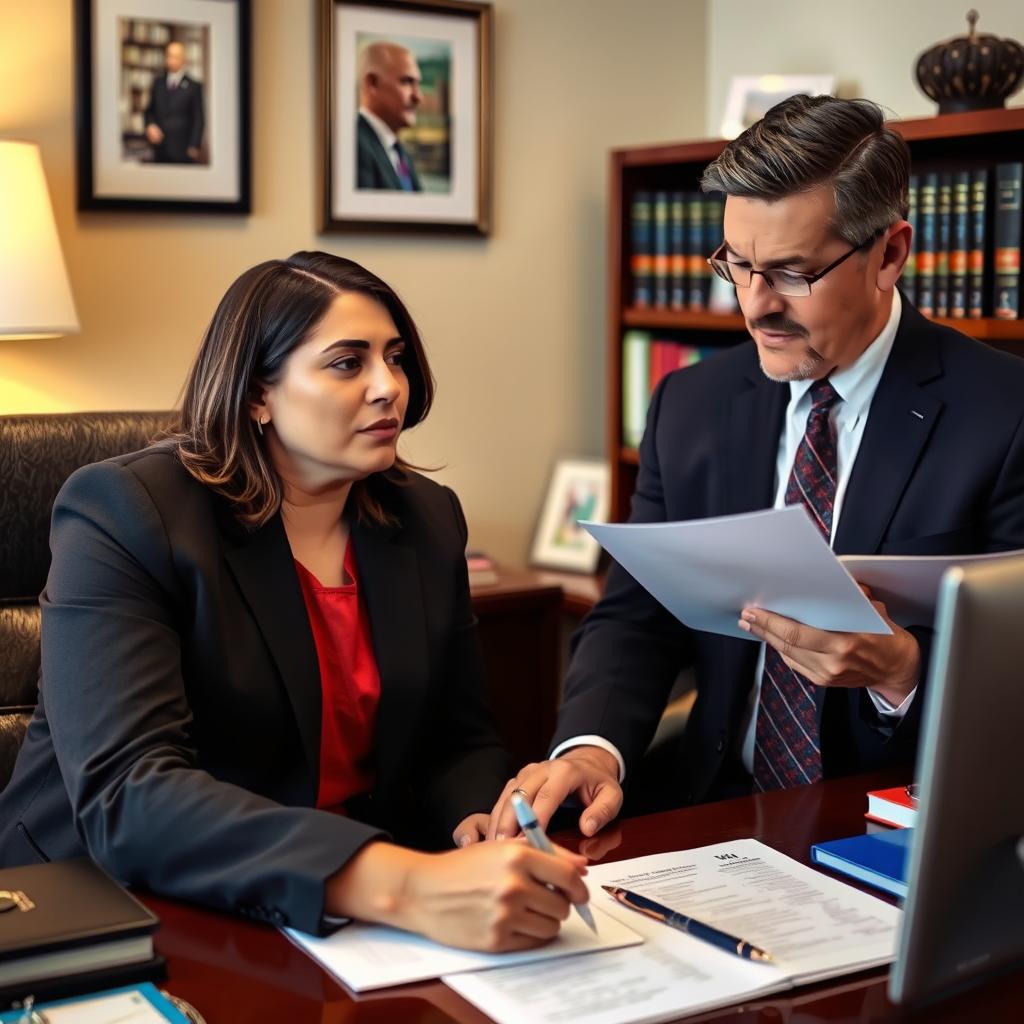
VAWA Immigration Lawyer Maryland, MD
For Maryland residents facing abuse or extreme cruelty from a U.S. Citizen or lawful permanent resident family member, VAWA immigration relief offers a path to safety and lawful status without the abuser’s involvement. Law Offices Of SRIS, P.C. Concentrates its immigration practice in part on VAWA self-petitions, adjustment of status, and related family-based immigration matters for clients throughout Maryland. Mr. Sris, Owner and Founder of Law Offices Of SRIS, P.C., leads a team that appears before the Baltimore Immigration Court, handles filings with the USCIS Baltimore Field Office, and represents individuals in Montgomery County, Prince George’s County, Howard County, and all 24 Maryland counties. Every VAWA case is handled with an understanding that the petitioner has already endured significant trauma—our approach prioritizes clear communication, thorough documentation, and careful guidance at each stage. To request a consultation about VAWA immigration options in Maryland, call (888) 437-7747. Law Offices Of SRIS, P.C. – Advocacy Without Borders.
What VAWA Immigration Means in Maryland
The Violence Against Women Act (VAWA) authorizes certain noncitizen victims of abuse to file a self-petition for lawful permanent residence without the knowledge or consent of the abusive U.S. Citizen or lawful permanent resident relative. Under 8 U.S.C. § 1154(a)(1)(A)(iii)–(iv), eligible petitioners may include spouses, former spouses, children, and parents of U.S. Citizens or lawful permanent residents, provided they have suffered battery or extreme cruelty and meet other statutory requirements. Maryland residents file these petitions with the USCIS Vermont Service Center; in-person interviews and biometrics appointments typically take place at the USCIS Baltimore Field Office at the Fallon Federal Building, 31 Hopkins Plaza, Baltimore, MD 21201. Removal proceedings arising from denied petitions or other enforcement actions are heard at the Baltimore Immigration Court.
Maryland’s diverse immigrant communities in Montgomery County, Prince George’s County, and the greater Baltimore area frequently turn to VAWA relief as a critical legal option. In addition to the self-petition, many Maryland VAWA clients pursue adjustment of status under 8 U.S.C. § 1255, employment authorization, and, if necessary, waivers of inadmissibility such as the I-601 hardship waiver or the provisional unlawful presence waiver. Because VAWA eligibility requires a showing of good moral character, physical presence, and a qualifying relationship, preparation involves rigorous evidence gathering—from police reports and protection orders to medical records and affidavits. The process is fact-intensive and benefits from counsel who is familiar with both immigration law and the local practices of the Baltimore Field Office and Immigration Court.
How Mr. Sris and His Of Counsel Handle VAWA Immigration Cases
Mr. Sris and his Of Counsel approach each VAWA matter with a focus on building a well-documented case from the outset. The first step is a careful assessment of eligibility: verifying the qualifying relationship, reviewing the nature and extent of abuse, confirming that the petitioner meets the good-moral-character standard, and identifying any grounds of inadmissibility that may need to be waived. The firm then assists the client in compiling the extensive supporting evidence required by USCIS regulation—including an I-360 petition, a detailed personal statement, corroborating documents, and any needed fee waiver requests (Form I-912). Throughout the process, the attorney team works to keep the petitioner informed of timelines, though actual processing times at USCIS vary and are subject to the agency’s current workload.
If a VAWA self-petitioner is in removal proceedings, Mr. Sris and his Of Counsel may appear before the Baltimore Immigration Court to request termination or administrative closure of proceedings while the petition is pending, or to seek cancellation of removal if VAWA relief is part of a broader defense strategy. In many instances, VAWA petitioners are also eligible to apply for employment authorization while their petition is adjudicated, allowing them to work lawfully in Maryland. The firm handles all related applications—adjustment of status, work authorization, advance parole—and coordinates with the National Visa Center when consular processing abroad becomes necessary. No two cases are identical; the legal strategy adapts to the facts of each client’s situation. Results may vary.
About Mr. Sris and His Of Counsel Team
Mr. Sris, Owner and Founder of Law Offices Of SRIS, P.C., has concentrated his practice in immigration law since founding the firm in 1997. He is admitted in Virginia, Maryland, the District of Columbia, New Jersey, and New York, and has represented clients in immigration matters before the Baltimore Immigration Court, the USCIS Baltimore Field Office, and federal immigration agencies nationwide. Mr. Sris is a former prosecutor. Mr. Sris testified before the Virginia House Courts of Justice Committee in support of 2019 HB 635 (chief patron Del. David Bulova).
His Of Counsel team includes attorneys with substantial experience in family-based immigration, removal defense, and humanitarian relief. All attorneys work collaboratively on complex immigration matters, drawing on over 120 years of combined legal experience and 4,739+ documented firm-wide results between Mr. Sris and his Of Counsel. Results may vary. The firm’s Maryland location is at 199 E. Montgomery Avenue, Suite 100, Room 211, Rockville, MD 20850, and serves clients from all 24 Maryland counties, including Montgomery, Prince George’s, Howard, Anne Arundel, and Frederick counties.
VAWA self-petition eligibility is governed by 8 U.S.C. § 1154(a)(1)(A)(iii)–(iv).
Source: Immigration and Nationality Act, 8 U.S.C. § 1154. U.S. Code, Title 8, § 1154
Reviewed by Mr. Sris, admitted in VA/MD/DC/NJ/NY.
VAWA petitions from Maryland are processed at the USCIS Baltimore Field Office, 31 Hopkins Plaza, Baltimore, MD 21201.
Source: USCIS Field Office locator. Baltimore Field Office
Reviewed by Mr. Sris, admitted in VA/MD/DC/NJ/NY.
Frequently Asked Questions
What is a VAWA self-petition?
A VAWA self-petition allows certain abused spouses, children, and parents of U.S. Citizens or lawful permanent residents to apply for lawful immigration status without the abuser’s involvement. The petition is filed on Form I-360 with USCIS, accompanied by evidence of the qualifying relationship, abuse, and good moral character. If approved, the petitioner may then apply for lawful permanent residence (a green card) through adjustment of status or consular processing.
Do I need a lawyer for a VAWA immigration case in Maryland?
Maryland law does not require an attorney to file a VAWA self-petition, but USCIS regulations and the complexity of the evidence-gathering process often make legal guidance valuable. A lawyer can help ensure that the petition is complete, that sufficient corroborating evidence is submitted, and that any inadmissibility issues are addressed. In removal proceedings before the Baltimore Immigration Court, having counsel is particularly important because the procedural rules are strict and the consequences of a mistake can include a deportation order.
How does the VAWA process work in Maryland?
A Maryland VAWA petitioner first files Form I-360 with USCIS, either by mail to the Vermont Service Center or concurrently with an application for adjustment of status if eligible. USCIS reviews the petition, may request additional evidence, and schedules a biometrics appointment at the Baltimore Field Office. If the I-360 is approved, the petitioner can then apply for a green card. Throughout the process, the timeline depends on USCIS caseload and the complexity of the case. Work authorization may be available while the petition is pending in certain circumstances.
What evidence is required for a VAWA self-petition?
A VAWA self-petition requires evidence of the qualifying relationship, battery or extreme cruelty, good moral character, and, in some instances, shared residency with the abuser. Typical documents include a copy of the marriage certificate, police reports, court protection orders, medical records, affidavits from witnesses or therapists, and the petitioner’s personal declaration describing the abuse. The standard of proof is “preponderance of the evidence,” which means showing that the claim is more likely true than not.
Can a VAWA petitioner file while in removal proceedings in Maryland?
Yes, a person in removal proceedings before the Baltimore Immigration Court may file a VAWA self-petition as a form of relief from removal. The immigration judge may administratively close the case or continue proceedings while USCIS adjudicates the petition. If the petition is approved, the respondent may then apply for adjustment of status before the immigration judge. This is a common defensive strategy for eligible individuals who are in contact with immigration enforcement.
How do I find a VAWA immigration lawyer in Maryland?
You can reach Law Offices Of SRIS, P.C. at (888) 437-7747 to schedule a consultation about VAWA immigration relief in Maryland. The firm’s Maryland location serves clients throughout Montgomery County, Prince George’s County, Howard County, and every other county in the state. A VAWA consultation provides an opportunity to discuss eligibility, the evidence needed, and the next steps in a confidential setting.
For further information on immigration legal services in specific Maryland counties, see our pages for Montgomery County immigration lawyer, Prince George’s County immigration lawyer, and Howard County immigration lawyer.
Additional primary legal sources: Virginia Code Title 13.1 | SCC business entity filings | Virginia Circuit Courts.
Attorney advertising. Prior results do not guarantee a similar outcome. Case results depend on a variety of factors unique to each case. Results may vary. Attorney responsible for this advertising: Mr. Sris.