
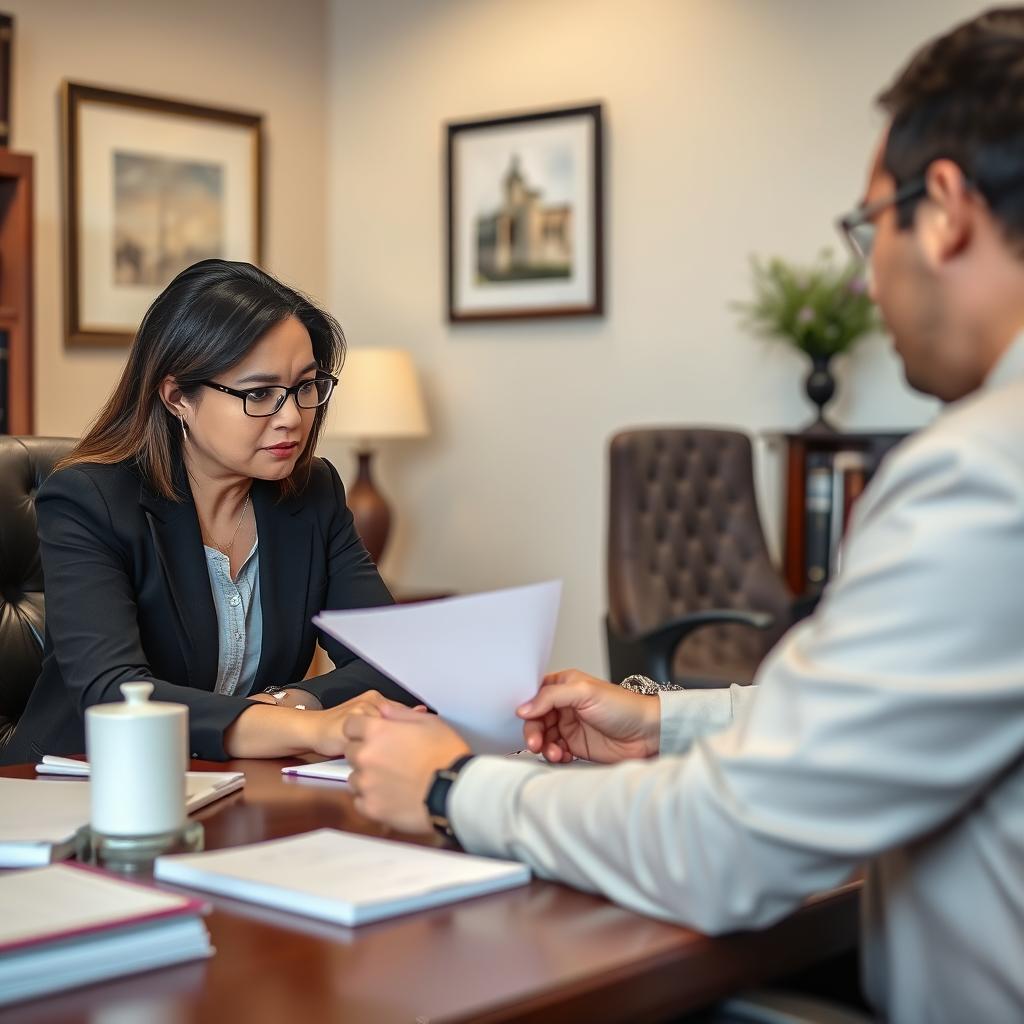
VAWA Immigration Lawyer Chesterfield County
You need a VAWA immigration lawyer Chesterfield County to file a self-petition under the Violence Against Women Act. This process allows abused spouses, children, or parents of U.S. citizens or lawful permanent residents to seek lawful status independently. Law Offices Of SRIS, P.C. —Advocacy Without Borders. Our team understands the specific evidence requirements for immigration cases in Chesterfield County. (Confirmed by SRIS, P.C.)
Statutory Definition of VAWA Immigration Relief
The Violence Against Women Act (VAWA) is codified in the Immigration and Nationality Act (INA) at 8 U.S.C. § 1154(a)(1)(A)(iii) and (B)(ii). It provides a path to lawful permanent residency for certain abused family members. This is a discretionary form of relief adjudicated by U.S. Citizenship and Immigration Services (USCIS). A successful VAWA immigration lawyer Chesterfield County petition can lead to a grant of deferred action and work authorization. Ultimately, it can result in the approval of a Form I-360 and adjustment of status to lawful permanent resident.
VAWA was created to protect immigrants trapped in abusive relationships. The law recognizes that abusers often use immigration status as a tool of control. The self-petition process allows the victim to apply without the abuser’s knowledge or consent. This is a critical protection for individuals in Chesterfield County and across Virginia. The legal standards are strict and the evidence must be compelling.
USCIS officers scrutinize these petitions for credibility and consistency. The burden of proof rests entirely on the petitioner. You must demonstrate the qualifying relationship, the abuser’s status, your good moral character, and that you resided with the abuser. You must also provide substantial evidence of the battery or extreme cruelty. An experienced Virginia immigration attorney is essential for this complex task.
What evidence is required for a VAWA case in Chesterfield County?
You need documentary proof of the abuser’s status, the relationship, cohabitation, good moral character, and the abuse. Proof of the abuser’s U.S. citizenship or green card is the first pillar. This can be a passport, birth certificate, or naturalization certificate. Proof of the relationship, such as a marriage certificate or birth certificate, is equally critical. You must also show you lived together, using leases, utility bills, or affidavits.
Evidence of the abuse is the most sensitive component. This includes police reports, medical records, photographs, and detailed personal affidavits. Psychological evaluations and reports from domestic violence shelters can be powerful evidence. Proof of your good moral character, like tax returns and community letters, rounds out the petition. A VAWA immigration lawyer Chesterfield County knows how to gather and present this evidence effectively.
Who qualifies to file a VAWA self-petition in Virginia?
Abused spouses, children, and parents of U.S. citizens or lawful permanent residents may qualify. The spouse must have been abused by the U.S. citizen or lawful permanent resident spouse. Children must be under 21 and unmarried, abused by the U.S. citizen or lawful permanent resident parent. Parents abused by their U.S. citizen son or daughter also qualify. The abuse can be battery or extreme mental cruelty.
The petitioner must have entered the marriage in good faith, not solely for immigration benefits. They must have resided with the abuser at some point. They must demonstrate good moral character. If the abuser lost their status due to an incident of domestic violence, you may still qualify. Consulting with a legal team experienced in these matters is a necessary first step.
How does VAWA differ from a standard marriage-based green card in Chesterfield?
A VAWA self-petition does not require the abuser’s participation or knowledge. A standard marriage-based green card requires the U.S. citizen or permanent resident spouse to file a petition. That spouse must attend the interview and provide ongoing support. In a VAWA case, the victim files on their own behalf, independently. This separation is the core legal protection the Act provides.
The process also offers specific confidentiality protections. USCIS policies prevent the agency from informing the abuser about the self-petition. This reduces the risk of retaliation. The eligibility rules also account for situations where the abuser has died or lost their status. For many in Chesterfield County, VAWA is the only viable path to secure status and safety.
The Insider Procedural Edge for Chesterfield County
Your VAWA petition is filed with the USCIS Vermont Service Center, not a local Chesterfield court. The mailing address is USCIS Vermont Service Center, 38 River Road, Essex Junction, VT 05479-0001. While there is no local filing, the evidence gathered in Chesterfield County is paramount. Local police reports, restraining orders from Chesterfield County Juvenile and Domestic Relations District Court, and medical records from local providers form the backbone of your case. Procedural specifics for Chesterfield County are reviewed during a Consultation by appointment at our Chesterfield County Location.
The timeline for a VAWA case is lengthy and unpredictable. USCIS currently reports processing times of 24 to 36 months for Form I-360 petitions. After approval, you may apply for work authorization. You can also file for adjustment of status if an immigrant visa is immediately available. If you are in removal proceedings, the process interacts with the immigration court in Arlington. Having a lawyer who understands this dual-track system is critical.
The filing fee for a VAWA self-petition (Form I-360) is currently $0. Congress has waived the filing fee for this specific form. This is a significant benefit for survivors seeking independence. However, associated forms, like the application for work authorization or adjustment of status, do have fees. Fee waivers may be available based on demonstrated financial need. A detailed financial assessment is part of the initial case strategy.
What is the typical VAWA case timeline for Chesterfield County residents?
The process from filing to green card can take three to five years or longer. The initial I-360 petition takes over two years for USCIS to adjudicate. After approval, you file for adjustment of status if a visa is available. That application adds another year or more to the timeline. If you are not in status, you may need to wait for a visa to become available, which can cause further delay.
During this period, you may receive deferred action and a work permit. This allows you to live and work legally in the United States, including in Chesterfield County. It does not provide lawful permanent resident status. It is a temporary protection while your case is pending. Your attorney must manage your expectations and prepare you for this marathon, not a sprint.
Where do I file my VAWA petition if I live in Chesterfield County?
All VAWA self-petitions are mailed to the USCIS Vermont Service Center. There is no in-person filing location in Chesterfield County for this specific form. Your attorney will compile the entire petition package and send it via certified mail. You may need to attend a biometrics appointment at the USCIS Application Support Center in Richmond. Any subsequent interview for adjustment of status would likely be at the Norfolk or Fairfax Field Location.
Local Chesterfield County documents are still essential. Restraining orders from the Chesterfield County Courthouse are strong evidence. Police reports from the Chesterfield County Police Department carry significant weight. Medical records from local hospitals like Chippenham Hospital are key pieces of the puzzle. Your lawyer’s job is to take these local facts and build a national-level immigration case.
Penalties of a Denial and Defense Strategies
The most common consequence of a VAWA denial is the loss of a path to lawful status and potential placement in removal proceedings. If your self-petition is denied, you lose the chance to adjust status through this channel. USCIS may refer your case to Immigration and Customs Enforcement (ICE) if you are unlawfully present. This can initiate deportation proceedings in the Arlington Immigration Court. A strong initial petition is your best defense against this outcome.
| Potential Negative Outcome | Direct Consequence | Legal Notes |
|---|---|---|
| Denial of Form I-360 | No work authorization; No path to green card via VAWA. | You may be able to appeal or file a motion to reopen with new evidence. |
| Referral to ICE | Initiation of removal (deportation) proceedings. | This is a risk if you are out of status and the petition is denied. |
| Loss of Deferred Action | Loss of protection from deportation and work permit. | Occurs if petition is denied or revoked. |
| Future Immigration Bar | Difficulty applying for other forms of relief due to a prior denial. | A well-documented denial is better than a frivolous claim. |
[Insider Insight] USCIS Vermont Service Center adjudicators are trained to detect inconsistencies. They see thousands of petitions. Petitions from Chesterfield County that lack specific, corroborating local evidence are often met with Requests for Evidence (RFEs) or denials. Generic personal statements without supporting documents like dated police reports or medical records are insufficient. The trend is toward rigorous documentation. Your attorney must anticipate this scrutiny and build an airtight case from the start.
What happens if my VAWA petition is denied in Virginia?
You may file an appeal with the USCIS Administrative Appeals Location (AAO) or a motion to reopen/reconsider. The appeal must be filed within 30 days of the denial notice. A motion to reopen must present new, material facts that were not available before. A motion to reconsider argues the decision was based on an incorrect application of law. This is a highly technical area where legal representation is non-negotiable.
If you are placed in removal proceedings, your VAWA case can be renewed before an immigration judge. The judge has independent authority to grant the self-petition. This is a second chance, but it occurs in the high-stakes environment of a deportation hearing. Having a lawyer with courtroom litigation experience becomes even more critical at this stage.
Can a criminal record affect my VAWA case in Chesterfield County?
Yes, certain criminal convictions can bar approval or lead to a denial. Crimes involving moral turpitude, drug offenses, or aggravated felonies pose serious problems. You must disclose all arrests and convictions on your application. USCIS will conduct its own background checks. Even without a conviction, arrests can raise questions about your good moral character.
An attorney can analyze your record and advise on the potential impact. In some cases, post-conviction relief may be necessary before filing the VAWA petition. This could involve seeking a pardon or expungement in the Chesterfield County Circuit Court. This is a strategic reason to involve a lawyer early in the process. They can identify and address these barriers before you file.
Why Hire SRIS, P.C. for Your Chesterfield County VAWA Case
Our lead immigration attorney has over 15 years of focused experience handling complex VAWA self-petitions and removal defense. This depth of knowledge is applied directly to cases for residents of Chesterfield County. We understand the unique challenges of building a VAWA case with evidence from this locality. Our approach is methodical, evidence-driven, and strategically focused on overcoming USCIS skepticism.
Attorney Profile: Our senior immigration counsel has successfully represented hundreds of survivors in VAWA and related proceedings. This attorney has specific experience liaising with Chesterfield County agencies to obtain crucial documentation. Their practice includes direct representation before USCIS and the Arlington Immigration Court. They focus on creating a compelling narrative supported by irrefutable evidence.
SRIS, P.C. has a dedicated immigration team that works collaboratively on every case. We assign a primary attorney and a supporting legal assistant to ensure no detail is missed. We have a documented record of achieving approvals for clients in Chesterfield County and across Virginia. Our firm invests in the technology and resources needed to manage these document-intensive cases efficiently. We provide immigration legal help that is both compassionate and legally aggressive.
We know that you are handling a difficult personal situation. Our role is to handle the legal burden so you can focus on your safety and well-being. We explain each step in clear terms, without jargon. We set realistic expectations about timelines and potential hurdles. Our Chesterfield County Location is staffed to serve clients in this community directly.
Localized VAWA Immigration FAQs for Chesterfield County
Can I get a work permit while my VAWA case is pending?
Yes. After filing Form I-360, you can apply for work authorization by filing Form I-765. USCIS typically issues an Employment Authorization Document (EAD) if the petition is deemed prima facie approvable. This process can take several months.
Will my abuser be notified that I filed a VAWA petition?
No. USCIS has strict confidentiality policies prohibiting notification of the abuser. The self-petition is designed to protect your safety. Your information is not disclosed to the person you are accusing of abuse.
What if I am already in deportation proceedings in Virginia?
You can still file a VAWA self-petition. You can file it directly with USCIS or renew it before the immigration judge in Arlington. An approved petition can be a ground for terminating proceedings and applying for your green card.
How much does it cost to hire a VAWA lawyer in Chesterfield County?
Legal fees vary based on case complexity. Most attorneys charge a flat fee for the VAWA petition preparation. Additional fees apply for adjustment of status or court representation. The USCIS filing fee for the I-360 itself is waived.
Do I need a police report to file a VAWA case in Chesterfield?
No, but it is powerful evidence. USCIS accepts many forms of proof, including medical records, psychological evaluations, affidavits, and photos. A police report from Chesterfield County Police is highly persuasive but not an absolute requirement.
Proximity, Contact, and Critical Legal Disclaimer
Our Chesterfield County Location is strategically positioned to serve clients throughout the region. We are accessible from neighborhoods like Midlothian, Bon Air, and Brandermill. Procedural specifics for your immigration case in Chesterfield County are reviewed during a Consultation by appointment. Call our team 24/7 to schedule your case review.
Law Offices Of SRIS, P.C.—Advocacy Without Borders.
Phone: [Phone Number from GMB]
Consultation by appointment. Call 24/7.
Past results do not predict future outcomes.