
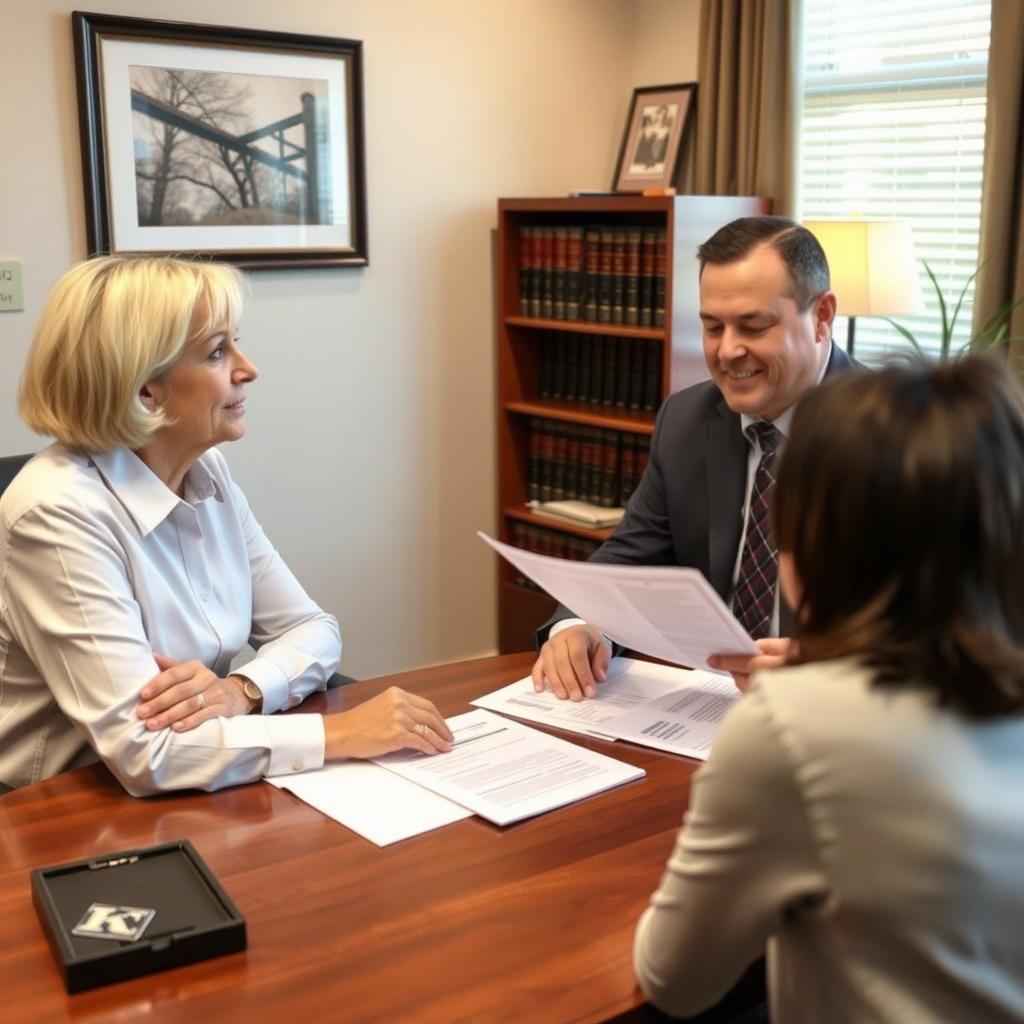
K-3 Spouse Visa Lawyer Suffolk
A K-3 spouse visa lawyer Suffolk helps a U.S. citizen bring their foreign spouse to the United States while a permanent residency petition is pending. The process involves filing an I-129F petition with USCIS and handling consular processing. Law Offices Of SRIS, P.C. —Advocacy Without Borders. provides focused legal support for Suffolk residents managing this complex immigration pathway. (Confirmed by SRIS, P.C.)
Statutory Definition and Legal Basis
The K-3 nonimmigrant visa is established under the Immigration and Nationality Act (INA) § 101(a)(15)(K). This provision allows the spouse of a U.S. citizen to enter the United States to await the approval of an immigrant visa petition. The K-3 visa is a direct response to processing delays for the I-130 Petition for Alien Relative. It serves as a temporary bridge for families. The legal framework is detailed in Title 8 of the Code of Federal Regulations (8 CFR). These regulations govern the petition and application process. A K-3 spouse visa lawyer Suffolk must understand both the statute and its implementing rules. The goal is lawful reunification while the permanent green card process continues.
INA § 101(a)(15)(K) — Nonimmigrant Classification — Permits entry to await immigrant visa availability.
The K-3 visa process starts with two concurrent filings.
You must first file Form I-130, Petition for Alien Relative, with U.S. Citizenship and Immigration Services (USCIS). This petition establishes the qualifying marital relationship. You then file Form I-129F, Petition for Alien Fiancé(e), for the K-3 visa. The I-129F relies on the pending I-130. Both petitions require substantial evidence of a bona fide marriage. This evidence includes marriage certificates, joint financial documents, and photographs. A marriage visa petition lawyer Suffolk gathers this evidence strategically. Proper filing avoids requests for evidence that cause delays.
Consular processing is the final mandatory stage.
USCIS approval of the I-129F sends the case to the National Visa Center (NVC). The NVC then forwards it to the U.S. Embassy or Consulate in the beneficiary’s home country. The foreign spouse must complete a medical examination and attend an interview. The consular officer determines if the marriage is genuine and the applicant is admissible. Denials can occur for fraud, criminal history, or health grounds. A spousal immigration lawyer Suffolk prepares clients thoroughly for this interview. Mock interviews and document reviews are standard practice.
State-specific considerations impact Virginia residents.
Virginia petitioners must prove domicile or intent to re-domicile in the United States. This is a requirement for the sponsoring U.S. citizen. Evidence can include Virginia driver’s licenses, lease agreements, or job offers. Suffolk residents may face scrutiny if they have lived abroad with their spouse. The financial sponsorship form (I-864) is also critical. The sponsor’s income must meet 125% of the federal poverty guidelines. A K-3 spouse visa lawyer Suffolk reviews asset and income documentation carefully. Co-sponsors can be used if the primary sponsor’s income is insufficient.
The Insider Procedural Edge in Suffolk
While immigration is federal, local legal strategy is essential. USCIS and the Department of State handle the petitions and interviews. However, Suffolk-specific factors influence case preparation and evidence. Our Suffolk Location provides direct access to clients for document collection and review. We understand the local courts and agencies that may hold relevant records. This includes the Suffolk Circuit Court clerk’s Location for marriage licenses. It also includes local financial institutions for joint account evidence. A marriage visa petition lawyer Suffolk uses local knowledge to build a stronger case.
Procedural facts and timelines are case-specific.
USCIS processing times for I-129F petitions vary by service center. Current estimates range from 10 to 15 months. The subsequent NVC and consular stages add several more months. The entire K-3 process can take 18-24 months or longer. Expedited processing is rarely granted and requires extreme humanitarian reasons. A spousal immigration lawyer Suffolk manages client expectations with these timelines. Regular status updates and proactive communication are part of our service. We monitor case progress through the online USCIS and Department of State portals.
Filing fees are set by federal regulation.
The current filing fee for Form I-129F is $675. The fee for Form I-130 is $625. These fees are paid directly to the U.S. Department of Homeland Security. Additional costs include medical examination fees and visa application fees. These fees are paid to the designated panel physician and the U.S. Embassy. Translation and document authentication may incur further costs. A K-3 spouse visa lawyer Suffolk provides a clear cost breakdown during the initial consultation. All government fees are subject to change without notice.
Penalties, Risks, and Defense Strategies
The primary risk in a K-3 visa case is denial, not criminal penalty. Denial separates families and wastes significant time and money. A denial can trigger a multi-year bar to re-entry for the foreign spouse. It can also lead to permanent ineligibility for any U.S. visa. Common grounds for denial include insufficient proof of a bona fide marriage. Past immigration violations or criminal history are also major factors. A marriage visa petition lawyer Suffolk develops strategies to overcome these hurdles. We address potential issues before they are raised by an officer.
| Risk / Issue | Consequence | Notes |
|---|---|---|
| Visa Denial (Fraud) | Permanent ineligibility | Material misrepresentation on any form. |
| Visa Denial (Public Charge) | Rejection of I-864 | Sponsor income below guidelines. |
| Visa Denial (Criminal) | Inadmissibility | Certain crimes make spouse ineligible. |
| Administrative Processing | Indefinite delay | Additional security or background checks. |
| Abandonment of Petition | Case closure | Failure to respond to USCIS requests. |
[Insider Insight] Consular officers at high-fraud posts scrutinize K-3 applications heavily. They look for red flags like large age gaps or limited cohabitation. Suffolk petitioners who married abroad must provide extensive relationship evidence. We advise clients to document continuous communication and financial co-mingling. Social media activity is also reviewed by consular officials. A spousal immigration lawyer Suffolk prepares a detailed relationship affidavit and chronology. This narrative connects all supporting evidence into a coherent story.
A strong defense starts with perfect paperwork.
Errors on forms I-130 and I-129F are a leading cause of delays. Inconsistent dates or addresses raise suspicion of fraud. We carefully prepare and review every form before submission. Our team cross-references all biographical information across documents. We also ensure all required supporting documents are included in the correct format. A K-3 spouse visa lawyer Suffolk treats the initial filing as the most critical step. A well-prepared petition can avoid months of requests for evidence.
Overcoming criminal inadmissibility requires a waiver.
Certain criminal convictions make a foreign spouse inadmissible to the United States. This includes crimes involving moral turpitude and drug offenses. In such cases, a waiver of inadmissibility (Form I-601) may be possible. The applicant must prove extreme hardship to the U.S. citizen spouse. This is a high legal standard requiring detailed medical, financial, and psychological evidence. A marriage visa petition lawyer Suffolk with experience in waivers is crucial. We work with experienced attorneys to build a compelling hardship case for the waiver.
Why Hire SRIS, P.C. for Your Suffolk K-3 Visa Case
Our lead immigration attorney has over a decade of focused experience in family-based immigration. This includes hundreds of successfully filed K-1 and K-3 visa petitions. We understand the nuances of the Suffolk jurisdiction and its residents. Our team provides direct attorney access throughout your case. We do not delegate critical client communication to paralegals. You will work with a dedicated K-3 spouse visa lawyer Suffolk from start to finish. Our goal is efficient family reunification with minimal stress.
Attorney Profile: Our senior immigration counsel has represented Suffolk clients in over 200 family visa matters. This attorney is a member of the American Immigration Lawyers Association (AILA). They have a proven track record of handling complex consular processing issues. Their practice is dedicated solely to U.S. immigration law and procedure.
SRIS, P.C. has a dedicated Suffolk Location for client convenience. We offer in-person consultations to review your specific situation. Our firm differentiator is hands-on, detail-oriented case management. We develop a custom strategy for every K-3 visa case. This strategy accounts for your unique marital history and any potential complications. We also provide strong support for the adjustment of status process after arrival. This is the final step to convert the K-3 status to lawful permanent residence.
Localized Suffolk K-3 Visa FAQs
How long does the K-3 visa process take for Suffolk applicants?
The total process typically takes 18 to 24 months. This includes USCIS petition review and consular interview abroad. Suffolk-specific evidence gathering does not significantly alter the federal timeline.
Can my spouse work in the U.S. on a K-3 visa?
Yes, but only after applying for and receiving an Employment Authorization Document (EAD). Your K-3 spouse visa lawyer Suffolk files Form I-765 after the spouse enters the United States. Processing for the EAD can take several months.
What is the difference between a K-3 visa and a CR-1 visa?
The K-3 is a nonimmigrant visa for waiting abroad. The CR-1 is an immigrant visa granting permanent residence upon entry. The CR-1 often has a longer initial wait but provides immediate green card status.
What happens if our I-130 is approved before the K-3 visa?
The NVC will convert the K-3 case to an immigrant visa (CR-1) process. Your spousal immigration lawyer Suffolk will guide you through this transition. It can sometimes result in a faster overall reunion.
Do we need an interview in Suffolk for the K-3 visa?
No. The U.S. citizen petitioner does not attend an interview in Suffolk. The foreign spouse’s interview is held at the U.S. Embassy or Consulate in their home country. The petitioner may provide additional evidence if requested.
Proximity, Contact, and Final Disclaimer
Our Suffolk Location is strategically positioned to serve clients throughout the city and surrounding areas. We are accessible from neighborhoods like Harbour View, North Suffolk, and Driver. Consultation by appointment. Call 888-437-7747. 24/7.
SRIS, P.C.
Suffolk, Virginia
Phone: 888-437-7747
For related legal support, consider our Virginia family law attorneys for matters like divorce that may intersect with immigration. Our experienced legal team handles complex cases. If you face other immigration challenges, our criminal defense representation may be relevant for inadmissibility issues. We also assist with DUI defense in Virginia which can impact good moral character determinations.
Past results do not predict future outcomes.