
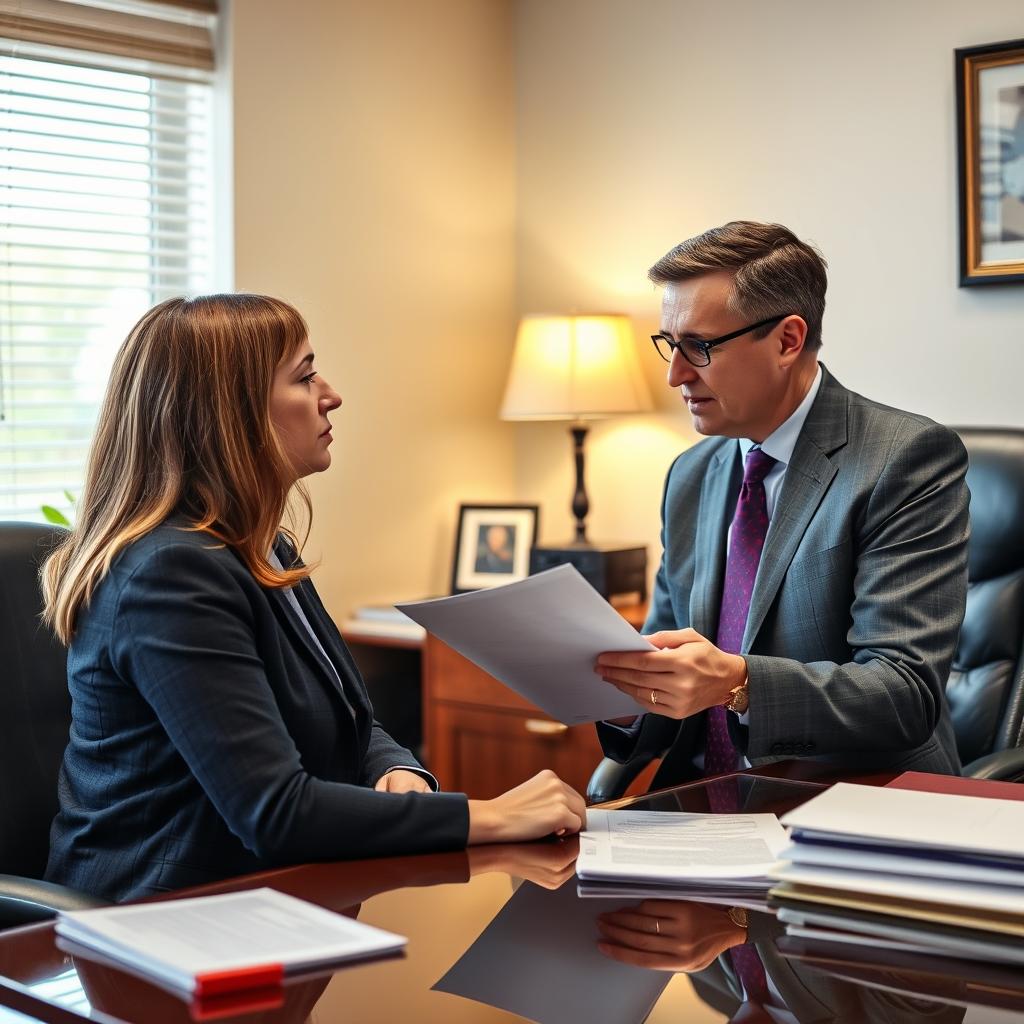
K-3 Spouse Visa Lawyer Frederick County, VA
Bringing a spouse to the United States is a deeply personal undertaking, and for residents of Frederick County, Virginia, the K‑3 spouse visa can provide an important bridge while an immigrant petition is pending. At Law Offices Of SRIS, P.C., Mr. Sris and the firm’s Of Counsel attorneys guide clients through the K‑3 process, from initial eligibility evaluation through consular processing. Immigration cases for Frederick County families are processed through the USCIS Washington District Office and the Arlington Immigration Court, and our firm’s multi‑state practice helps address the federal laws and administrative requirements involved. To request a consultation, call (888) 437‑7747.
What a K‑3 Spouse Visa Means in Frederick County, Virginia
The K‑3 visa was created to allow the spouse of a U.S. Citizen to enter the country while the immigrant visa petition (Form I‑130) is awaiting approval. Although USCIS has since streamlined processing so that many I‑130 petitions are adjudicated concurrently with the K‑3 application, the K‑3 remains a useful option when consular processing delays could otherwise keep spouses separated. For Frederick County residents, all official immigration filings for a K‑3 spouse are handled at the federal level—there is no local Virginia court that processes the visa application. However, understanding where the related interviews, biometrics appointments, and potential hearings take place is essential. Affirmative applications are typically processed at the USCIS Washington District Office at 2675 Prosperity Avenue in Fairfax, while removal proceedings, should they become necessary, are heard before the Arlington Immigration Court. Because Frederick County is situated in the northern Shenandoah Valley along the I‑81 corridor, our Shenandoah location is positioned to meet with clients directly while coordinating federal filings in Fairfax and Arlington.
Mr. Sris and the firm’s Of Counsel attorneys have assisted Frederick County families with family‑based petitions, adjustment of status, consular processing, deportation defense, asylum, cancellation of removal, and VAWA petitions for survivors of domestic violence. The firm draws on documented case results across all practice areas—results that vary, and prior outcomes do not guarantee a similar result. Consultations are by appointment, and the firm can be reached at (888) 437‑7747.
How Mr. Sris and the Firm’s Of Counsel Attorneys Handle K‑3 Spouse Visa Cases
Navigating a K‑3 spouse visa involves overlapping requirements under the Immigration and Nationality Act, including the simultaneous filing of Form I‑129F (Petition for Alien Fiancé(e)) and Form I‑130 (Petition for Alien Relative) with USCIS. Mr. Sris and the firm’s Of Counsel attorneys work with clients to gather evidence of the bona fide marriage, prepare the supporting documentation required by the National Visa Center, and coordinate communication with the U.S. Embassy or consulate abroad. Because the K‑3 category is a nonimmigrant visa that may later transition to permanent residence through adjustment of status, the process often spans multiple federal agencies and requires careful attention to USCIS policy changes. Our firm’s approach is to keep the petitioner and the foreign‑national spouse informed at each stage, addressing any issues—such as requests for evidence or visa‑eligibility concerns—as they arise.
Each matter is unique, and the firm does not guarantee a particular timeline or outcome. What the firm can provide is experienced counsel that has been handling immigration matters since 1997. Mr. Sris, a former prosecutor, focuses his practice on the legal strategy and preparation, while the firm’s Of Counsel attorneys contribute their own extensive background in immigration and related fields. Together, they work to present the strongest possible petition and to resolve procedural obstacles without unnecessary delay.
About Mr. Sris and the Firm’s Of Counsel Attorneys
Mr. Sris is the Owner and Founder of Law Offices Of SRIS, P.C., which has been serving clients across Virginia, Maryland, the District of Columbia, New Jersey, and New York since 1997. A former prosecutor, Mr. Sris testified before the Virginia House Courts of Justice Committee in support of 2019 HB 635 (chief patron Del. David Bulova). His admissions span the five jurisdictions where the firm practices, and he regularly appears in immigration matters that require coordination with federal authorities. The firm’s Of Counsel attorneys bring additional breadth, including backgrounds in family law, criminal defense, court procedure, and visa processing, which enriches the firm’s ability to handle K‑3 cases that may intersect with other legal concerns. Mr. Sris and the firm’s Of Counsel attorneys bring extensive combined legal experience. Results may vary. Reach Law Offices Of SRIS, P.C. at (888) 437‑7747 to arrange a consultation.
Frequently Asked Questions
What is a K‑3 spouse visa?
A K‑3 spouse visa is a nonimmigrant visa that lets the spouse of a U.S. Citizen enter the United States while waiting for the approval of an immigrant visa petition. The K‑3 classification was created by the Legal Immigration Family Equity (LIFE) Act of 2000 to reduce the separation period for married couples. The process requires filing both Form I‑130 and Form I‑129F with USCIS and, if approved, completing consular processing abroad before the visa is issued. Because USCIS may administratively close the K‑3 petition when both forms are approved together, the K‑3 is often viewed as a backup mechanism, but it remains available in certain situations. An experienced immigration attorney can help determine whether the K‑3 is appropriate for your specific circumstances.
How does a K‑3 visa differ from a K‑1 fiancé visa?
The K‑3 visa is for spouses who are already married to a U.S. Citizen, while the K‑1 visa is for a foreign‑national fiancé(e) who intends to marry the U.S. Citizen petitioner within 90 days of entering the United States. Under a K‑3 visa, the couple is already married, so the goal is eventual adjustment to lawful permanent resident status after entry. A K‑1 fiancé(e) enters the U.S. Specifically to marry and then must file for permanent residence based on the marriage. Each pathway has different eligibility requirements and procedures, and factors such as where the couple married and whether the foreign spouse is already in the U.S. Affect which visa is most suitable. For guidance on which option fits your situation, contact our firm at (888) 437‑7747.
Who is eligible for a K‑3 visa?
To be eligible for a K‑3 visa, the applicant must be married to a U.S. Citizen, and the U.S. Citizen spouse must have filed Form I‑130 on the applicant’s behalf and subsequently filed Form I‑129F. Both the U.S. Citizen spouse and the foreign‑national spouse must remain married throughout the process. The foreign‑national spouse must also be living outside the United States, as the K‑3 visa cannot be sought from within the country unless the individual is otherwise eligible for adjustment of status. Additionally, the applicant must be admissible under the provisions of the INA, and certain criminal or immigration‑history factors can affect eligibility. An evaluation of the specific facts of the marriage and each spouse’s background is necessary before filing.
Do I need a lawyer for a K‑3 visa application?
You are not legally required to hire a lawyer to file a K‑3 visa application, but the process is complex and involves multiple government agencies, making legal guidance beneficial. Errors in the petition, insufficient evidence of the marriage, or failure to respond correctly to a request for evidence can lead to significant delays or denials. An immigration attorney can prepare the applications, advise on documentation, coordinate with the National Visa Center and the consulate, and help resolve any complications that arise. For Frederick County residents, the firm’s Shenandoah location is accessible for consultations, and we can be reached at (888) 437‑7747 to discuss representation.
How does the K‑3 visa process work for Frederick County residents?
Frederick County residents file the K‑3 petition with USCIS, which processes it at the Washington District Office in Fairfax; after USCIS approval, the case moves to the National Visa Center and then to a U.S. Embassy or consulate abroad for the visa interview. Because Frederick County is in the Northern Shenandoah Valley, clients often travel on I‑81 to reach appointments at the USCIS field office in Fairfax or to attend consultations at our Shenandoah location. If the visa is denied or if removal proceedings become necessary, the Arlington Immigration Court has jurisdiction. The firm’s familiarity with the regional USCIS office and the Arlington immigration docket allows us to prepare clients for what to expect at each stage. Timelines vary by case, and adjustments to USCIS policy can affect processing; we work to keep clients informed throughout.
What should I bring to a consultation about a K‑3 visa?
Bring your marriage certificate, identity documents for both spouses, evidence of the bona fide marriage, and any correspondence you have received from USCIS or the consulate. The attorney will also need information about prior marriages, any criminal or immigration history, and the U.S. Citizen spouse’s proof of citizenship. Financial documents that demonstrate the ability to support the foreign spouse may also be helpful. At Law Offices Of SRIS, P.C., we schedule consultations by appointment and can provide a detailed checklist before the meeting. Call (888) 437‑7747 to arrange a consultation.
For further reading, visit the following official sources:
U.S. Citizenship and Immigration Services
Executive Office for Immigration Review (EOIR)
8 U.S.C. § 1101 (Immigration and Nationality Act)
Our firm also provides immigration representation in the following Virginia localities:
Clarke County Immigration Lawyer
Shenandoah County Immigration Lawyer
Warren County Immigration Lawyer
Rockingham County Immigration Lawyer
Augusta County Immigration Lawyer
Attorney advertising. Prior results do not guarantee a similar outcome. Results may vary.
Case results depend on a variety of factors unique to each case.