
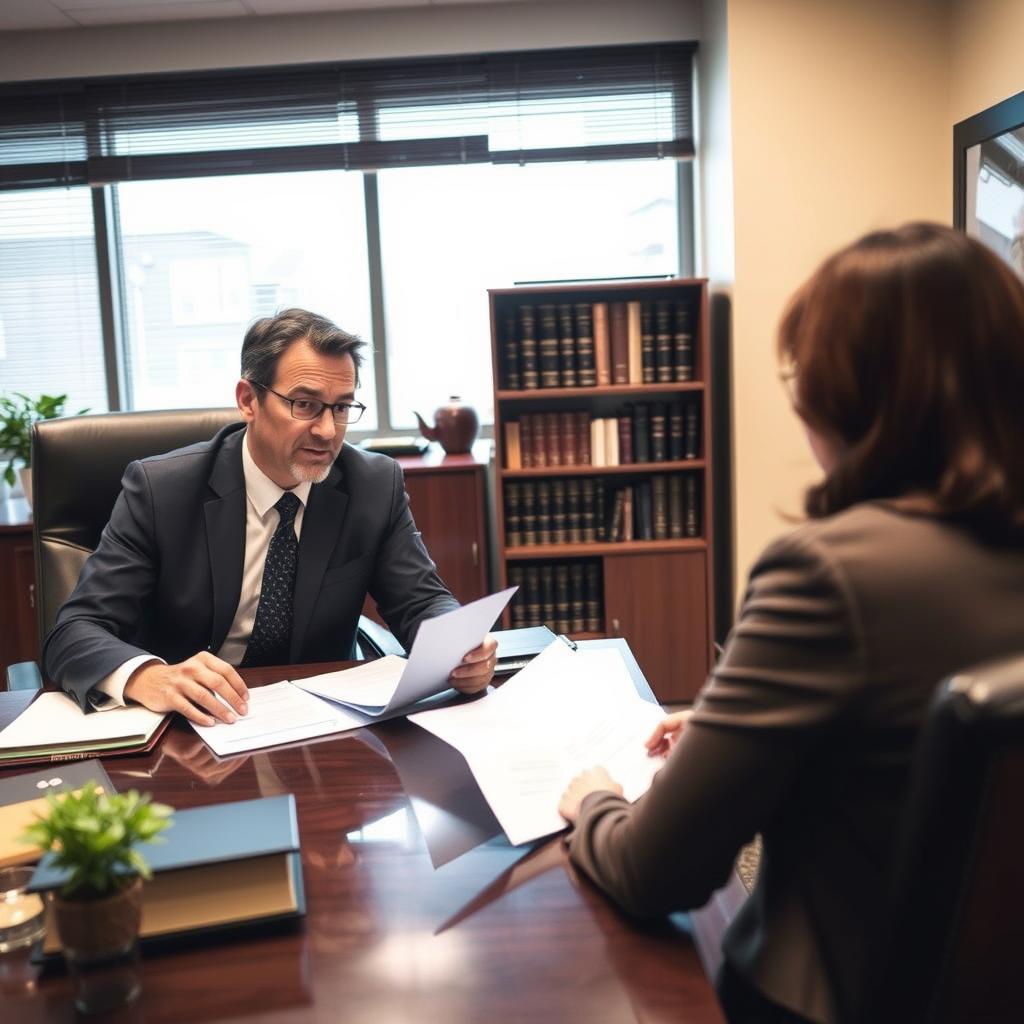
Immigration Waiver Lawyer Alexandria, VA
When U.S. Citizenship and Immigration Services denies your family-based green card or immigrant visa application because of a ground of inadmissibility—such as a prior immigration violation, a misrepresentation, or a criminal record—you may feel that your path to lawful status is blocked. An immigration waiver can lift that bar, but only with a precise legal strategy and thorough supporting evidence. Law Offices Of SRIS, P.C. represents Alexandria residents who need to overcome inadmissibility findings before USCIS, the immigration court, or the Board of Immigration Appeals. Reach our firm at (888) 437-7747 to discuss your waiver options. Law Offices Of SRIS, P.C. – Advocacy Without Borders.
How Our Firm Approaches Immigration Waiver Cases
Securing an immigration waiver requires more than filling out a form. The legal team identifies the specific inadmissibility ground, determines which waiver type applies under the Immigration and Nationality Act, and builds a record that demonstrates the full impact a denial would have on a qualifying U.S. Citizen or lawful permanent resident family member. Whether the case calls for an I‑601 application, a provisional unlawful presence waiver on Form I‑601A, or a waiver of a prior removal order, the focus is on presenting a compelling picture of extreme hardship.
We gather detailed personal, financial, medical, and psychological evidence to show that the qualifying relative would suffer far more than the ordinary consequences of separation or relocation. The firm’s Of Counsel attorneys review every filing for consistency and completeness before it goes to the agency. Throughout the process, we keep clients informed and ready for any request for additional evidence from USCIS.
Many waiver applicants come to us after receiving a denial or a request for evidence that they could not fully address on their own. In those situations, counsel reviews what was submitted previously, identifies gaps in the evidentiary record, and works with the applicant to supplement the file with the missing documentation. This may include obtaining updated medical assessments from treating physicians, securing declarations from employers or community members who can attest to the qualifying relative’s circumstances, and compiling country-condition evidence from recognized international sources that corroborates the hardship claim. The firm also coordinates with family members to ensure that each affidavit addresses the specific factors USCIS adjudicators consider when evaluating extreme hardship, such as the qualifying relative’s ties to the United States, the conditions in the country of relocation, and the financial and emotional impact of separation.
For clients who are outside the United States and pursuing a waiver through consular processing, counsel provides guidance on the timing of the application, the documents needed for the consular interview, and the steps to take if the consular officer requests additional information at the interview stage. For clients already inside the United States, the firm evaluates whether the provisional waiver process under I‑601A is available before the applicant departs for the consular interview abroad, which can reduce the time a family is separated during the processing period. Each approach is tailored to the specific facts of the case and the applicable legal framework.
What to Expect When Applying for an Immigration Waiver
After an initial consultation, counsel will evaluate the grounds of inadmissibility and confirm which waiver is available. The applicant must then gather supporting documents—affidavits from family members, expert evaluations, country-condition reports, and financial records—that substantiate the extreme-hardship claim. Once the application package is assembled, it is filed with the appropriate USCIS service center or lodged with the immigration court if the individual is in removal proceedings.
Processing times vary based on the USCIS office handling the file and the complexity of the case. While some families receive a decision in a matter of months, contested facts or an agency request for further evidence can extend the timeline. Our firm tracks each case closely and responds promptly to any USCIS inquiry. If the waiver is approved, the underlying green card or visa application can move forward; if it is denied, we analyze the decision and discuss whether an appeal or a renewed application makes sense under the circumstances.
Applicants should also be aware that certain waiver categories carry additional procedural steps. For instance, a provisional unlawful presence waiver under I‑601A requires the applicant to demonstrate that denial of the waiver would result in extreme hardship to a qualifying U.S. Citizen or lawful permanent resident spouse or parent. The applicant must also establish that they are otherwise admissible except for the unlawful presence ground. This means gathering documentation that addresses any other potential inadmissibility issues before the provisional waiver is filed, because an approval of an I‑601A waiver does not cure other grounds of inadmissibility that may arise at the consular interview. Counsel helps clients identify these issues early and develop a comprehensive strategy that accounts for all relevant factors.
Consequences When a Waiver Is Not Granted
An unwaived inadmissibility finding usually prevents an applicant from adjusting status or obtaining an immigrant visa. For individuals already in removal proceedings, the immigration judge may order removal from the United States if no other avenue of relief exists. Even outside the court context, a person with a prior removal order or a period of unlawful presence who lacks a waiver may trigger permanent bars upon departing the country. Acting early to pursue a waiver—before a final removal order or a consular interview—is often critical to preserving options.
The statutory framework governing inadmissibility includes several distinct bars that can be triggered by different circumstances. Unlawful presence in the United States for more than 180 days but less than one year, followed by departure, triggers a three-year bar to reentry under INA § 212(a)(9)(B)(i)(I). Unlawful presence of one year or more, followed by departure, triggers a ten-year bar under INA § 212(a)(9)(B)(i)(II). Individuals who have been previously removed or who departed voluntarily while a removal order was outstanding may face an additional bar under INA § 212(a)(9)(A) that can extend to five, ten, or twenty years, or be permanent in certain circumstances. A separate permanent bar under INA § 212(a)(9)(C) applies to individuals who enter or attempt to reenter the United States without admission after having accrued more than one year of unlawful presence or after a prior removal order. Understanding which bar applies and which waiver corresponds to it is a central part of the legal analysis our firm undertakes at the outset of every waiver case.
Experienced Immigration Attorneys Serving Alexandria
Mr. Sris, Owner and Founder of Law Offices Of SRIS, P.C., has practiced law since 1997 and is admitted in Virginia, Maryland, the District of Columbia, New Jersey, and New York. A former prosecutor, he understands how government agencies evaluate evidence and build cases—experience that informs the detailed work a waiver application demands. Mr. Sris testified before the Virginia House Courts of Justice Committee in support of 2019 HB 635 (chief patron Del. David Bulova).
The firm’s Of Counsel attorneys bring substantial additional experience in immigration and related areas of law. Together, the team prepares thorough waiver packages that address each element required by statute and regulation. The firm has documented case results across multiple practice areas. Results may vary.
Frequently Asked Questions
What is an immigration waiver and when do I need one?
An immigration waiver is a formal request to U.S. Immigration authorities to excuse a specific ground of inadmissibility so that you may obtain a visa, adjust status to permanent residence, or avoid removal. You need a waiver when USCIS or an immigration judge determines you are ineligible for the benefit you seek because of a prior immigration violation, a criminal conviction, a health-related ground, or a finding of fraud or misrepresentation. Waivers are discretionary; the decision rests on whether a qualifying relative would suffer extreme hardship if you were not admitted or were removed.
What is extreme hardship and how do I show it?
Extreme hardship means hardship that is substantially different from or beyond the normal emotional and financial strain that family separation typically causes. You show it through evidence such as medical records of a family member who depends on your care, psychological evaluations, financial records demonstrating an inability to relocate to your home country, and country-condition reports detailing dangers or lack of adequate services there. An immigration lawyer helps you compile and present this evidence persuasively.
Can I apply for a waiver if I am in removal proceedings?
Yes, many waivers can be requested before the immigration judge during removal proceedings. The judge may continue the case while USCIS adjudicates the waiver application, or you may be eligible to file the waiver directly with the court. Having an attorney present the waiver arguments in court can influence whether the judge grants a continuance, administratively closes the case, or ultimately approves the relief.
How long does the immigration waiver process take?
Processing times for immigration waivers vary widely depending on the USCIS office, the specific waiver type, and whether additional evidence is requested. Some cases are resolved in a matter of months, while others take longer, especially when they involve complex factual disputes or are reviewed alongside removal proceedings. An appropriate approach is to file a complete package initially, with all supporting evidence, to reduce the likelihood of a request for further evidence.
Do I need a lawyer to file an immigration waiver?
You are not required to hire a lawyer, but an experienced immigration attorney can substantially improve your chances of approval. Waiver applications involve detailed legal arguments and extensive documentation. An attorney can identify the correct waiver, gather and present the strongest evidence, and, if necessary, represent you at an immigration court hearing. For guidance on your specific situation, contact Law Offices Of SRIS, P.C. at (888) 437-7747.
Request a Consultation
To discuss your immigration waiver case and learn whether you may qualify for relief, reach Law Offices Of SRIS, P.C. at (888) 437-7747. Our firm serves Alexandria residents from our Arlington location at 1655 Fort Myer Dr, Suite 700, Room 719, Arlington, VA 22209. Consultations are by appointment only.
Attorney advertising. Prior results do not guarantee a similar outcome.
Results may vary.
Case results depend on a variety of factors unique to each case.