
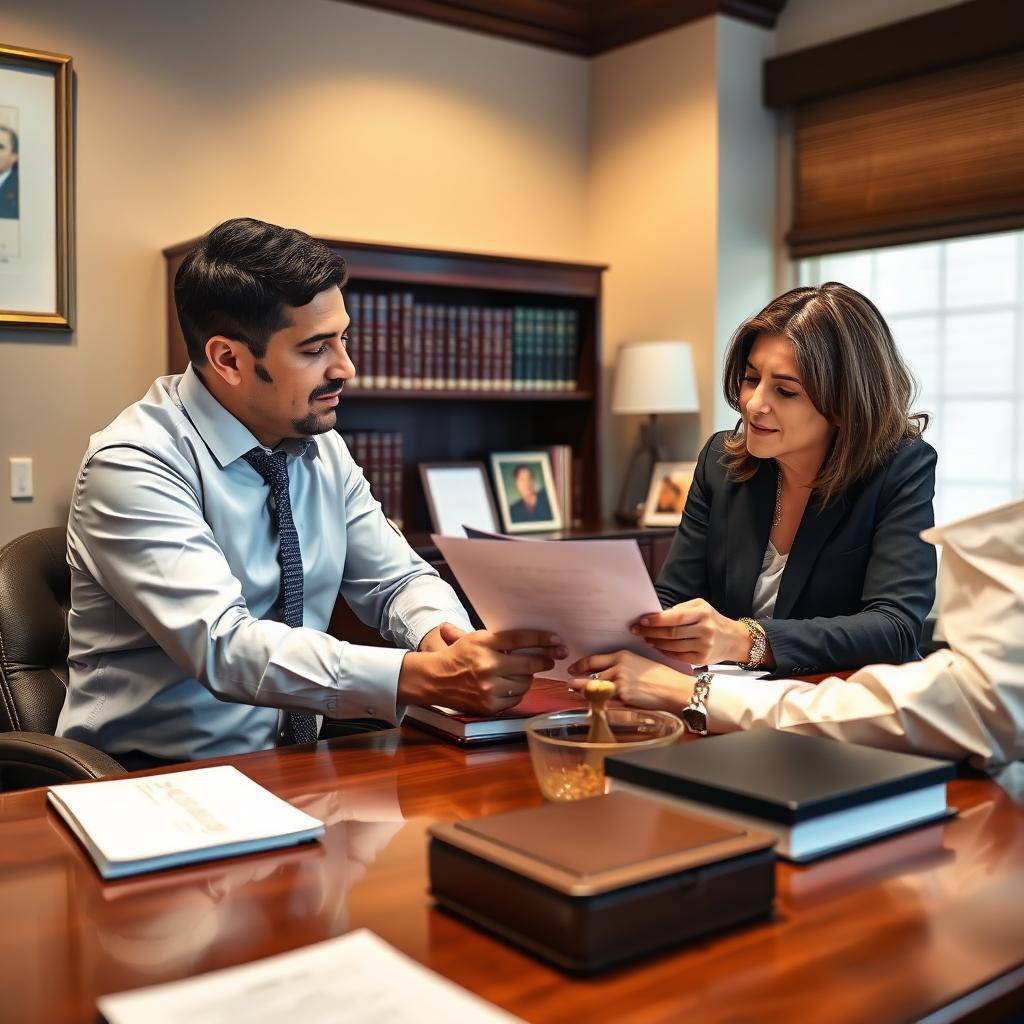
Immediate Relative Petition Lawyer Culpeper County
An Immediate Relative Petition Lawyer Culpeper County files Form I-130 to establish a qualifying family relationship for U.S. immigration. Law Offices Of SRIS, P.C. —Advocacy Without Borders. handles these petitions for spouses, parents, and unmarried children under 21. The process requires precise documentation to prove the bona fide nature of the relationship. (Confirmed by SRIS, P.C.)
Statutory Definition of an Immediate Relative Petition
The legal basis for an immediate relative petition is found in the Immigration and Nationality Act (INA). This is not a Virginia state code but federal law. The INA defines “immediate relatives” as the spouses, parents, and unmarried children under 21 years of age of U.S. citizens. There is no annual numerical limit on visas for these categories. This allows for faster processing compared to family preference categories. The petition, Form I-130, is the foundational document to initiate this process. It must be filed with U.S. Citizenship and Immigration Services (USCIS). Approval proves the qualifying relationship exists. It is the first major step toward a green card for the foreign national beneficiary.
Primary Statute: Immigration and Nationality Act (INA) § 201(b)(2)(A)(i) – Defines “Immediate Relatives” – No numerical visa limit.
Success hinges on submitting irrefutable evidence with the initial filing. USCIS officers scrutinize petitions for marital fraud or misrepresented parent-child relationships. An Immediate Relative Petition Lawyer Culpeper County gathers the correct documentary proof. This includes marriage certificates, birth certificates, and proof of U.S. citizen status. Financial co-mingling evidence is critical for spousal petitions. The lawyer ensures every form is completed without error. Mistakes can cause requests for evidence or denials. This delays family unification for months or years.
What evidence is required for a spousal petition in Culpeper County?
Evidence for a spousal petition must prove a legitimate marital union. You need a certified marriage certificate from the jurisdiction where the marriage occurred. Joint financial documents are equally important. Submit joint bank account statements, joint tax returns, and shared lease or mortgage agreements. Provide photographs of the couple together over time. Affidavits from friends and family can support the petition’s validity. An immigration lawyer organizes this evidence into a compelling package for USCIS.
How does a parent petition differ from a spousal petition?
A parent petition requires proof of the petitioner’s birth and U.S. citizenship. The U.S. citizen child must be at least 21 years old to petition for a parent. The key document is the petitioner’s birth certificate showing the parent’s name. The parent’s birth certificate and passport are also necessary. The relationship is typically easier to document biologically than a marital relationship. There is less focus on ongoing co-mingling of finances and lives.
What happens if the I-130 petition is denied?
A denied I-130 petition can often be appealed or refiled. The denial notice will state the specific reasons for the decision. Common reasons include insufficient evidence or suspected fraud. You may file a Motion to Reopen or a Motion to Reconsider with USCIS. You must address the grounds for denial with new evidence or legal argument. Alternatively, you can refile the entire petition with corrected information. An attorney analyzes the denial to determine the strongest corrective action. Learn more about Virginia legal services.
The Insider Procedural Edge in Culpeper County
While USCIS handles the petition, local evidence gathering in Culpeper County is critical. Culpeper County Circuit Court is a key resource for vital records. The address is 135 West Cameron Street, Culpeper, VA 22701. This court houses the clerk’s Location where marriage licenses and decrees are filed. You may need certified copies of marriage certificates or divorce decrees from this court. These documents are primary evidence for an I-130 petition. Having a lawyer familiar with this local clerk’s Location simplifies evidence collection.
Procedural specifics for Culpeper County are reviewed during a Consultation by appointment. The local USCIS field Location for interviews is often in Fairfax or Norfolk. However, the petition is mailed to a USCIS lockbox facility. The current filing fee for Form I-130 is $625. Biometrics appointments may be scheduled at an Application Support Center. An Immediate Relative Petition Lawyer Culpeper County manages this multi-step process. They track critical deadlines and prepare clients for potential interviews. Local knowledge helps anticipate how Virginia-specific documents are viewed by adjudicators.
What is the typical processing timeline for an I-130?
Processing times for immediate relative petitions vary by USCIS service center. Current processing can range from 10 to 18 months for a decision. Premium processing is not available for family-based I-130 petitions. After approval, the case moves to the National Visa Center for consular processing. The total timeline to visa issuance often exceeds 18-24 months. An attorney monitors your case and follows up on any unreasonable delays.
Where do I file the I-130 petition from Culpeper County?
You file the I-130 petition by mail to a USCIS lockbox. The specific lockbox address depends on your petitioner’s state of residence and the filing method. For Virginia residents, it is typically the USCIS Phoenix or Dallas Lockbox. You do not file directly with the local Culpeper County court. The court is only for obtaining certified copies of local vital records needed as evidence.
Penalties, Challenges, and Defense Strategies
The most common risk is a Request for Evidence (RFE) or a denial of the petition. An RFE delays the process by 60-90 days minimum. A denial requires a costly and time-consuming appeal or refiling. In severe cases, a finding of fraud can lead to permanent immigration bars. A lawyer’s strategy is to build an unassailable case from the start to avoid these outcomes. Learn more about criminal defense representation.
| Potential Challenge | Consequence | Notes |
|---|---|---|
| Request for Evidence (RFE) | 60-90+ day delay | USCIS needs more proof of relationship. |
| Petition Denial | Loss of filing fee, need to appeal/refile | Stops the immigration process entirely. |
| Finding of Fraud or Misrepresentation | Possible permanent immigration bar | Under INA § 212(a)(6)(C)(i). |
| Consular Interview Refusal | Visa denied, case sent back to USCIS | Occurs after petition approval at U.S. embassy abroad. |
[Insider Insight] USCIS adjudicators are trained to identify fraudulent marriages. Petitions from areas with known fraud patterns may receive extra scrutiny. A petition from Culpeper County with thin evidence will be questioned. Presenting a well-documented, chronological story of the relationship is the best defense. Lawyers pre-empt RFEs by submitting overwhelming evidence initially.
Can a prior criminal record affect the petition?
Certain criminal records can severely impact an immigration petition. A petitioner’s criminal history may affect their ability to act as a financial sponsor. The beneficiary’s criminal record can make them inadmissible to the United States. Crimes involving moral turpitude or drug offenses are major red flags. Disclosure and legal analysis of any record is essential before filing. An attorney can advise on potential waivers, like Form I-601.
What if my income is below the poverty guidelines?
Income below the Federal Poverty Guidelines requires a joint sponsor. The petitioner must still file an Affidavit of Support (Form I-864). A joint sponsor who meets the income requirements must also file an I-864. The joint sponsor assumes equal legal responsibility for supporting the immigrant. A lawyer helps identify a suitable joint sponsor and prepares their documentation.
Why Hire SRIS, P.C. for Your Immediate Relative Petition
Our lead immigration attorney has over 15 years focused on family-based petitions. This specific experience translates to efficient, accurate petition preparation. We understand the exact evidence thresholds required by different USCIS officers.
Primary Attorney: Our managing immigration attorney has handled hundreds of I-130 petitions. This includes complex cases involving prior denials, criminal records, and relationship doubts. The attorney’s practice is dedicated to handling USCIS procedures and building strong evidentiary records. Learn more about DUI defense services.
SRIS, P.C. provides Advocacy Without Borders. from our Culpeper County Location. We have secured approvals for immediate relative petitions for clients throughout Virginia. Our approach is direct and procedural. We gather documents, complete forms, and present your case with clarity. We anticipate problems and address them before USCIS raises them. You work directly with an attorney, not a paralegal, on your case. Our goal is a clean approval without requests for evidence.
Localized FAQs for Culpeper County Families
What is the first step to bring my spouse to Culpeper County?
The first step is filing Form I-130, Petition for Alien Relative, with USCIS. The U.S. citizen spouse is the petitioner. This establishes the qualifying marital relationship for immigration purposes.
How long does it take to get a green card through a parent?
After I-130 approval, consular processing takes 12-18 months. There is no visa wait for immediate relatives. The total process often takes 2+ years from initial filing to green card receipt.
Can I adjust status in the U.S. if my spouse is here?
If the spouse entered the U.S. legally, you may file for adjustment of status concurrently. This involves Forms I-130, I-485, I-765, and I-131. An attorney determines eligibility based on entry and status history.
What if I cannot find an original birth certificate?
Secondary evidence like baptismal records or school documents may be used. You must also obtain a letter from the vital records Location stating the record is unavailable. A lawyer guides you through this alternative evidence process. Learn more about our experienced legal team.
Do we need an interview for the I-130 petition?
USCIS rarely interviews the petitioner for an I-130. Interviews are common for the beneficiary during the consular or adjustment of status phase. The petition stage is primarily a documentary review.
Proximity, Contact, and Critical Disclaimer
Our Culpeper County Location serves clients throughout the region. We are accessible for consultations to discuss your immediate relative petition. Procedural specifics for your case are reviewed during a Consultation by appointment. Call our dedicated immigration line 24/7 to schedule. We provide clear guidance on the I-130 process and evidence requirements. Our team is prepared to handle your family immigration matter from start to finish.
Consultation by appointment. Call 24/7.
Law Offices Of SRIS, P.C.
Advocacy Without Borders.
Phone: [PHONE NUMBER FROM GMB]
Past results do not predict future outcomes.