
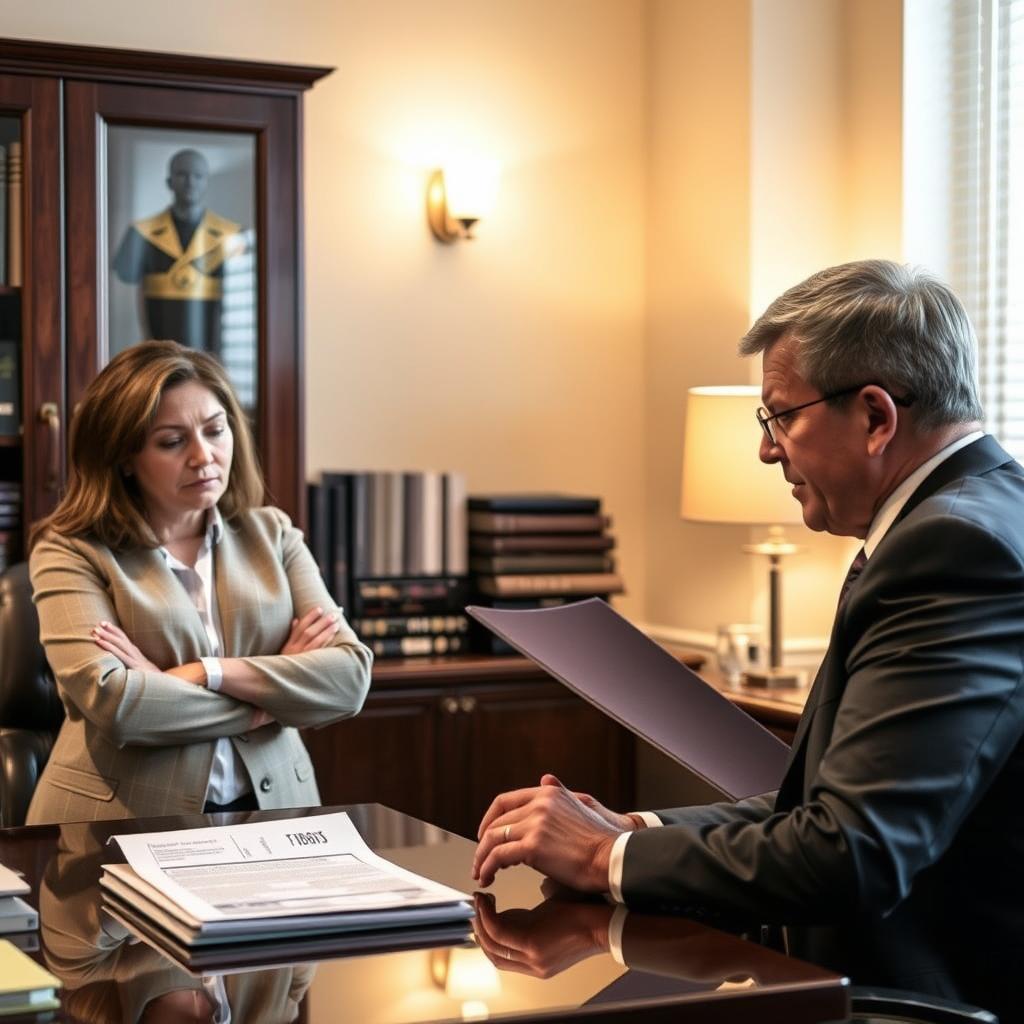
I-601 Waiver Lawyer Foggy Bottom, DC
You live in Foggy Bottom, a few blocks from the George Washington University campus or perhaps near the State Department, and you have built a life here. Your spouse is a U.S. Citizen, your children go to school in the District, and your career is rooted in this community. Then a visa interview, an adjustment-of-status application, or a notice from USCIS brings an unexpected finding: a ground of inadmissibility bars you from the immigration benefit you applied for. An overstay from years ago, a misrepresentation on a prior application, or a criminal disposition you thought was minor now threatens your ability to remain with your family. For residents of Foggy Bottom and the broader Washington, D.C. Area, the I-601 waiver offers a path to overcome certain grounds of inadmissibility when a qualifying relative would suffer extreme hardship. Law Offices Of SRIS, P.C. assists clients with I-601 waiver applications filed with USCIS and in immigration court proceedings. Reach us at (888) 437-7747 to schedule a consultation. Law Offices Of SRIS, P.C. – Advocacy Without Borders.
What the I-601 Waiver Means for D.C. Residents
The I-601 waiver, governed by 8 U.S.C. § 1182(i), permits certain applicants to ask the government to forgive specific grounds of inadmissibility. It is not a standalone application; it accompanies a green card application, a nonimmigrant visa application, or another underlying immigration benefit. The central requirement is demonstrating that a qualifying relative — a U.S. Citizen or lawful permanent resident spouse or parent — would experience extreme hardship if the waiver were not granted. For Foggy Bottom residents, whose lives are often intertwined with the international institutions, universities, and professional networks concentrated in this part of the District, the stakes of an inadmissibility finding can be particularly high. A denial can mean separation from a spouse, disruption of a career at a Foggy Bottom-area employer, or upheaval for children enrolled in D.C. Schools.
Immigration applications for D.C. Residents are processed through the USCIS Washington District Office in Fairfax, Virginia, for affirmative filings. When an inadmissibility issue arises in removal proceedings, those matters are heard at the Arlington Immigration Court on South Bell Street. Practitioners appearing before these adjudicators must present a well-documented case that meets the extreme-hardship standard — a standard that requires more than the normal hardship of family separation. The adjudicator weighs factors such as the qualifying relative’s health, financial circumstances, ties to the community, and conditions in the country to which the applicant would relocate. Mr. Sris and his Of Counsel team work with clients to develop the evidentiary record that supports a thorough hardship showing.
How Mr. Sris and His Of Counsel Handle I-601 Waiver Cases
An I-601 waiver application is built on evidence, not on sympathy. The adjudicator needs documentation that addresses each hardship factor with specificity: medical records for a qualifying relative with a chronic condition, employment records showing the economic impact of relocation, expert reports on country conditions, and affidavits from family members and community contacts. Mr. Sris and his Of Counsel guide clients through identifying, gathering, and organizing this evidence. The team reviews the client’s immigration history for the inadmissibility ground at issue, evaluates the strength of the qualifying-relative relationship, and assesses the hardship factors that apply to the family’s circumstances.
For D.C.-area clients, the firm understands the local institutions and community resources that can support a hardship showing. A Foggy Bottom resident may have medical providers affiliated with George Washington University Hospital, employment records from a Foggy Bottom-based employer, or children enrolled in D.C. Public Schools. Each of these connections can be relevant to demonstrating the hardship that would result if the waiver were denied and the family were forced to relocate abroad. The firm helps clients frame these local ties within the legal standards that USCIS and the immigration court apply. Every case is fact-specific; the timeline and outcome depend on the particular circumstances, the completeness of the documentation, and the adjudicator’s assessment of the hardship evidence.
About Mr. Sris and His Of Counsel Team
Mr. Sris, Owner and Founder of Law Offices Of SRIS, P.C., has practiced immigration law since founding the firm in 1997. Admitted in Virginia, Maryland, the District of Columbia, New Jersey, and New York, Mr. Sris brings a former prosecutor’s perspective to immigration matters, including those involving inadmissibility findings tied to criminal dispositions. Mr. Sris testified before the Virginia House Courts of Justice Committee in support of 2019 HB 635 (chief patron Del. David Bulova). His Of Counsel team includes practitioners with experience in family-based immigration, waivers of inadmissibility, and removal defense. Together, Mr. Sris and his Of Counsel assist clients with I-601 waiver applications, adjustment-of-status matters, consular processing, and representation in immigration court proceedings. The firm serves clients from its Arlington location, a short distance from the Foggy Bottom neighborhood and the immigration adjudication venues that handle D.C.-area cases.
Frequently Asked Questions
What is an I-601 waiver?
An I-601 waiver is an application to forgive certain grounds of inadmissibility so that an otherwise eligible applicant can obtain a green card, visa, or other immigration benefit. It is filed with USCIS or presented in immigration court proceedings. The applicant must show that a qualifying relative — a U.S. Citizen or lawful permanent resident spouse or parent — would experience extreme hardship if the waiver were denied. The I-601 covers grounds including unlawful presence, misrepresentation, certain criminal inadmissibility grounds, and health-related bars. It is distinct from the I-601A provisional waiver, which is filed before the applicant departs the United States for consular processing.
Who qualifies for an I-601 waiver?
An applicant qualifies to apply for an I-601 waiver if they are inadmissible on a ground for which a waiver is available and have a qualifying relative who would suffer extreme hardship. Qualifying relatives are limited to U.S. Citizen or lawful permanent resident spouses and parents. Children, siblings, and fiancés do not count as qualifying relatives for I-601 purposes, though hardship to children may be considered as a factor in the overall hardship analysis. The specific inadmissibility ground determines whether a waiver is available; some grounds, such as certain aggravated felony convictions, have no waiver available. An experienced immigration attorney can evaluate which inadmissibility grounds apply to your situation and whether a waiver is a viable option.
What does “extreme hardship” mean for an I-601 waiver?
Extreme hardship means hardship that goes beyond the normal difficulties of family separation or relocation and requires a showing that is specific to the qualifying relative’s circumstances. Adjudicators consider factors including the qualifying relative’s health, age, financial situation, ties to the United States, and conditions in the country to which the applicant would relocate. Medical conditions requiring ongoing treatment, the impact on U.S. Citizen children’s education, and economic disruption beyond ordinary loss of income can all contribute to an extreme-hardship showing. The standard is applied on a case-by-case basis; the quality and specificity of the evidence presented significantly influence the adjudicator’s determination. Law Offices Of SRIS, P.C. assists clients in developing the documentation to support a thorough hardship presentation.
How long does the I-601 waiver process take?
Processing times for I-601 waiver applications vary depending on the USCIS service center handling the case, the complexity of the inadmissibility issue, and whether the waiver is filed affirmatively or in immigration court. USCIS publishes estimated processing times that are updated periodically, but individual cases may take longer depending on the need for additional evidence requests or other procedural factors. For waivers filed in immigration court, the timeline is linked to the court’s hearing calendar. An attorney can help ensure that the application package is complete when filed, which may reduce delays caused by requests for evidence. To discuss the timeline that may apply to your particular circumstances, contact Law Offices Of SRIS, P.C. at (888) 437-7747.
Where do I file an I-601 waiver application?
An I-601 waiver is filed with the USCIS service center designated for the type of application it accompanies, or it may be presented to the immigration judge in removal proceedings. For affirmative applications — those filed outside of immigration court — the filing location is determined by the underlying benefit application and the applicant’s place of residence. For D.C. Residents, the USCIS Washington District Office in Fairfax, Virginia, processes many types of applications, though the waiver itself may be adjudicated at a different service center. If the waiver is sought in removal proceedings, it is submitted to the Arlington Immigration Court at 1901 South Bell Street, Arlington, Virginia. For guidance on your specific filing, reach Law Offices Of SRIS, P.C. at (888) 437-7747.
What documents do I need for an I-601 waiver?
An I-601 waiver application requires evidence demonstrating the qualifying relationship, the inadmissibility ground, and the extreme hardship the qualifying relative would suffer. Typical supporting documents include marriage certificates, birth certificates of the qualifying relative, medical records documenting health conditions, financial records showing the economic impact of relocation, employment verification, school records for children, and affidavits from family and community members. Expert reports on country conditions or medical prognosis are often submitted when relevant. A personal statement from the applicant and the qualifying relative explaining the hardship in their own words is also an important part of the package. The specific documents needed depend on the facts of your case.
Can I stay in the U.S. While my I-601 waiver is pending?
Whether you can remain in the United States while an I-601 waiver is pending depends on your underlying immigration status and whether removal proceedings are underway. If you are in lawful status and file an affirmative I-601 with an adjustment-of-status application, the pending application generally authorizes you to remain until a decision is issued. If you are in removal proceedings and seek the waiver as a defense to removal, you remain in proceedings until the immigration judge resolves your case. If you are outside the United States and filed the I-601 after a consular interview, you must wait abroad until the waiver is adjudicated. An attorney can explain how the waiver filing affects your particular situation. Contact Law Offices Of SRIS, P.C. at (888) 437-7747 to discuss your circumstances.
What happens if my I-601 waiver is denied?
If an I-601 waiver is denied, the underlying inadmissibility finding remains, and the applicant may need to consider alternative immigration pathways or, in some cases, leave the United States. A denial is not necessarily the end of the case. Depending on the circumstances, an appeal or a motion to reopen or reconsider may be available. In immigration court proceedings, the immigration judge may permit the applicant to submit additional evidence or pursue a different form of relief. The options after a denial depend on the specific inadmissibility ground, the procedural posture of the case, and whether new evidence or changed circumstances support a renewed application. For guidance on your specific situation, reach Law Offices Of SRIS, P.C. at (888) 437-7747.
Do I need a lawyer for an I-601 waiver application?
You are not legally required to hire a lawyer to file an I-601 waiver, but the complexity of the extreme-hardship standard and the risk of denial make experienced legal representation an important consideration. The I-601 waiver requires a detailed evidentiary showing that addresses multiple hardship factors. Gaps in documentation, failure to address all relevant factors, or a misunderstanding of which inadmissibility grounds apply can result in denial. An attorney familiar with I-601 adjudication standards can help identify the strongest hardship factors, develop supporting evidence, and present the case in a manner that addresses the legal requirements. For a consultation, reach Mr. Sris and his Of Counsel at (888) 437-7747.
How much does an I-601 waiver lawyer cost?
Attorney fees for I-601 waiver representation vary depending on the complexity of the case, the inadmissibility grounds at issue, the evidence required, and whether the waiver is filed affirmatively or in immigration court. Some cases involve straightforward hardship showings with readily available documentation; others require expert reports, extensive medical records, or litigation in immigration court, which affects the overall cost. During a consultation, an attorney can assess the complexity of your case and discuss the anticipated scope of representation and associated fees. Contact Law Offices Of SRIS, P.C. at (888) 437-7747 to schedule a consultation and obtain information about fees for your particular matter.
Where is the immigration court for DC residents?
Removal proceedings for District of Columbia residents are heard at the Arlington Immigration Court at 1901 South Bell Street, Arlington, VA 22202. The Arlington Immigration Court is part of the Executive Office for Immigration Review and handles removal proceedings, bond hearings, and applications for relief including waivers of inadmissibility. Affirmative applications — those not in removal proceedings — are processed at the USCIS Washington District Office at 2675 Prosperity Avenue, Fairfax, VA 22031. The firm’s Arlington location is convenient to both venues, and Mr. Sris and his Of Counsel appear regularly at the Arlington Immigration Court on behalf of clients from the District of Columbia.
What is the difference between an I-601 and I-601A waiver?
The I-601 waiver is filed for a broad range of inadmissibility grounds and may be submitted from inside or outside the United States, while the I-601A provisional waiver applies only to unlawful-presence grounds and is filed before the applicant departs for consular processing. The I-601A process allows certain immediate relatives of U.S. Citizens who are in the United States to request a provisional waiver of the unlawful-presence bar before leaving for their consular interview. If the I-601A is approved, the applicant departs for the interview knowing that the unlawful-presence ground will be waived, reducing the time spent abroad. The I-601, by contrast, covers a wider range of inadmissibility grounds and is filed either with USCIS or in immigration court. An attorney can determine which waiver, if any, applies to your particular circumstances.
For a comprehensive statutory analysis of the I-601 waiver and related provisions of the Immigration and Nationality Act, see our detailed overview at srislawyer.com.
Attorney advertising. Prior results do not guarantee a similar outcome.
Case results depend on a variety of factors unique to each case.
Results may vary.