
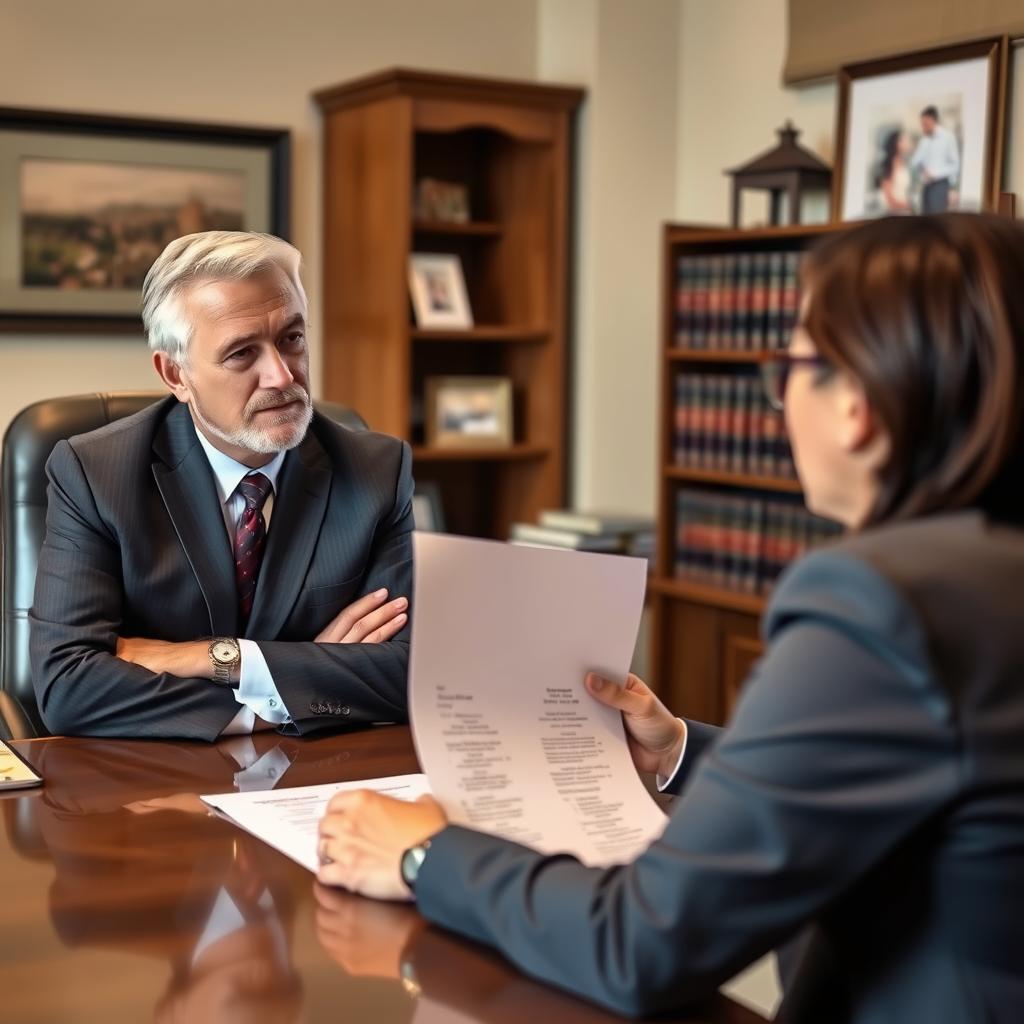
Fiancé Visa Lawyer Culpeper County, VA
Immigration matters are governed by federal law, but for Culpeper County residents the practical journey runs through the USCIS Washington Field Office in Fairfax and the immigration courts in Annandale and Sterling. The K‑1 fiancé visa is one of the most personal immigration pathways — it allows a U.S. Citizen’s fiancé(e) to enter the country, marry, and apply for permanent residence. Errors in the petition, incomplete documentation, or unaddressed grounds of inadmissibility can delay or derail the process. Law Offices Of SRIS, P.C. assists clients throughout Culpeper County with fiancé visa petitions, consular processing, and post‑marriage adjustment of status. Call (888) 437‑7747 to request a consultation. Law Offices Of SRIS, P.C. – Advocacy Without Borders.
Mr. Sris, Owner and Founder | Practicing since 1997 | Admitted in Virginia, Maryland, the District of Columbia, New Jersey, and New York
Se habla español — English, Spanish, Tamil spoken | Fairfax Location — By appointment. 4008 Williamsburg Court, Fairfax, VA 22032
What a Fiancé Visa Means for Culpeper County Families
Culpeper County residents pursuing a K‑1 fiancé visa work within a federal immigration system whose local processing points are the USCIS Washington District Office at 2675 Prosperity Avenue in Fairfax and, for contested matters, the Arlington Immigration Court at 1901 South Bell Street. Because immigration is exclusively federal, no hearing occurs in the Culpeper County General District Court or the Circuit Court, but our Fairfax Location serves as the home base for preparing petitions, responding to requests for evidence, and, when necessary, representing clients in removal proceedings that stem from fiancé‑visa complications.
The K‑1 classification — found at 8 U.S.C. § 1101(a)(15)(K) — is a nonimmigrant visa designed to unite a U.S. Citizen petitioner with a foreign‑national fiancé(e). Once the visa is issued, the couple must marry within 90 days of the fiancé(e)’s admission, after which the foreign spouse may apply for adjustment of status to lawful permanent resident. Culpeper County residents frequently seek advice on how to prove a bona‑fide relationship, meet the in‑person meeting requirement, and navigate the interplay between the K‑1 and the subsequent green‑card process. Because every case involves individual facts, early guidance can help avoid missteps that lead to delays at the consulate or a finding of inadmissibility.
How the Firm Handles Fiancé Visa Cases
Mr. Sris and the firm’s attorneys provide comprehensive support for the full life‑cycle of a K‑1 visa — from the initial I‑129F petition through consular processing, the adjustment‑of‑status application, and, if necessary, defense in removal proceedings. The approach begins with a detailed evaluation of the couple’s eligibility, including an assessment of any legal barriers such as prior immigration violations, criminal history on either side, or prior marriage‑fraud findings. The firm then prepares the petition with the supporting evidence that USCIS expects: proof of the relationship, evidence of the in‑person meeting (or a qualifying waiver), and documentation of the petitioner’s citizenship.
After the I‑129F is approved and the case moves to the National Visa Center and the U.S. Embassy or consulate abroad, the firm helps the foreign‑national fiancé(e) prepare for the visa interview, advises on the medical examination requirements, and addresses any administrative processing delays. Once the fiancé(e) enters the United States and the couple marries, the firm guides them through the I‑485 adjustment‑of‑status application and the I‑751 removal of conditions on the two‑year conditional residence. When a case does not go as expected — because an application is denied, a notice of intent to deny is issued, or removal proceedings are initiated — Mr. Sris and the firm’s attorneys advocate before USCIS, the Immigration Court, and the Board of Immigration Appeals.
About Mr. Sris and the Firm’s Attorneys
Mr. Sris, Owner and Founder, established the firm in 1997 and has practiced immigration law for nearly three decades. He is admitted in Virginia, Maryland, the District of Columbia, New Jersey, and New York. Mr. Sris is a former prosecutor — experience that informs his strategic approach to complex immigration cases that intersect with criminal grounds of inadmissibility. He testified before the Virginia House Courts of Justice Committee in support of 2019 HB 635 (chief patron Del. David Bulova).
The firm’s attorneys bring extensive combined legal experience. The team works collaboratively to ensure that each Culpeper County client receives careful, knowledgeable representation through every stage of the fiancé‑visa journey. Results may vary.
Frequently Asked Questions
How does a fiancé visa work?
A fiancé visa (K‑1) allows the foreign‑citizen fiancé(e) of a U.S. Citizen to enter the United States for marriage within 90 days, after which the couple can apply for permanent residence. The U.S. Citizen files Form I‑129F with USCIS. Once approved, the case goes to the National Visa Center and then to the U.S. Embassy or consulate where the fiancé(e) applies for the K‑1 visa, attends an interview, and undergoes a medical examination. After admission, the marriage must occur within 90 days. The newly married spouse then files Form I‑485 to adjust status to lawful permanent resident. The entire process involves multiple government agencies and eligibility standards; having an experienced attorney helps avoid common procedural pitfalls.
What are the basic requirements for a K‑1 visa?
The petitioner must be a U.S. Citizen, both parties must be legally free to marry, and they must have met in person at least once within the two years before filing — unless a waiver applies. The petitioner must demonstrate the ability to support the fiancé(e) at or above applicable poverty‑guideline levels (through an I‑134 affidavit of support). The foreign‑national fiancé(e) must not be inadmissible on health, criminal, security, or other grounds under the Immigration and Nationality Act. If a prior K‑1 petition was filed for a different beneficiary, additional rules apply. The firm helps clients assess these requirements before filing to strengthen the petition.
What happens if my fiancé visa application is denied?
A denial can occur for many reasons, including insufficient evidence of a bona‑fide relationship, failure to meet the in‑person meeting requirement, or a finding of inadmissibility. A denial at the USCIS stage may be challenged through a motion to reopen or reconsider, or by filing a new petition with corrected evidence. A denial at the consulate often results in a return of the petition to USCIS with a stated reason; in some cases, an appeal or a waiver may be available. Law Offices Of SRIS, P.C. Evaluates the specific basis for denial and identifies the most appropriate path forward, which may include waivers of inadmissibility, additional documentation, or representation in removal proceedings if the denial leads to detention or a notice to appear. Results may vary.
Can I adjust status from a fiancé visa?
Yes — after entering on a K‑1 visa and marrying the U.S. Citizen petitioner within 90 days, the foreign‑national spouse may apply for adjustment of status to lawful permanent resident using Form I‑485. This step is not automatic; it requires a new filing with USCIS, supporting evidence of the marriage’s validity, medical examination, and an interview. If the marriage occurs after the 90‑day period, the foreign spouse generally cannot adjust status through the K‑1 route and may need to pursue consular processing abroad. The firm assists with the I‑485 package, prepares clients for the adjustment interview, and addresses any complications that arise, such as requests for additional evidence.
Do I need a lawyer for a fiancé visa?
There is no legal requirement to hire an attorney to file a K‑1 petition, but navigating the process without guidance can lead to costly delays or denials. USCIS regulations are detailed, and the standard of proof for a bona‑fide relationship is high. An attorney can help ensure the petition is complete, identify potential inadmissibility issues early, and advise on waivers when needed. If a case reaches immigration court — for example, after a denial in removal proceedings — having experienced counsel is critical. Law Offices Of SRIS, P.C. offers an initial consultation to review your circumstances.
How does a Virginia attorney help with a fiancé visa that involves criminal history?
A Virginia attorney can evaluate how a prior criminal disposition — in Virginia or elsewhere — may affect eligibility for a K‑1 visa, particularly under the Immigration and Nationality Act’s inadmissibility provisions that cover crimes involving moral turpitude and controlled‑substance offenses. The firm’s dual experience in criminal defense and immigration law allows it to assess whether a Virginia conviction triggers an immigration ground of inadmissibility and, where possible, to pursue post‑conviction relief or a waiver that preserves the K‑1 application. Mr. Sris’s background as a former prosecutor and the firm’s attorneys’ familiarity with Virginia courts are valuable when the petition intersects with an arrest or conviction in Culpeper County or elsewhere in the Commonwealth.
What is the difference between a K‑1 fiancé visa and a K‑3 spouse visa?
The K‑1 is for a fiancé(e) of a U.S. Citizen who intends to marry after entry; the K‑3 is for the spouse of a U.S. Citizen who is already married and awaiting approval of an I‑130 family petition. The K‑1 requires marriage within 90 days of admission, after which the foreign spouse adjusts status. The K‑3 allows the spouse to enter the U.S. While the I‑130 is pending, then adjust status after approval. In practice, K‑3 visas are rarely used today because USCIS processes I‑130 petitions and K‑3 petitions concurrently and often administratively closes the K‑3 when the I‑130 is approved. Law Offices Of SRIS, P.C. can determine which classification better fits a couple’s situation.
How are K‑2 visas handled for children of the fiancé(e)?
The unmarried children under 21 of the K‑1 beneficiary may accompany or follow to join on K‑2 visas, provided they are listed in the I‑129F petition and meet all eligibility requirements. Once the parent marries the U.S. Citizen, the child may apply for adjustment of status alongside the parent. The K‑2 child must remain unmarried and under 21 throughout the process. If the parent marries and files I‑485 within the 90‑day window, the child must also file I‑485 to obtain lawful permanent residence; failure to do so can create a gap in status. The firm guides families through the K‑2‑inclusive petition and adjustment process to avoid discontinuity in the child’s legal status.
What should I do if I receive a Request for Evidence on my K‑1 petition?
A Request for Evidence (RFE) is a formal notice from USCIS asking for additional information to support the petition; it must be answered thoroughly and by the deadline stated in the notice. RFEs typically arise when the initial evidence of the relationship, the petitioner’s citizenship, or the legal eligibility to marry is insufficient. The response should directly address each item USCIS has questioned and may include affidavits, photographs, travel records, or other documentation. Ignoring an RFE or submitting an incomplete response usually results in denial. Law Offices Of SRIS, P.C. helps Culpeper County clients assemble a persuasive RFE response that meets the government’s evidentiary standard.
Can a fiancé visa lead to citizenship?
Yes — after the foreign‑national spouse obtains permanent residence through adjustment of status following the marriage, they may eventually become eligible for naturalization if they meet all statutory requirements. Typically, a lawful permanent resident who is married to and living with the U.S. Citizen spouse may apply for naturalization three years after becoming a permanent resident, provided other conditions are satisfied: continuous residence, physical presence, good moral character, and knowledge of English and U.S. Civics. The firm assists with naturalization applications when the time comes, helping Culpeper County residents navigate the N‑400 process.
Internal Links: Explore our immigration services in nearby counties: Fairfax County Immigration Lawyer | Prince William County Immigration Lawyer | Manassas (City) Immigration Lawyer | Falls Church (City) Immigration Lawyer.