
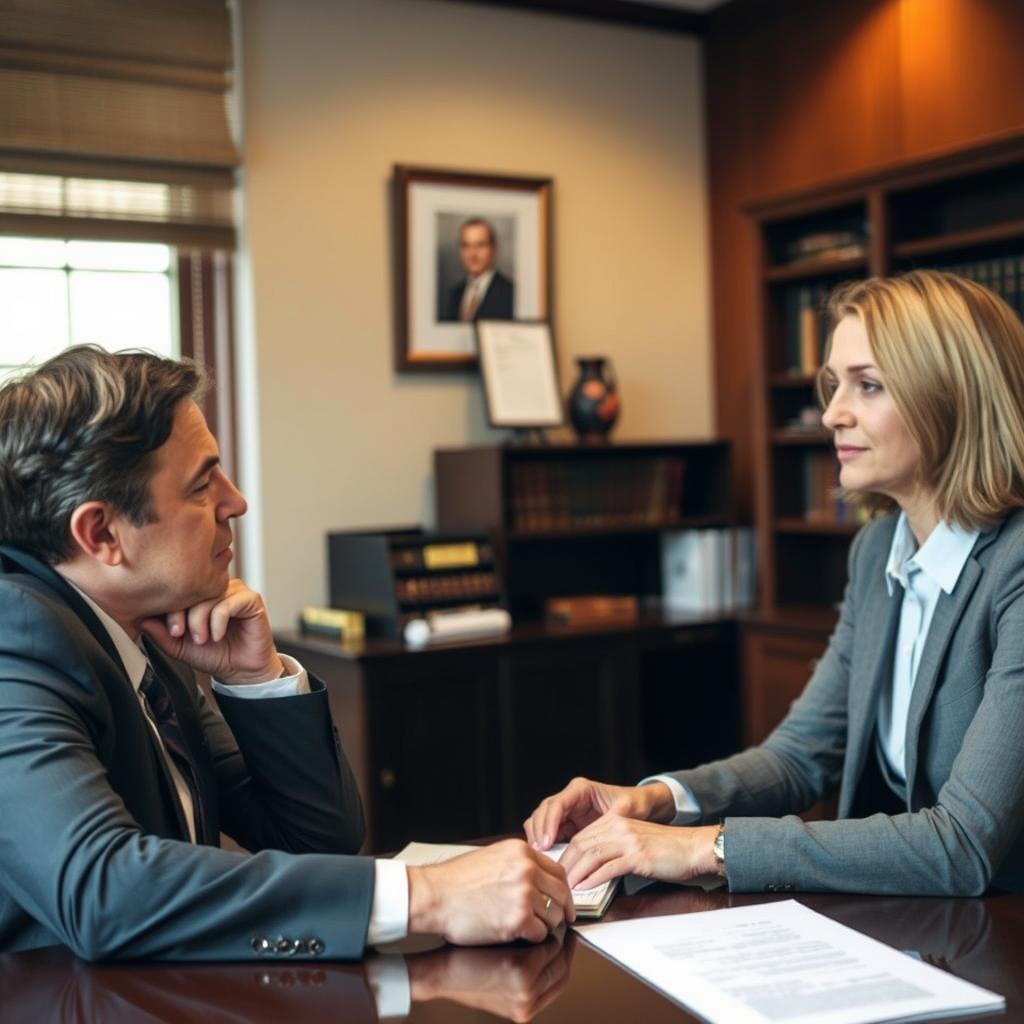
Cancellation of Removal Lawyer Washington DC
Washington, D.C. Residents who face removal proceedings may be eligible for cancellation of removal, a form of relief that halts deportation and grants lawful permanent resident status. This relief is available under 8 U.S.C. § 1229b in both its forms—cancellation of removal for lawful permanent residents and cancellation of removal for non-permanent residents—but the eligibility standards are demanding and require thorough documentation. For D.C. Residents, removal proceedings are heard at the Arlington Immigration Court, located at 1901 South Bell Street in Arlington, Virginia. Law Offices Of SRIS, P.C. represents individuals in removal defense matters throughout the Washington, D.C., area, assisting with every stage from initial master calendar hearings to presentation of the cancellation application on the individual hearing date. Mr. Sris and his Of Counsel understand the stakes and work to build complete records for clients seeking this relief. To discuss your situation in confidence, reach our Arlington location at (888) 437‑7747. Law Offices Of SRIS, P.C. – Advocacy Without Borders.
Cancellation of Removal in Washington, D.C.
Although cancellation of removal is a federal immigration remedy, the practical experience of pursuing it is shaped by the local immigration court where the case is heard. For Washington, D.C., removal cases are assigned to the Arlington Immigration Court, a satellite of the Executive Office for Immigration Review (EOIR). The court sits at 1901 S. Bell Street, Arlington, Virginia, easily accessible from downtown D.C. Via I‑395 or the Metro’s Blue and Yellow lines. Local procedural practices, typical continuance policies, and the calendar of the assigned immigration judge all influence how a cancellation application is prepared and presented.
Under the Immigration and Nationality Act, cancellation of removal for lawful permanent residents requires that the applicant has been an LPR for at least five years, has resided in the United States continuously for at least seven years after having been admitted in any status, and has not been convicted of an aggravated felony. Cancellation for non‑permanent residents demands a continuous physical presence of at least ten years, good moral character during that period, and a showing that removal would result in dedicated and extremely unusual hardship to a qualifying U.S. Citizen or lawful permanent resident spouse, parent, or child. The statute also imposes strict bars: certain criminal convictions or failures to appear can render a person ineligible, and the stop‑time rule cuts off accrual of physical presence once a Notice to Appear is served. Because the Arlington Immigration Court applies these federal standards in a local procedural setting, familiarity with the court’s scheduling orders, evidentiary practices, and ongoing policy guidance from EOIR can make a meaningful difference in the preparation of a strong application.
How Mr. Sris and His Of Counsel Handle Cancellation of Removal Cases
Every cancellation case begins with a detailed review of the client’s immigration history, criminal record, family ties in the United States, and any prior removal orders. Mr. Sris and his Of Counsel identify whether the client meets the threshold eligibility requirements and, equally important, whether any statutory bars apply. Because the burden of proof rests entirely on the applicant, the team structures an evidentiary plan early—gathering country‑condition reports, medical and school records, psychological evaluations, and letters from family members and community leaders that demonstrate the requisite hardship.
Once the file is complete, a written application with supporting declarations and exhibits is filed with the Arlington Immigration Court, and the applicant is prepared for testimony. Mr. Sris and his Of Counsel often conduct mock direct and cross-examination sessions so the client understands the types of questions the immigration judge and government attorney may pose. At the individual hearing, counsel presents opening and closing statements, examines and cross‑examines witnesses, and argues the legal standards under the controlling Board of Immigration Appeals and federal‑circuit precedent. Throughout the process, the team remains available to answer questions and update the client on any changes in the court’s schedule or docket.
About Mr. Sris and His Of Counsel Team
Mr. Sris, Owner and Founder of Law Offices Of SRIS, P.C., founded the firm in 1997. His background includes service as a former prosecutor, and he maintains law‑firm admissions in Virginia, Maryland, the District of Columbia, New Jersey, and New York. Mr. Sris testified before the Virginia House Courts of Justice Committee in support of 2019 HB 635 (chief patron Del. David Bulova). He concentrates his practice on immigration, criminal defense, and family law matters, and he personally oversees the strategy for every removal‑defense case the firm accepts.
Mr. Sris and his Of Counsel bring extensive combined legal experience. Results may vary. The Of Counsel, engaged through professional‑services arrangements, are licensed attorneys who collaborate with Mr. Sris on evidentiary preparation, motion practice, and courtroom advocacy. The team’s structure allows each client to benefit from multiple perspectives while maintaining consistent case management.
Frequently Asked Questions
Who qualifies for cancellation of removal?
Qualification depends on whether the applicant is a lawful permanent resident or a non‑permanent resident, but both categories must generally meet a required period of residency and avoid disqualifying criminal convictions. For lawful permanent residents, the applicant must have held LPR status for at least five years, resided in the United States continuously for at least seven years after admission, and not be convicted of an aggravated felony. Non‑permanent residents must show at least ten years of continuous physical presence in the United States, good moral character, and that removal would cause dedicated and extremely unusual hardship to a qualifying immediate relative who is a U.S. Citizen or LPR. Several bars exist, including certain criminal offenses and time spent in immigration detention.
What is the difference between cancellation for permanent residents and non‑permanent residents?
The central difference is the required period of residency and the standard of hardship, with non‑permanent residents facing a higher burden. Lawful permanent residents seeking cancellation must demonstrate at least five years of LPR status and seven years of continuous residence after admission; they are not required to show hardship to a specific relative, though the immigration judge weighs equities and adverse factors. Non‑permanent residents, by contrast, must prove ten years of continuous physical presence, good moral character, and “dedicated and extremely unusual hardship” to a qualifying U.S. Citizen or LPR spouse, parent, or child—a standard significantly more difficult to meet than the ordinary hardship threshold used elsewhere.
How does the cancellation of removal process work in Washington, D.C.?
D.C. Residents file the application with the Arlington Immigration Court after the government issues a Notice to Appear initiating removal proceedings. The applicant first appears before an immigration judge for a master calendar hearing, where charges are stated and the judge sets a deadline to submit the written application and supporting evidence. Counsel then prepares the application on Form EOIR‑42B (for non‑LPR cancellation) or EOIR‑42A (for LPR cancellation), attaches a detailed supporting brief, declarations, country‑condition materials, and any expert reports. On the individual hearing date, the applicant testifies and counsel presents arguments; the immigration judge decides whether relief should be granted. Throughout this process, Law Offices Of SRIS, P.C. assists with gathering the necessary documentation and preparing clients to testify.
What evidence is needed for a cancellation of removal case?
The applicant must present evidence of identity, physical presence, good moral character, and—for non‑LPR cases—dedicated and extremely unusual hardship to a qualifying relative. Typical materials include certified birth and marriage certificates, school records, tax returns, leases and utility statements showing continuous presence, letters from employers and religious leaders attesting to good moral character, medical and psychological records for the qualifying relative, and country‑condition reports detailing the conditions the relative would face if forced to relocate. In hardship cases, experienced attorney opinions from physicians or psychologists often play a key role. Law Offices Of SRIS, P.C. Guides clients through this documentation process and works to ensure that all evidence is properly authenticated and presented.
Can cancellation of removal be denied even if I meet the requirements?
Yes, cancellation of removal is a discretionary form of relief; an immigration judge may deny the application even if the statutory eligibility criteria are satisfied. The judge weighs the positive equities—family ties, employment history, community involvement, length of residence—against any negative equities such as prior criminal arrests or violations of immigration law. The ultimate decision is an exercise of administrative discretion. If the application is denied, an appeal to the Board of Immigration Appeals may be available, and in some cases further review by a federal circuit court. Having experienced counsel at the trial level helps create a thorough record for any potential appeal.
Do I need a lawyer for a cancellation of removal case in Washington, D.C.?
There is no legal requirement to hire an attorney, but cancellation of removal involves complex evidentiary burdens and a high‑stakes individual hearing that make legal representation strongly advisable. The Department of Homeland Security is represented by an ICE attorney, and the immigration judge applies technical rules of evidence and procedure. An experienced attorney can identify the strongest hardship arguments, prepare witnesses, and ensure that the application is complete and persuasive. For a consultation about your specific situation, reach Law Offices Of SRIS, P.C. at (888) 437‑7747.
For further reading on related topics, you may be interested in our pages covering Georgetown immigration matters, Spring Valley immigration representation, and Cleveland Park immigration counsel.
Attorney advertising. Prior results do not guarantee a similar outcome. Results may vary.
Case results depend on a variety of factors unique to each case.