
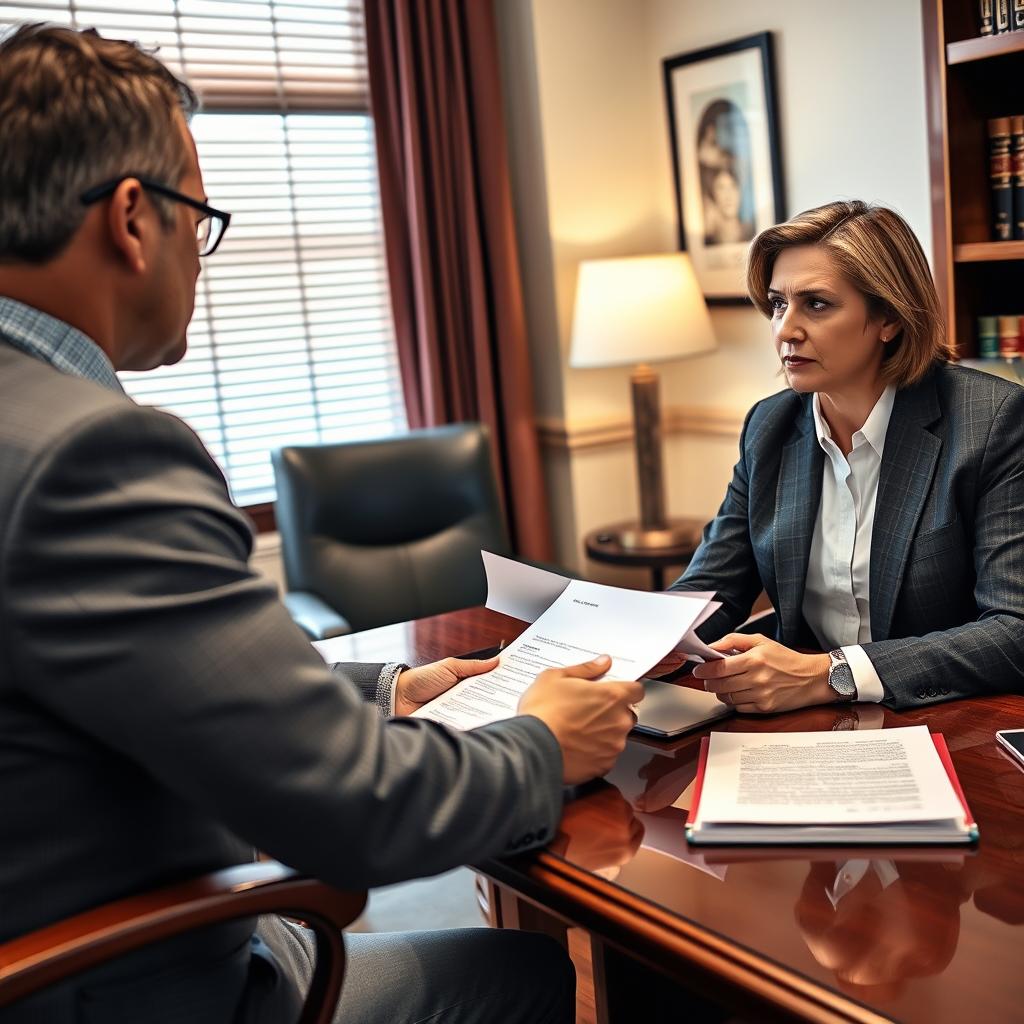
Cancellation of Removal Lawyer Logan Circle, DC
For residents of Logan Circle and the broader District of Columbia who are facing removal proceedings, understanding the possibility of relief through cancellation of removal is essential. Cancellation of removal is a discretionary form of relief under Section 240A of the Immigration and Nationality Act (8 U.S.C. § 1229b) that allows a noncitizen to end removal proceedings and become a lawful permanent resident if specific statutory requirements are met. The stakes could not be higher: a grant of cancellation means you remain in the United States with a green card; a denial likely results in an order of removal. Mr. Sris, Owner and Founder of Law Offices Of SRIS, P.C., and his Of Counsel team advise DC residents on the nuances of cancellation of removal before the Arlington Immigration Court, which holds removal proceedings for the District. Whether you are a lawful permanent resident seeking to retain your status or a non-permanent resident who has built a life here, an experienced immigration attorney can help you understand your eligibility and present the strong case. Reach Law Offices Of SRIS, P.C. at (888) 437-7747 to schedule a consultation. Law Offices Of SRIS, P.C. – Advocacy Without Borders.
What Cancellation of Removal Means for Logan Circle Residents
Immigration matters for DC residents are largely handled at the federal level, but they intersect with local courts in ways that can affect eligibility. The Arlington Immigration Court (1901 S. Bell St, Arlington, VA 22202) hears removal proceedings for persons residing in the District. Meanwhile, the USCIS Washington District Office (2675 Prosperity Ave, Fairfax, VA 22031) processes affirmative applications and family-based petitions that may underpin a cancellation claim. Because Logan Circle is part of the unified DC Superior Court system, certain ancillary matters—such as family-court orders that establish the hardship to a qualifying relative—may originate in DC Superior Court and later become evidence in an immigration case.
Residents of the Logan Circle neighborhood, which borders the U Street Corridor, Shaw, and Dupont Circle, are close to downtown institutions and transportation, making access to legal counsel straightforward. Law Offices Of SRIS, P.C. serves the entire District of Columbia from its Arlington Location, just a short distance from Logan Circle via I-66 or the Key Bridge. Whether your case involves a defensive application for cancellation of removal before an immigration judge or a motion to reopen a prior in absentia order, having an attorney who is familiar with both the local courthouse and the federal immigration system can be critical.
As of the date of this writing, USCIS filing fees for common immigration applications include: I-485 (adjustment of status) — $1,440; N-400 (naturalization) — $760; I-130 (family petition) — $675; I-140 (employment-based petition) — $715; I-589 (asylum) — no filing fee; and standard biometrics — $85. Fee waivers are available for certain forms using Form I-912.
Source: USCIS Fee Schedule. USCIS Filing Fees
Reviewed by Mr. Sris, admitted in Virginia, Maryland, the District of Columbia, New Jersey, and New York.
How Mr. Sris and His Of Counsel Handle Cancellation of Removal Cases
When a DC resident contacts Law Offices Of SRIS, P.C., regarding a possible cancellation-of-removal claim, Mr. Sris and his Of Counsel begin by thoroughly examining the client’s immigration and criminal history, family ties in the United States, and any discretionary equities that could support the claim. For lawful permanent residents, the focus is on whether the individual has been an LPR for at least five years, has resided in the United States continuously for at least seven years after having been admitted in any status, and has not been convicted of an aggravated felony. For non-permanent residents, the analysis centers on ten years of continuous physical presence, good moral character, and a showing that removal would result in dedicated and extremely unusual hardship to a qualifying U.S.-citizen or lawful-permanent-resident spouse, parent, or child.
Because the cancellation-of-removal standard is demanding and the burden of proof rests with the applicant, the firm’s approach is methodical and evidence-intensive. Mr. Sris and his Of Counsel work to develop witness statements, expert reports (where appropriate—particularly in hardship cases involving medical or psychological conditions), and thorough documentary submissions that address each element of the statute. When a Notice to Appear is defective under the Pereira/Niz‑Chavez line of cases, the firm may challenge the immigration court’s jurisdiction or argue that the stop‑time rule has not been triggered. In every case, the team prepares for the merits hearing with the same rigor, cross‑examining government witnesses and presenting persuasive direct testimony from the client and supporting witnesses.
About Mr. Sris and His Of Counsel Team
Mr. Sris, Owner and Founder of Law Offices Of SRIS, P.C., is a former prosecutor whose understanding of government litigation strategy informs his approach to cancellation-of-removal defense. He is admitted to practice in the District of Columbia, Virginia, Maryland, New Jersey, and New York, and has been practicing since 1997. Mr. Sris testified before the Virginia House Courts of Justice Committee in support of 2019 HB 635 (chief patron Del. David Bulova).
The firm’s Of Counsel attorneys bring substantial experience in immigration law and related fields, enabling the team to address the interplay between family law, criminal history, and immigration consequences that often arises in cancellation-of-removal cases. Together, Mr. Sris and his Of Counsel provide extensive combined legal experience to every matter they handle. Results may vary. in your case. Clients in Logan Circle and across the District of Columbia can reach the firm at (888) 437-7747 to discuss their situation in a confidential consultation.
Frequently Asked Questions
What is cancellation of removal?
Cancellation of removal is a form of immigration relief that allows a noncitizen in removal proceedings to obtain lawful permanent resident status and avoid deportation if they meet specific statutory criteria. There are two main types: cancellation for lawful permanent residents (LPRs) under INA § 240A(a) and cancellation for non‑LPRs under INA § 240A(b). Both require extensive proof of residence, good moral character, and, in the non‑LPR context, a showing of dedicated and extremely unusual hardship to a qualifying relative. The process culminates in a merits hearing before an immigration judge, who has the discretion to grant or deny the application. An experienced attorney can help gather the evidence necessary to present the strong case possible.
How do I know if I am eligible for cancellation of removal as a DC resident?
Eligibility depends on your immigration status, length of residence, criminal record, and the degree of hardship your qualifying family members would suffer if you were removed. The immigration judge will evaluate each element individually. For LPRs, you must have been an LPR for at least five years, have resided in the United States continuously for at least seven years, and not have any aggravated felony convictions. For non‑LPRs, the requirements are stricter: ten years of continuous physical presence, ten years of good moral character, and a showing that removal would cause dedicated and extremely unusual hardship to a U.S.‑citizen or LPR spouse, parent, or child. The firm assists clients in identifying and documenting the evidence that will satisfy these demanding standards.
What is the difference between cancellation of removal for LPRs and non‑LPRs?
LPR cancellation is designed to preserve the status of long‑term lawful permanent residents, while non‑LPR cancellation is for individuals who have never held LPR status but have deep ties to the United States. The LPR version requires five years as an LPR and seven years of continuous residence after admission in any status; it does not require a showing of hardship, but a broad range of criminal convictions can bar eligibility. The non‑LPR version requires ten years of continuous physical presence, good moral character for the entire ten‑year period, and proof of dedicated and extremely unusual hardship to a qualifying relative. Both forms are adjudicated within the same substantive framework, but the evidentiary demands differ significantly.
What happens after a cancellation of removal is granted?
If an immigration judge grants cancellation of removal, the noncitizen becomes a lawful permanent resident as of the date of the grant. The Department of Homeland Security may appeal the decision, but if it becomes final, the individual can receive a green card and ultimately apply for naturalization after meeting the residency requirements. It is important to avoid any criminal conduct that could trigger a new removal proceeding or affect the new LPR status. The firm continues to advise clients on the post‑grant phase to ensure that they understand their obligations and rights as new permanent residents.
Do I need a lawyer to apply for cancellation of removal in the DC area?
While you are not legally required to have an attorney, the cancellation-of-removal process is highly complex and the consequences of denial can be severance from family, loss of a career, and deportation. The immigration court will not provide you with a lawyer, and the government will be represented by experienced trial attorneys. An attorney who understands the specific local procedures at the Arlington Immigration Court and the DC Superior Court can help you present a well-organized case, protect your appellate rights, and avoid procedural pitfalls that could lead to a denial or an in‑absentia removal order. To discuss your situation with Mr. Sris and his Of Counsel, call (888) 437-7747.
How does a criminal record affect a cancellation of removal claim?
A criminal record can have a decisive impact on your eligibility for cancellation of removal. For LPR cancellation, an aggravated felony conviction is an absolute bar. For non‑LPR cancellation, any conviction that falls within certain grounds of inadmissibility or removability can disrupt the required showing of good moral character or continuous residence. Even a minor offense can, in some circumstances, break the ten‑year continuous‑residence requirement if it triggers a Notice to Appear before the ten years have elapsed. The firm carefully reviews all criminal-history documents and works with clients to determine whether post‑conviction relief might restore eligibility. Every case is fact‑specific, and an early assessment by an experienced attorney is essential.
Related pages:
Washington, D.C. Immigration Lawyer |
Georgetown Immigration Lawyer |
Spring Valley Immigration Lawyer
Primary sources:
U.S. Citizenship and Immigration Services |
Executive Office for Immigration Review |
DC Courts
Attorney advertising. Prior results do not guarantee a similar outcome.
Case results depend on a variety of factors unique to each case.
Results may vary.