
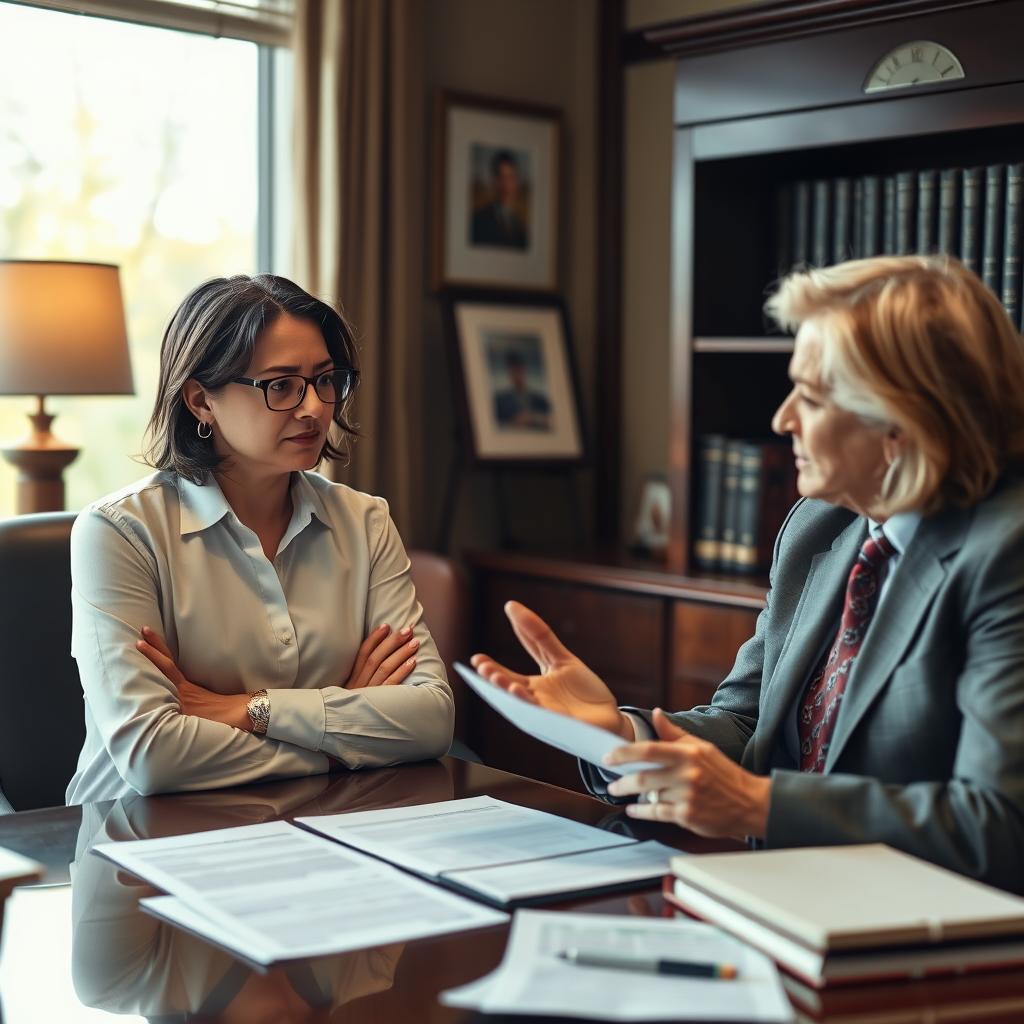
Family Visa Lawyer Greene County, VA
Family visa petitions allow U.S. Citizens and lawful permanent residents to bring certain immediate and extended family members to the United States. For residents of Greene County, Virginia, the process is handled by federal immigration agencies—primarily U.S. Citizenship and Immigration Services (USCIS) at its Washington District Office in Fairfax, and the U.S. Department of State for consular processing abroad. Law Offices Of SRIS, P.C., through Mr. Sris and the firm’s Of Counsel attorneys, assists individuals and families in Greene County with preparing and submitting family visa applications, navigating Requests for Evidence, and addressing issues that arise during adjudication. Whether you need a spouse visa, a fiancé visa, a parent visa, a sibling petition, or adjustment of status for a family member already in the United States, our experienced multi-state team is available to guide you. To request a consultation, call (888) 437-7747. Law Offices Of SRIS, P.C. – Advocacy Without Borders.
What a Family Visa Lawyer Does for Greene County Residents
Immigration law is exclusively federal, meaning no single Virginia locality has its own immigration court. Greene County residents’ family visa matters are processed by USCIS at the Washington District Office in Fairfax, and, when an individual is placed in removal proceedings, those hearings take place at the Arlington Immigration Court or other Executive Office for Immigration Review (EOIR) facilities. A family visa lawyer’s role is to prepare the petition packet, assemble the required supporting documentation, and ensure the legal arguments satisfy the Immigration and Nationality Act’s requirements for the particular visa classification.
The most common family visa categories include immediate-relative petitions—for spouses, unmarried children under 21, and parents of U.S. Citizens—and family-preference petitions for more distant relatives, such as siblings of citizens or married children. Each category has its own set of eligibility criteria, chargeability rules, and priority-date waiting times. An inaccurate filing or missing evidence can cause significant delays or an outright denial. Working with an experienced immigration attorney helps Greene County families avoid common procedural errors and present a complete application from the start.
How Mr. Sris and the Firm’s Of Counsel Attorneys Handle Family Visa Cases
Mr. Sris and the firm’s Of Counsel attorneys begin every family visa matter with a careful review of the petitioner’s and beneficiary’s immigration status, the qualifying relationship, and any potential grounds of inadmissibility. The team then advises on the appropriate petition type—whether an I-130 family petition, an I-129F petition for a fiancé, or a different filing—and assembles the supporting materials that USCIS and the Department of State typically expect. Throughout the process, the firm monitors case status, responds to Requests for Evidence, and, when necessary, advocates on the client’s behalf before immigration officials.
If a case encounters complications, whether a prior immigration violation, an ineligibility finding under INA § 212(a), or a consular officer’s decision to refuse the visa, Mr. Sris and the firm evaluate the options for a waiver, a motion to reconsider, or other legal remedy. While every family’s situation is different, the firm’s approach is to present the strongest possible evidentiary record and to raise the relevant legal arguments at each stage. The firm does not guarantee a particular result, but it works methodically to pursue a favorable outcome for each client.
Frequently Asked Questions About Family Visas
Who qualifies for a family visa in the United States?
U.S. Citizens can petition for spouses, unmarried children under 21, parents (if the citizen is 21 or older), and, in certain preference categories, siblings and married children; lawful permanent residents can petition for spouses and unmarried children. Immediate relatives of U.S. Citizens are not subject to annual numerical caps, so a visa is generally available as soon as the petition is approved. Family-preference categories, however, are subject to per-country and worldwide limits, which can lead to wait times that vary by country of chargeability and category. Eligibility also requires the petitioner to demonstrate the bona fides of the qualifying relationship and the beneficiary to be admissible to the United States or eligible for a waiver of inadmissibility.
What is the difference between an immigrant visa and a nonimmigrant family visa?
An immigrant visa leads to lawful permanent residence (a green card), while a nonimmigrant family visa, such as the K-1 fiancé visa or K-3 spouse visa, is temporary and intended to allow entry while the immigrant visa process is completed. K-1 visa holders must marry the U.S. Citizen petitioner within 90 days of admission and then apply for adjustment of status. K-3 visa holders may enter to await the approval of an I-130 petition and then adjust status. Both nonimmigrant categories require separate filings and have distinct processing timelines compared to standard immigrant visa applications.
How long does it take to get a family-based green card?
Immediate relative petitions often take between 8 and 14 months from filing to interview, though processing times at USCIS field offices and U.S. Consulates can vary. Family-preference categories can range from a few years to well over a decade, depending on the category, the beneficiary’s country of chargeability, and the priority-date movement shown in the monthly Visa Bulletin. For Greene County residents, the USCIS Washington District Office handles most adjustment-of-status interviews, and the Department of State’s National Visa Center processes immigrant visas for consular interviews abroad. Because timelines are subject to change, regular case-status checks are important.
What role does the USCIS Washington Field Office play for Greene County applicants?
Greene County residents applying for adjustment of status or certain other benefits file their applications with USCIS, and interviews are typically held at the Washington District Office at 2675 Prosperity Avenue in Fairfax. That office handles biometrics appointments, adjustment interviews, and naturalization ceremonies. For family visa cases, the Washington District Office reviews the I-130 petition (if filed concurrently) and schedules the I-485 adjustment-of-status interview. If the case is processed through consular processing, the National Visa Center coordinates the transfer of the approved petition to the relevant U.S. Embassy or consulate overseas.
Do I need a lawyer for a family visa petition?
You are not legally required to hire a lawyer to file a family visa petition, but legal guidance helps you avoid mistakes that can lead to delays, Requests for Evidence, or denials. Immigration law involves detailed regulations, form instructions, and case-specific strategic decisions—such as whether a waiver of inadmissibility is needed, how to present evidence of a bona fide marriage, or how to respond to a notice of intent to deny. An experienced attorney can identify potential issues early and prepare the strongest possible application. To discuss your family visa matter, call Law Offices Of SRIS, P.C. at (888) 437-7747.
What happens if my family visa application is denied?
A denial is not necessarily the end of the case; you may be able to file a motion to reopen or reconsider, appeal to the Administrative Appeals Office, or refile with additional evidence. The denial notice will explain the legal and factual basis for the decision. Common reasons include insufficient proof of the qualifying relationship, a finding that a prior marriage was not properly terminated, or a determination that the beneficiary is inadmissible. An attorney can review the denial, assess whether a waiver or further legal action is available, and guide you through the appropriate remedy.
Can I apply for a family visa while in the U.S. On another status?
Yes, in many circumstances an individual who entered lawfully and maintains a valid nonimmigrant status may apply for adjustment of status based on an approved family petition without leaving the country. Eligibility depends on the applicant’s current visa category, the timing of the petition, and whether the individual is in lawful status at the time of filing. Individuals who overstayed or violated status may still qualify for adjustment through certain petitioning relationships, but specific rules under INA § 245(a) and (c) must be met. A preliminary eligibility review with a lawyer helps clarify which pathway is available.
What documents are required for a family visa application?
Required documents generally include proof of the petitioner’s U.S. Citizenship or lawful permanent resident status, proof of the qualifying family relationship (such as birth or marriage certificates), government-issued identification, and evidence of any name changes. For spouse petitions, evidence of the bona fides of the marriage—such as joint financial documents, photographs, and affidavits from third parties—is essential. All foreign-language documents must be accompanied by certified English translations. Additional civil documents, such as divorce decrees or death certificates of prior spouses, may be required depending on the circumstances. A complete document checklist tailored to your case helps avoid processing delays.
What is the difference between a K-3 spouse visa and a spouse immigrant visa?
The K-3 visa is a nonimmigrant visa that allows a foreign spouse of a U.S. Citizen to enter the United States while a pending I-130 petition is being processed; the immigrant spouse visa grants lawful permanent residence upon entry. Because USCIS often processes I-130 petitions quickly for immediate relatives, K-3 visas are less common in practice, but they remain an option when consular processing delays could keep a family separated for an extended period. Once in the United States, a K-3 visa holder may apply for adjustment of status. An attorney can advise whether a K-3 or direct immigrant spouse visa is the more appropriate route for your situation.
How does consular processing work for an immigrant visa abroad?
Consular processing begins when USCIS approves the I-130 petition and transfers the case to the National Visa Center, after which the beneficiary submits an immigrant visa application, undergoes a medical exam, and attends an interview at the U.S. Consulate in their home country. The consular officer reviews the petition, the supporting civil documents, and the results of background checks before deciding whether to issue the visa. If the officer finds inadmissibility grounds, a waiver may be needed before the visa can be approved. Once the visa is issued, the beneficiary travels to the United States and becomes a lawful permanent resident upon admission.
About Mr. Sris and the Firm’s Of Counsel Attorneys
Mr. Sris is the Owner and Founder of Law Offices Of SRIS, P.C. A former prosecutor, he has practiced law since 1997 and is admitted to practice in Virginia, Maryland, the District of Columbia, New Jersey, and New York. Mr. Sris handles immigration matters—including family-based petitions, adjustment of status, consular processing, and deportation defense—for clients throughout Greene County and across Virginia. The firm’s Of Counsel attorneys contribute additional experience to immigration cases, assisting with case preparation, legal research, and client advocacy.
The firm’s Fairfax location serves clients in Greene County and the surrounding region. All consultations are by appointment. The firm’s staff includes Spanish-speaking and Tamil-speaking professionals, and the team is accustomed to working with families from diverse cultural and linguistic backgrounds. To schedule a consultation about a family visa matter, call (888) 437-7747 or contact our Fairfax location.
Related immigration resources:
Attorney advertising. Prior results do not guarantee a similar outcome.
Results may vary.
Case results depend on a variety of factors unique to each case.