
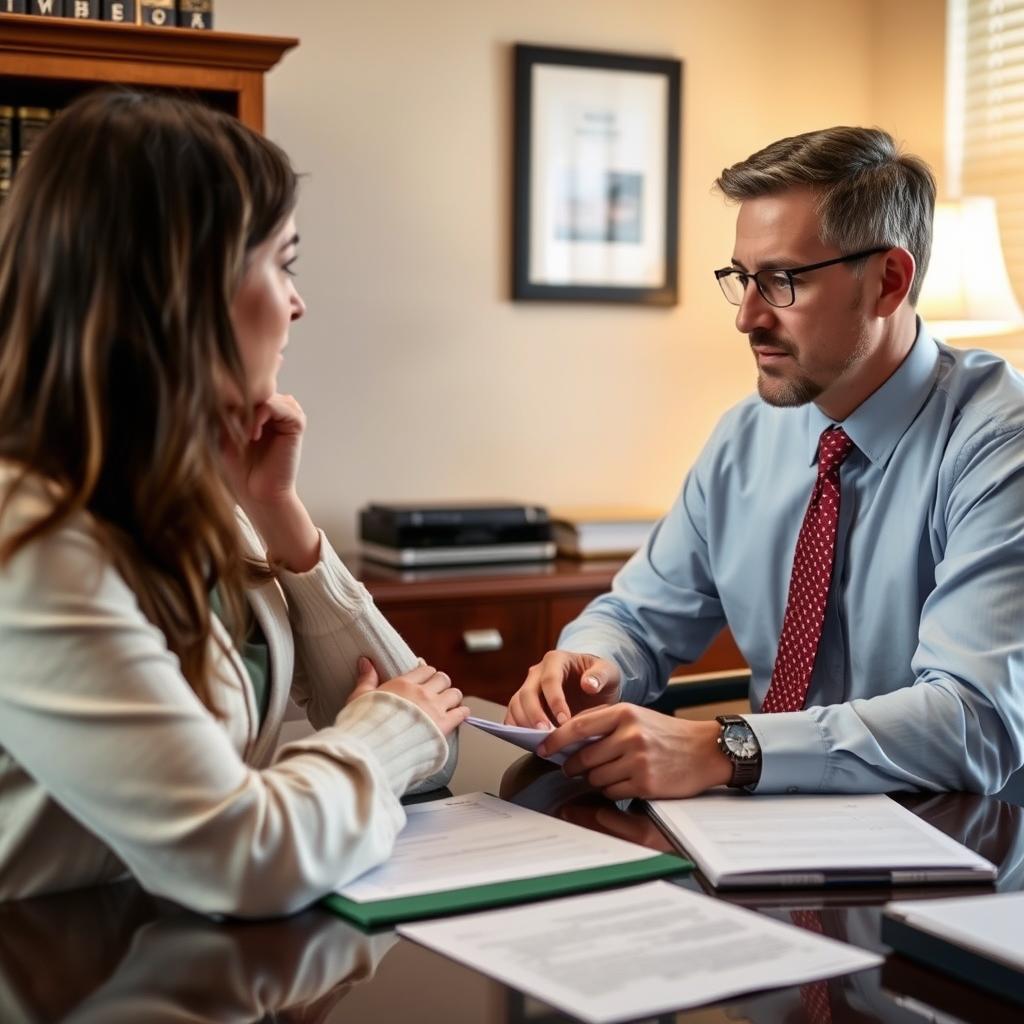
K-3 Spouse Visa Lawyer Madison County, VA
The K-3 spouse visa offers a pathway for the foreign-national spouse of a United States citizen to enter the United States while an immigrant visa petition is pending, allowing the family to wait together instead of apart. For Madison County, Virginia, residents, Law Offices Of SRIS, P.C. provides immigration counsel on K-3 eligibility, the dual-filing process, and the transition from nonimmigrant K-3 status to lawful permanent residence. Mr. Sris, Owner and Founder of the firm, and the firm’s experienced Of Counsel attorneys guide clients through each step — from the initial Form I-130 and Form I-129F filings to the consular interview and eventual adjustment of status or consular processing. To discuss a K-3 visa matter, reach our Fairfax Location at (888) 437-7747. Law Offices Of SRIS, P.C. – Advocacy Without Borders.
What a K-3 Spouse Visa Means for Madison County Families
A K-3 visa is a nonimmigrant classification created by Congress to shorten the period of separation between a U.S. Citizen and a foreign spouse while an immigrant visa (Form I-130) is adjudicated. The legal framework sits under Section 101(a)(15)(K) of the Immigration and Nationality Act (8 U.S.C. § 1101(a)(15)(K)). After USCIS approves a Form I-129F petition for alien fiancé(e) — adapted for the K-3 pathway — the spouse may attend a consular interview abroad, receive the K-3 visa, and travel to the United States to reunite with the petitioner. Once in the country, the spouse can apply for employment authorization and, when the underlying I-130 is approved, adjust to permanent resident status.
Madison County residents rely on the USCIS Washington District Office at 2675 Prosperity Avenue, Fairfax, Virginia, for affirmative filings such as I-129F petitions and adjustment-of-status applications. When a case reaches removal proceedings, it is heard at the Arlington Immigration Court, 1901 South Bell Street, Arlington. Neither venue is inside Madison County, but the firm’s Fairfax Location — 4008 Williamsburg Court, Fairfax, VA 22032 — is positioned to serve clients from Madison and the surrounding Piedmont communities efficiently. Mr. Sris and his Of Counsel attorneys monitor USCIS processing trends and policy changes that affect K-3 adjudication, helping Madison County families avoid administrative delays and compliance missteps.
The K-3 nonimmigrant classification is authorized by 8 U.S.C. § 1101(a)(15)(K).
Source: 8 U.S.C. § 1101 — Cornell Legal Information Institute
Reviewed by Mr. Sris, admitted in VA/MD/DC/NJ/NY.
How Mr. Sris and His Of Counsel Handle K-3 Visa Cases
The firm takes a whole-case approach, preparing both the I-130 immigrant petition and the I-129F nonimmigrant petition in tandem to preserve the K-3 option before the I-130 is adjudicated. Because K-3 eligibility hinges on a properly filed I-130 and the availability of a pending I-129F, the firm’s attorneys verify every supporting document — marriage certificate, proof of the U.S. Citizen’s status, and evidence of a bona fide marriage — before submission. If a K-3 beneficiary is overseas, the firm coordinates consular processing with the appropriate U.S. Embassy or consulate, advising on interview preparation, required vaccinations, and admissibility issues. For spouses already inside the United States, the firm evaluates whether adjusting status directly may be a more practical path, taking into account the client’s travel plans and work-authorization needs.
Mr. Sris and his Of Counsel bring extensive combined legal experience, enabling them to spot potential red flags — such as prior immigration violations, criminal history, or documentation gaps — that can derail a K-3 application. They stay abreast of USCIS guidance and processing-time fluctuations at the National Benefits Center and the local field office. Madison County clients benefit from a calibrated strategy: the firm explains each stage in clear terms, sets realistic expectations about processing windows, and remains accessible for questions until the spouse attains permanent residence. Results may vary.
About Mr. Sris and the Firm’s Of Counsel Attorneys
Mr. Sris founded Law Offices Of SRIS, P.C. in 1997. As Owner and Founder, he concentrates his practice on immigration and family-law matters that frequently intersect, including marriage-based visa petitions, fiancé(e) visas, and spousal sponsorship. Mr. Sris’s experience includes counseling clients through the entire K-3 lifecycle — from the initial filing to the final green-card interview. He is assisted by the firm’s Of Counsel attorneys, who add depth in federal immigration procedures and consular operations. Together, Mr. Sris and his Of Counsel serve Madison County families from the firm’s Fairfax Location, with English, Spanish, and Tamil capabilities available to meet the needs of the area’s diverse population.
Engaging Law Offices Of SRIS, P.C. Requires a signed engagement agreement. The firm does not guarantee any particular outcome in a K-3 case; each matter turns on its own facts and the discretion of USCIS and consular officials. Past favorable outcomes in other visa categories are not a predictor of future success.
Frequently Asked Questions
How does a K-3 spouse visa differ from a K-1 fiancé(e) visa?
A K-3 visa is for spouses who are already married to a U.S. Citizen, while a K-1 visa is for a fiancé(e) intending to marry in the United States. The K-3 applicant files Form I-130 (immigrant petition) and Form I-129F (nonimmigrant petition) concurrently, whereas a K-1 applicant files only I-129F before marriage. After marriage, the K-1 spouse must file for adjustment of status; a K-3 spouse can adjust once the underlying I-130 is approved. The K-3 classification essentially bridges the gap so that a married couple does not have to wait abroad during I-130 processing.
What are the basic eligibility requirements for a K-3 visa?
The K-3 visa requires that the applicant be the legal spouse of a U.S. Citizen and that a Form I-130 has been filed and is pending. The marriage must be validly contracted under the law of the place where it occurred. The U.S. Citizen petitioner must also file Form I-129F and demonstrate the ability to support the spouse at 125% of the federal poverty guidelines. The applicant must not be inadmissible on health, criminal, or security grounds, though waivers may be available in some circumstances.
Can a K-3 visa holder work in the United States?
Yes, a K-3 visa holder may apply for employment authorization by filing Form I-765. The authorization is generally valid for the period of the K-3 status and can be renewed as needed while the adjustment-of-status application is pending. The firm often advises clients to file the I-765 simultaneously with the adjustment application to minimize gaps in work permission. In some cases, a K-3 visa holder may also travel abroad with advance parole, though the firm carefully weighs travel risks before advising any departure.
How long does the K-3 process take from filing to approval?
Processing times vary depending on USCIS workload at the National Benefits Center and the consular post abroad. The I-129F petition generally receives faster processing than the I-130, but overall timelines can fluctuate with policy changes, staffing levels, and the volume of cases. An experienced immigration attorney can help monitor case status and respond to requests for evidence, which helps keep the process moving. Madison County clients work with our firm to set realistic expectations and prepare for next steps without relying on uncertain calendar predictions.
What happens if the I-130 is approved before the K-3 visa is issued?
If USCIS approves the I-130 while the I-129F is still pending, USCIS may administratively close the I-129F and the K-3 route becomes unavailable. At that point, the spouse must proceed through consular processing for an immigrant visa instead. The firm watches both petitions closely and can adjust strategy — for instance, requesting that the I-130 be held at the National Visa Center until the I-129F is decided, if that benefits the client. The goal is always to get the spouse lawful admission by the most direct and stable path.
Do I need an attorney to apply for a K-3 spouse visa?
While you are not legally required to have an attorney, K-3 applications involve overlapping USCIS forms and consular procedures that can be difficult to manage without legal guidance. An incomplete petition, a missed deadline, or an unresolved admissibility issue can cause delays or denials. Mr. Sris and his Of Counsel handle the entire package — verifying evidence, drafting cover letters, and preparing the couple for the consular interview — so Madison County families can focus on their reunion while the legal team manages the paperwork. For a consultation, reach Mr. Sris and his Of Counsel at (888) 437-7747.
Related Immigration Practice Areas:
Immigration Lawyer Fairfax County, VA |
Immigration Lawyer Prince William County, VA |
Immigration Lawyer Manassas (City), VA |
Immigration Lawyer Fairfax (City), VA
Authoritative Resources:
USCIS K-3/K-4 Nonimmigrant Visas |
Executive Office for Immigration Review (EOIR) |
8 U.S.C. § 1101 — Immigration and Nationality Act
Attorney advertising. Prior results do not guarantee a similar outcome. Case results depend on a variety of factors unique to each case. Results may vary. Attorney responsible for this advertising: Mr. Sris.