
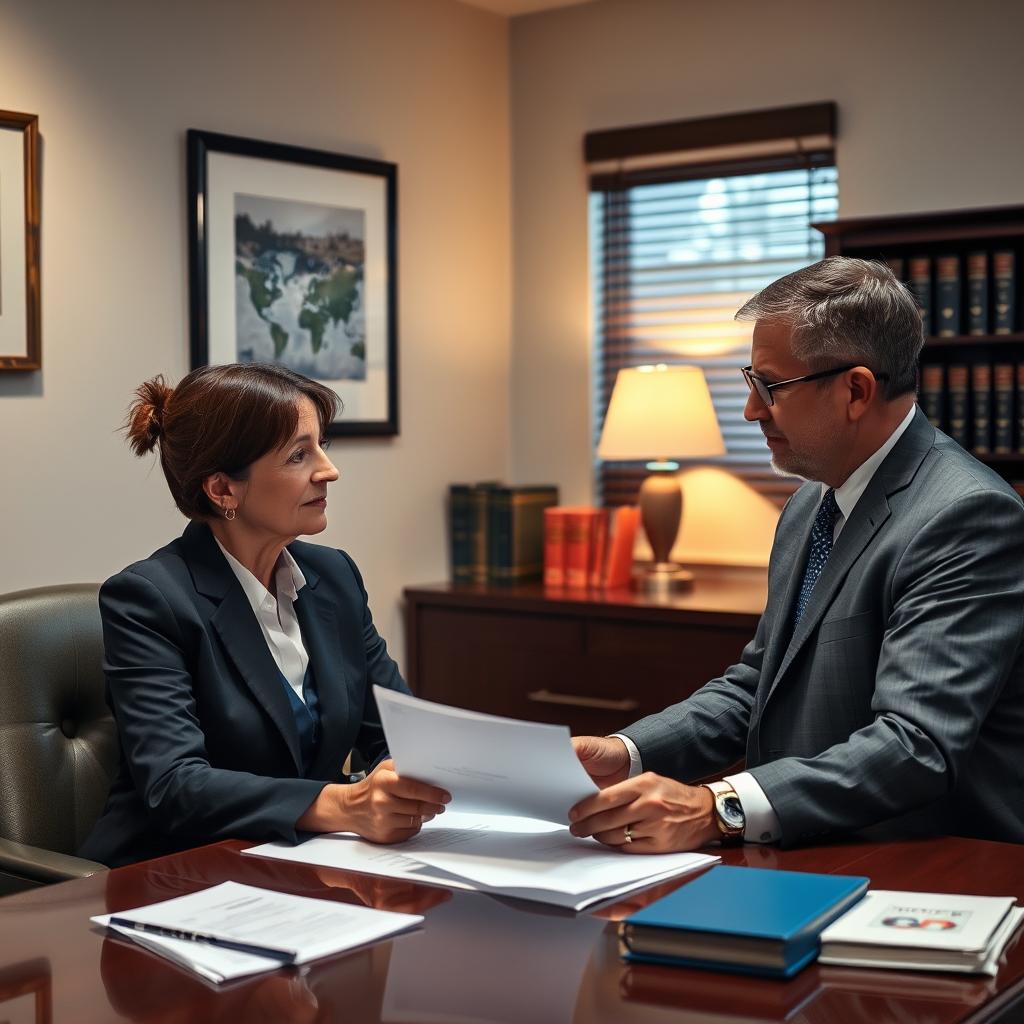
Immediate Relative Petition Lawyer Fairfax, VA
An immediate relative petition is one of the most direct pathways for a United States citizen to obtain a green card for a close family member. Under the Immigration and Nationality Act, immediate relatives include spouses, unmarried children under twenty‑one, and parents of adult U.S. Citizens. Because immediate relatives are exempt from annual numerical visa caps, the process avoids the multi‑year backlogs that affect other family‑based preference categories. For families in Fairfax, Virginia, the petition is filed with U.S. Citizenship and Immigration Services, and supporting documents are handled at the USCIS Washington District Office, located at 2675 Prosperity Avenue in Fairfax. Removal proceedings, when they arise, are heard at the Arlington Immigration Court. Mr. Sris and the firm’s Of Counsel attorneys assist with I‑130 petitions, adjustment of status, consular processing, and related immigration matters. Call (888) 437‑7747 to request a consultation. Law Offices Of SRIS, P.C. – Advocacy Without Borders.
What Immediate Relative Petition Matters Mean in Fairfax, Virginia
Fairfax is home to a large and diverse immigrant community, and the USCIS Washington Field Office serves as the primary intake point for affirmative applications filed by residents of Fairfax City, Fairfax County, and the surrounding Northern Virginia region. The Annandale Immigration Court and the Sterling Immigration Court also hear cases that may intersect with family‑based petitions—particularly when a petitioner needs to establish eligibility while in removal proceedings or defend against a denial.
The Fairfax location of Law Offices Of SRIS, P.C. is familiar with the local USCIS adjudication patterns and the procedures used at the Arlington Immigration Court. Because immigration is exclusively federal, the governing law is the Immigration and Nationality Act and Title 8 of the Code of Federal Regulations, not Virginia state law. However, local practice matters: evidence that may be persuasive before a USCIS officer in Fairfax may need to be organized differently for an Immigration Judge in Arlington. Mr. Sris and the firm’s Of Counsel attorneys work with clients to prepare petitions that meet the expectations of each adjudicator and to address potential issues—such as questions about the bona fides of a marriage or prior immigration violations—before they become obstacles.
How Mr. Sris and the Firm’s Of Counsel Attorneys Handle Immediate Relative Petition Cases
The process begins with a consultation to evaluate the petitioner’s and beneficiary’s circumstances, including the nature of the qualifying relationship, any prior immigration history, and whether the beneficiary is inside or outside the United States. The firm reviews critical documents—marriage certificates, birth certificates, prior divorce decrees, proof of termination of prior marriages, and evidence of joint financial and domestic life—and advises on the evidentiary standard that is likely to satisfy USCIS.
The I‑130 petition establishes the qualifying relationship. If the beneficiary is already in the United States and eligible to adjust status, the firm prepares Form I‑485 applications simultaneously, along with supporting affidavits, medical examination documentation, and employment authorization requests. When the beneficiary is abroad, the firm coordinates consular processing through the National Visa Center and the appropriate U.S. Embassy or consulate. Mr. Sris and the firm’s Of Counsel attorneys also handle Requests for Evidence, Notices of Intent to Deny, and motions to reopen or reconsider when an application encounters difficulty. Each matter is handled with attention to the factual record, because a well‑documented petition often moves more smoothly through the bureaucratic process.
About Mr. Sris and the Firm’s Of Counsel Attorneys
Mr. Sris, Owner and Founder of Law Offices Of SRIS, P.C., has practiced immigration law since 1997. His background as a former prosecutor gives him insight into the government’s approach to evidence and cross‑examination, skills that are directly applicable to immigration matters—especially when a petition is challenged or a client faces removal. Mr. Sris is admitted in Virginia, Maryland, the District of Columbia, New Jersey, and New York, and he personally guides the firm’s immigration practice.
The firm’s Of Counsel attorneys have practiced in areas that frequently intersect with immigration, including family law and criminal defense. They work closely with Mr. Sris to help ensure that each petition is supported by the strongest available evidence and that any collateral matters—such as the impact of a criminal charge on eligibility for permanent residence—are addressed proactively. Law Offices Of SRIS, P.C. serves Fairfax City and Fairfax County residents from its Fairfax location.
Frequently Asked Questions
What is an immediate relative petition?
An immediate relative petition is a Form I‑130 filed by a U.S. Citizen to establish the qualifying family relationship for a spouse, unmarried child under 21, or parent. Because immediate relatives are exempt from visa‑number caps, a green card is available as soon as the petition is approved and any required processing is completed. The petition itself does not grant status; it is the first step in either adjustment of status for a beneficiary in the United States or consular processing for one abroad.
Who can file an immediate relative petition?
Only a United States citizen who is at least 21 years old can file an immediate relative petition for a parent; a citizen of any age may petition for a spouse or an unmarried child under 21. Lawful permanent residents cannot file in the immediate‑relative category—they must use family preference categories that are subject to annual limits and longer wait times. The beneficiary must be a qualifying immediate relative; the petition cannot be filed by a grandparent, aunt, uncle, or sibling under this category.
Do I need a lawyer to file an immediate relative petition in Fairfax?
There is no legal requirement to hire a lawyer to file an I‑130 petition, but an experienced immigration attorney can help you avoid common mistakes that lead to denials or delays. Even seemingly straightforward cases can become complicated when there are prior marriages, criminal records, prior immigration violations, or a need to prove the bona fides of the relationship beyond the minimal documentation. When a petition is filed incorrectly, USCIS may issue a Request for Evidence or deny the petition outright, potentially creating a longer and more expensive path to approval.
What are the government filing fees for an immediate relative petition?
As of the current USCIS fee schedule, the government filing fee for the I‑130 family petition is $675, the I‑485 adjustment‑of‑status application fee is $1,440, and the biometric services fee is $85, for a total of approximately $2,200 before attorney fees. Fee waivers may be available for applicants who demonstrate inability to pay by filing Form I‑912 with documentation of income, receipt of means‑tested benefits, or other financial hardship. The USCIS Washington District Office in Fairfax processes fee‑waiver requests concurrently with the underlying applications.
The I‑130 family petition government filing fee is $675; the I‑485 adjustment‑of‑status fee is $1,440; and the biometric services fee is $85.
Source: USCIS Fee Schedule. USCIS Fee Schedule & Fee Waiver Information
Reviewed by Mr. Sris, admitted in VA/MD/DC/NJ/NY.
How long does it take to get a green card through an immediate relative petition?
Processing times vary depending on USCIS workload, the completeness of the application, and whether the beneficiary is adjusting status in the United States or going through consular processing abroad. The USCIS Washington District Office publishes current processing‑time estimates for the I‑130 and I‑485 forms on its website. Cases that are well‑documented and free of complicating factors tend to move more predictably, but every case is different and no specific timeline can be past results do not guarantee a similar outcome.
What happens if my immediate relative petition is denied?
If USCIS denies an I‑130 petition, the petitioner generally has the right to file a motion to reopen or reconsider, or to appeal the decision to the Board of Immigration Appeals, depending on the basis for the denial and the type of proceeding. The denial notice will state the reason, which may be that the qualifying relationship was not adequately established, that the petitioner lacked U.S. Citizenship status, or that the beneficiary is inadmissible. Mr. Sris and the firm’s Of Counsel attorneys review the denial, advise on the strongest response strategy, and prepare the necessary filings, including motions to reopen with new evidence or requests for reconsideration based on legal error.
Fairfax County Immigration Lawyer | Falls Church Immigration Lawyer | Prince William County Immigration Lawyer | Manassas Immigration Lawyer
Attorney advertising. Prior results do not guarantee a similar outcome. Results may vary.
Case results depend on a variety of factors unique to each case.