
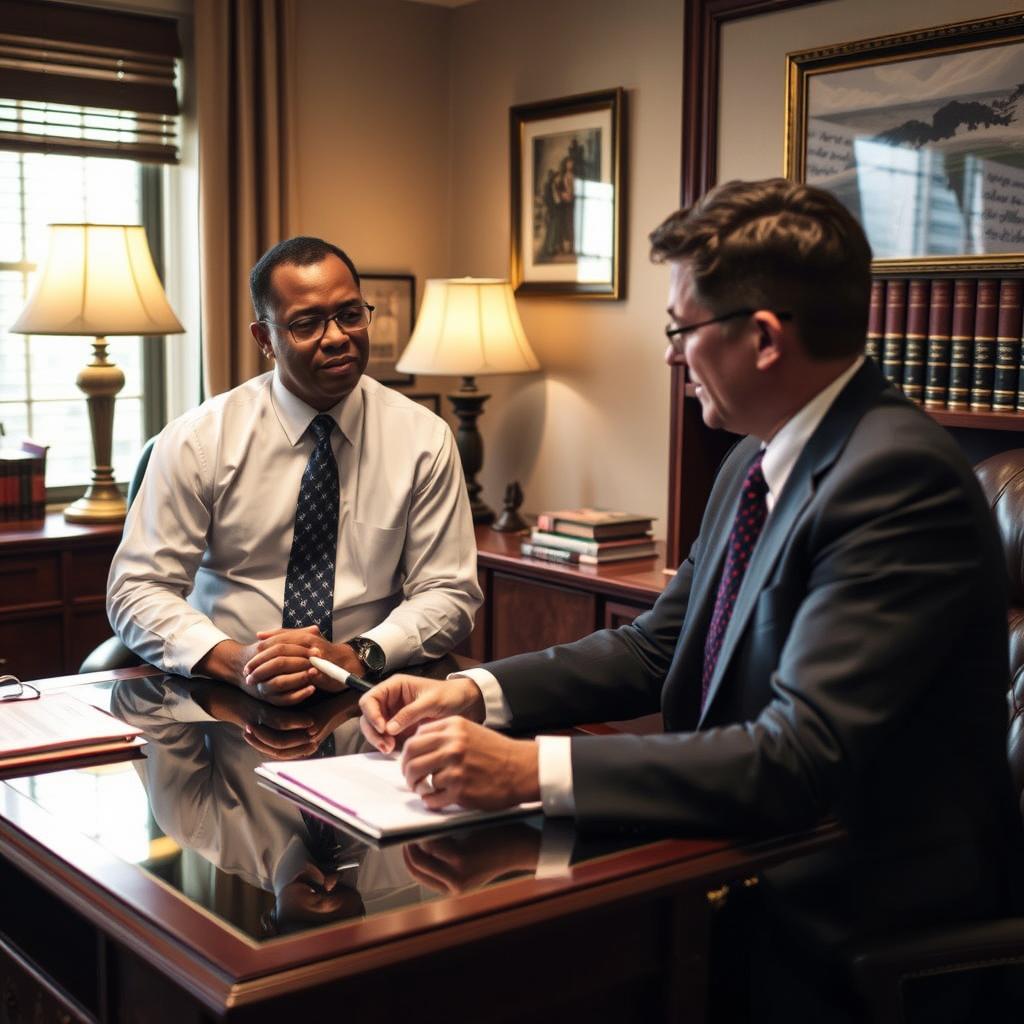
Immediate Relative Petition Lawyer Foggy Bottom, DC
An immediate relative petition is the first step for a U.S. Citizen to bring their closest family members to the United States as lawful permanent residents. Residents of Foggy Bottom, the neighborhood anchored by George Washington University and the State Department, often need guidance on immigration matters because the stakes are deeply personal. Mr. Sris and his Of Counsel team at Law Offices Of SRIS, P.C. assist individuals and families in Foggy Bottom with Form I‑130 petitions, adjustment of status, and representation before the Arlington Immigration Court when removal proceedings are involved. Our firm, founded in 1997, serves clients from our Arlington location just across the Potomac. For a consultation, call (888) 437‑7747. Law Offices Of SRIS, P.C. – Advocacy Without Borders.
Understanding Immediate Relative Petitions in Foggy Bottom
An immediate relative petition, filed on Form I‑130, allows a U.S. Citizen to sponsor a spouse, an unmarried child under 21, or a parent for a green card. These categories are not subject to annual numerical limits under federal immigration law, which means a visa number is immediately available once the petition is approved. For Foggy Bottom residents, the USCIS Washington District Office at 2675 Prosperity Avenue, Fairfax, VA 22031 handles affirmative applications including adjustment of status. Removal proceedings, if applicable, are heard at the Arlington Immigration Court located at 1901 South Bell Street, Arlington, VA 22202. Mr. Sris and his Of Counsel regularly appear at that court for clients who face deportation or need bond hearings.
The petition process requires careful documentation: proof of the petitioner’s U.S. Citizenship, evidence of the qualifying family relationship, and supporting civil records. In Foggy Bottom, many petitioners are professionals, diplomats, or academics with complex international backgrounds — dual citizenship, prior marriages, or overseas adoptions — that can add layers of review. Our team works to present a complete record from the start to reduce delays. The filing fee for a Form I‑130 is currently $675; fees are subject to change, and we can confirm the current USCIS fee schedule at the time of your consultation.
Frequently Asked Questions
What is an immediate relative petition?
An immediate relative petition (Form I‑130) is the USCIS application that a U.S. Citizen files to establish a qualifying family relationship with a spouse, unmarried child under 21, or parent, as the basis for a green card. These categories are not subject to per‑country numerical caps, so no priority date waiting is required once the petition is approved. The petition itself does not grant status; the relative must also apply for adjustment of status in the U.S. Or complete consular processing abroad. For a Foggy Bottom resident, this often involves the USCIS Washington District Office in Fairfax for interviews.
Who qualifies as an immediate relative under U.S. Immigration law?
Only three relationships qualify: a U.S. Citizen’s spouse, a U.S. Citizen’s unmarried child under 21 years old, and a U.S. Citizen’s parent (if the citizen is at least 21). Siblings, married children, and children over 21 fall into family preference categories with annual limits and waiting times. Stepchildren may qualify if the marriage creating the step‑relationship occurred before the child turned 18. Grandparents do not qualify directly. Mr. Sris and his Of Counsel can evaluate whether your relationship fits the immediate relative category and advise on alternative paths if it does not.
Do I need a lawyer to file an immediate relative petition?
You are not required to hire an attorney to file a Form I‑130, but legal representation can help avoid delays, denials, and complications that arise from incomplete or incorrect filings. A single omission — such as a missing certified translation of a foreign birth certificate — can trigger a Request for Evidence that adds months to the process. If the petition involves any inadmissibility issues (prior immigration violations, criminal record, fraud allegations), an attorney’s involvement is critical. Mr. Sris and his Of Counsel review your complete situation before filing.
How long does an immediate relative petition take?
Processing times for a Form I‑130 vary based on USCIS caseload and whether the beneficiary is adjusting status inside the U.S. Or processing at a consulate abroad. For Foggy Bottom residents, affirmative applications are routed to the USCIS Washington District Office in Fairfax. Current processing can range from several months to longer than a year depending on background checks, interviews, and requests for evidence. We monitor your case and can inquire with USCIS if processing falls outside normal timeframes.
What documents are needed for an immediate relative petition?
The core documents include proof of the petitioner’s U.S. Citizenship (passport, birth certificate, or naturalization certificate), evidence of the qualifying relationship (marriage certificate, birth certificate, adoption decree), and proof of termination of any prior marriages (divorce decrees or death certificates). All foreign‑language documents must be accompanied by certified English translations. If the beneficiary has any criminal history or prior immigration encounters, those records must also be gathered. Mr. Sris and his Of Counsel help clients in Foggy Bottom compile and authenticate all required paperwork before filing.
What happens if my immediate relative petition is denied?
If USCIS denies a Form I‑130, the petitioner can file a motion to reopen or reconsider, appeal to the Board of Immigration Appeals, or file a new petition correcting the deficiencies identified in the denial notice. The denial letter will state the legal and factual basis for the decision. In many cases, a denial can be overcome with additional evidence or a corrected filing. An attorney can evaluate whether an appeal has merit or whether a new petition is the faster path. If the beneficiary is in removal proceedings, the petition may need to be renewed before the Immigration Court.
What is the difference between an immediate relative petition and a family preference petition?
Immediate relative petitions are for spouses, unmarried children under 21, and parents of U.S. Citizens — these have no annual cap and no wait for a visa number. Family preference petitions are for other relationships: unmarried adult children of U.S. Citizens (F1), spouses and minor children of lawful permanent residents (F2A), unmarried adult children of LPRs (F2B), married children of U.S. Citizens (F3), and siblings of U.S. Citizens (F4). Preference categories have annual numerical limits, resulting in waiting periods that can be years or even decades for some countries. Mr. Sris can explain which category applies to your family member.
Can my relative work while the immediate relative petition is pending?
A pending I‑130 alone does not confer work authorization. Work authorization requires a separate application, typically an Employment Authorization Document (EAD) on Form I‑765, filed concurrently with an adjustment of status application (I‑485) if the relative is in the United States and eligible to adjust. The EAD application cannot be approved until the underlying I‑130 is approved and a visa number is available. For immediate relatives, a visa number is always available, so the EAD can be processed as soon as the I‑485 is pending. We guide clients through the complete package.
What if the U.S. Citizen petitioner dies while the petition is pending?
Under certain circumstances, USCIS may approve a pending immediate relative petition after the petitioner’s death if the beneficiary seeks reinstatement and can demonstrate humanitarian reasons. Section 204(l) of the Immigration and Nationality Act allows the approval or reinstatement of a petition if the beneficiary was residing in the United States at the time of the petitioner’s death and continues to reside here, and the approval would serve the public interest. This is a complex area; an attorney can assess whether relief is available and what evidence is needed.
Do immediate relatives need to attend an interview?
Yes, in most cases both the petitioner and the beneficiary must attend a USCIS interview at the Washington District Office in Fairfax if the beneficiary is applying for adjustment of status in the United States. The interview is part of the I‑485 adjustment of status process, not the I‑130 petition itself. An attorney can prepare you for the interview, explain what questions to expect, and attend with you to address any concerns the officer raises. If the beneficiary is processing through a U.S. Consulate abroad, the interview takes place at that consulate.
About Mr. Sris and His Of Counsel Team
Mr. Sris, Owner and Founder of Law Offices Of SRIS, P.C., is a former prosecutor who has practiced since 1997. He is admitted in Virginia, Maryland, the District of Columbia, New Jersey, and New York. Mr. Sris testified before the Virginia House Courts of Justice Committee in support of 2019 HB 635 (chief patron Del. David Bulova). His Of Counsel team consists of experienced attorneys who handle immigration matters across the firm’s multi‑state footprint. Mr. Sris and his Of Counsel bring extensive combined legal experience. Results may vary.
Our firm serves Foggy Bottom clients from our Arlington location at 1655 Fort Myer Dr, Suite 700, Room 719, Arlington, VA 22209. By appointment only. For a consultation, reach Law Offices Of SRIS, P.C. at (888) 437‑7747.
Immigration lawyer in Washington, D.C. | Immigration lawyer in Georgetown | Immigration lawyer in Spring Valley | Immigration lawyer in Cleveland Park | Immigration lawyer in Chevy Chase
Attorney advertising. Prior results do not guarantee a similar outcome.
Case results depend on a variety of factors unique to each case.